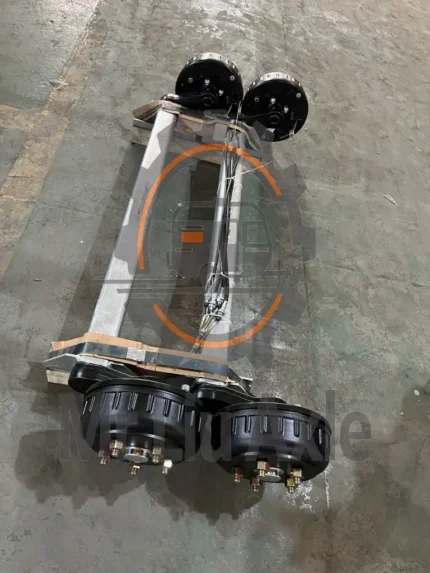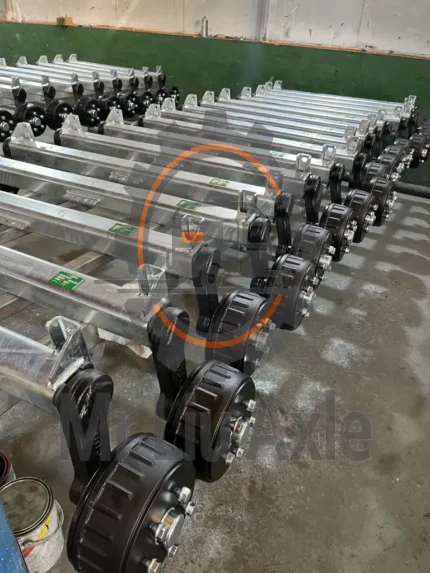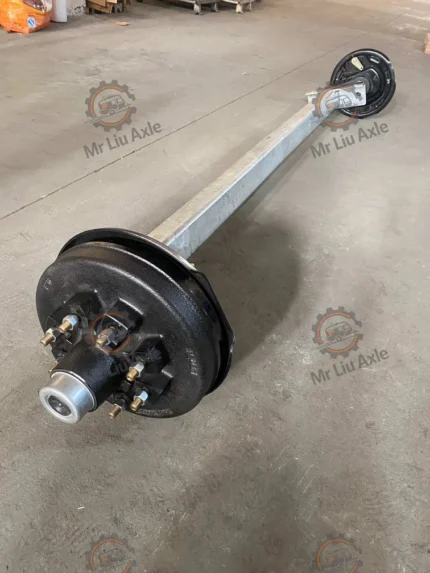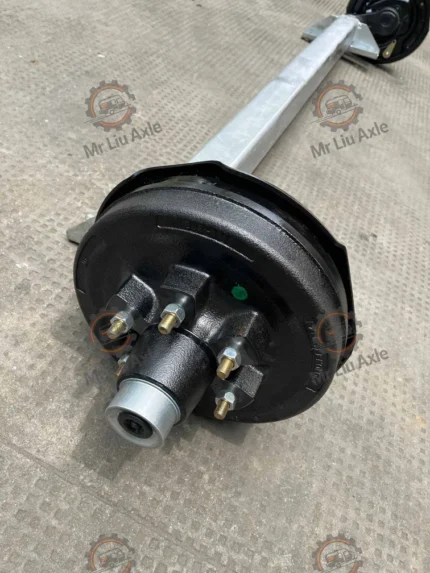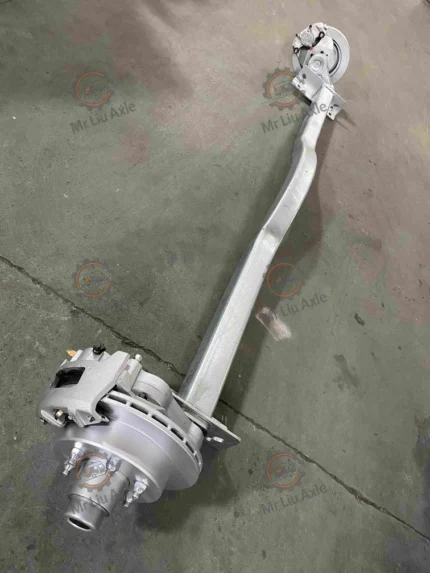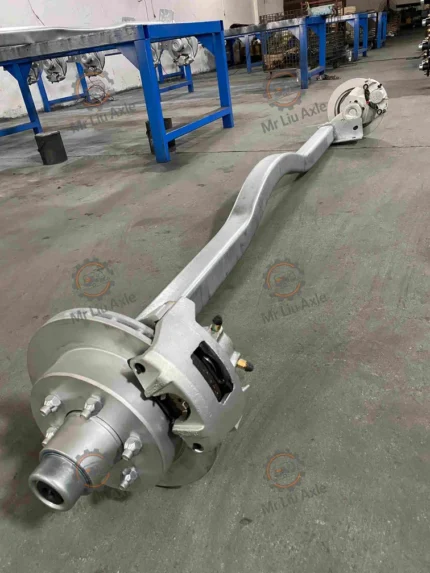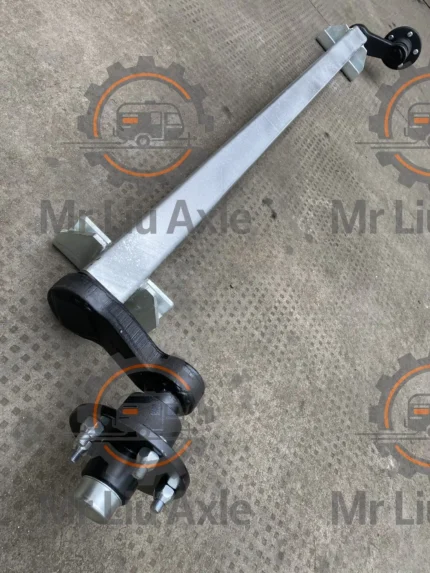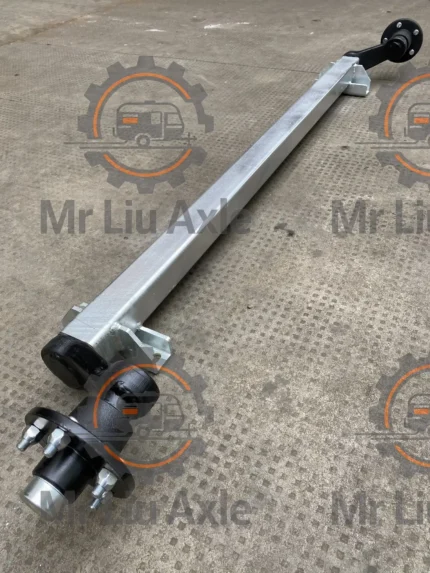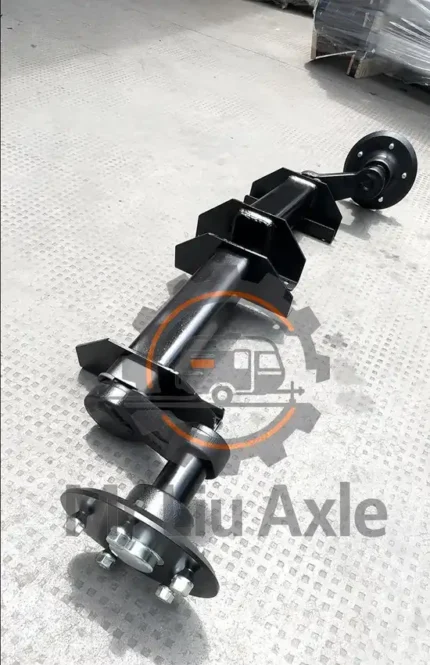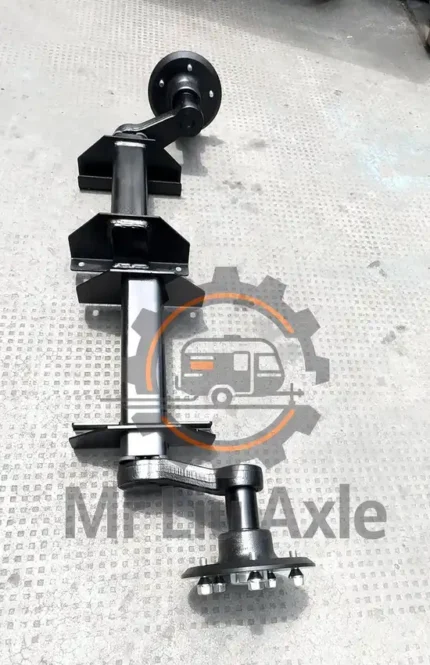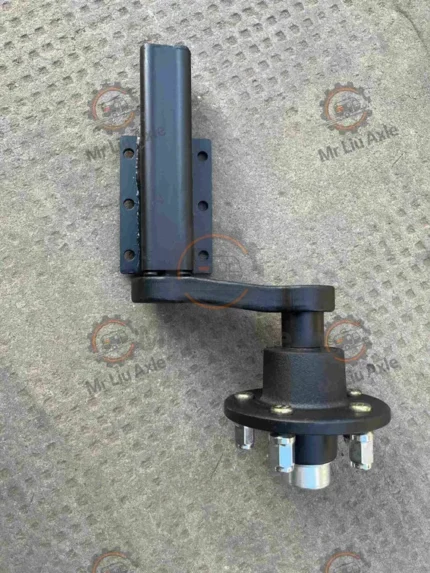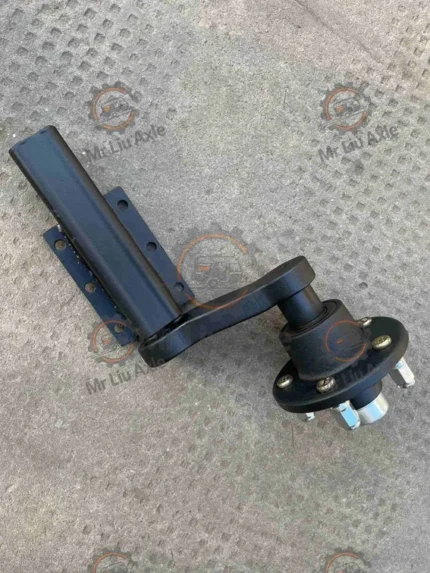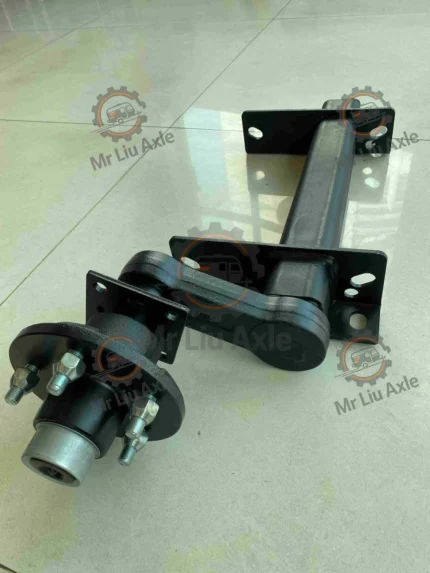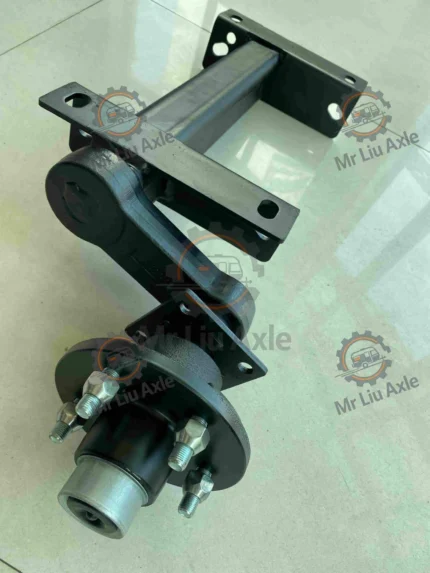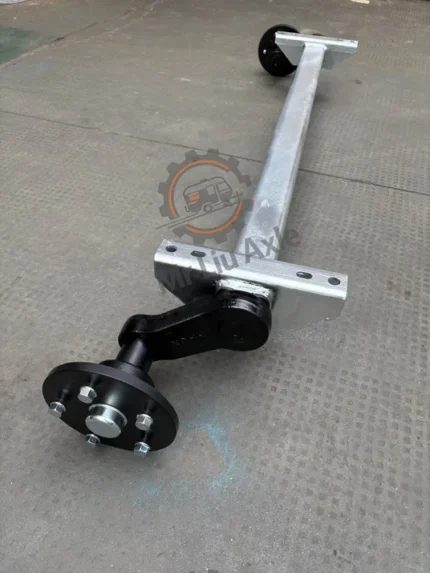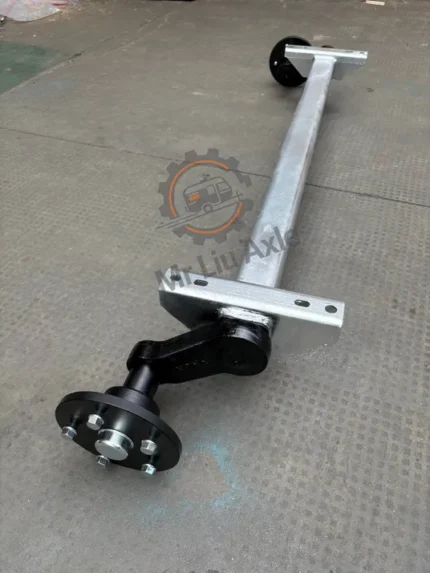


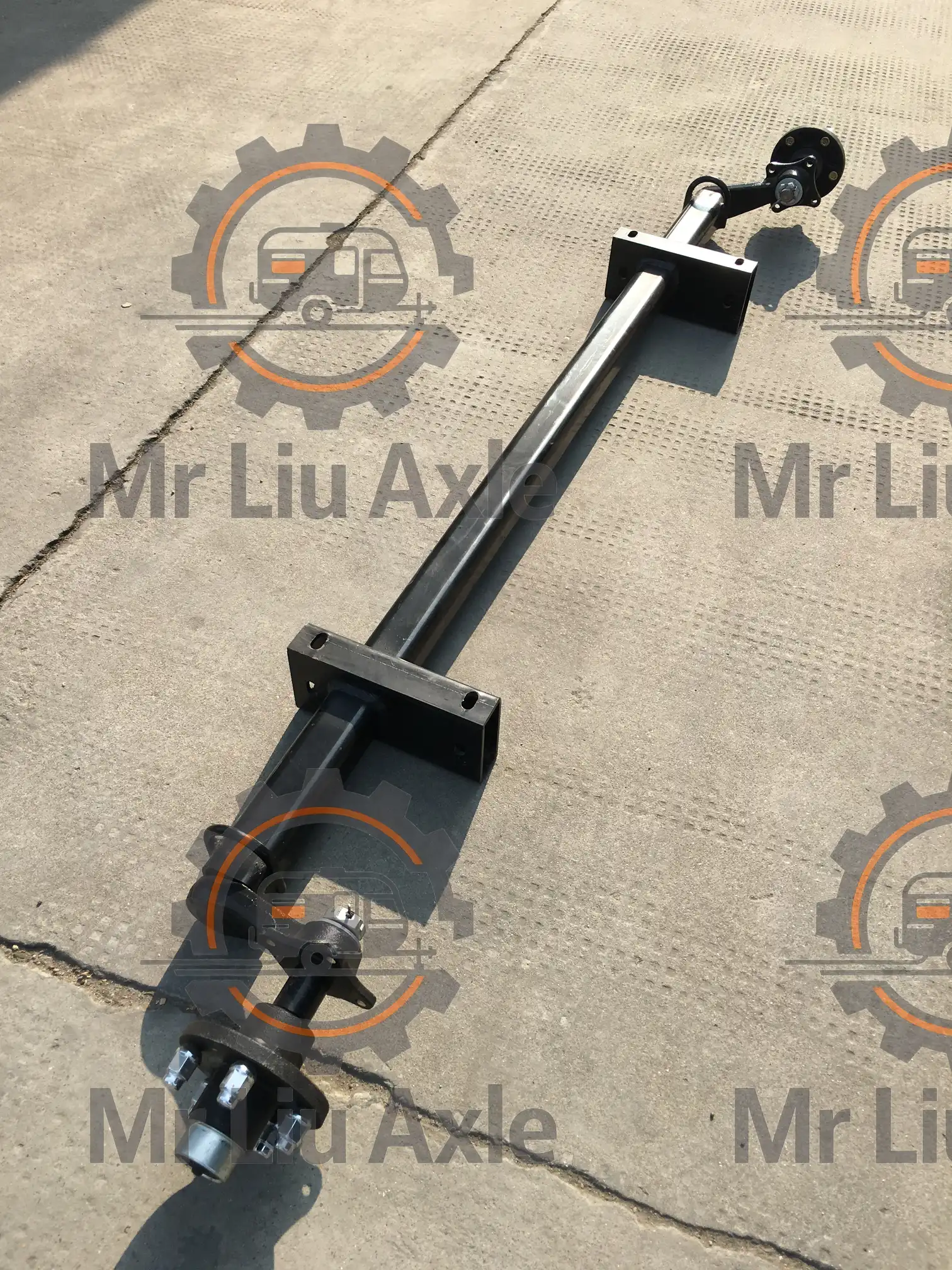
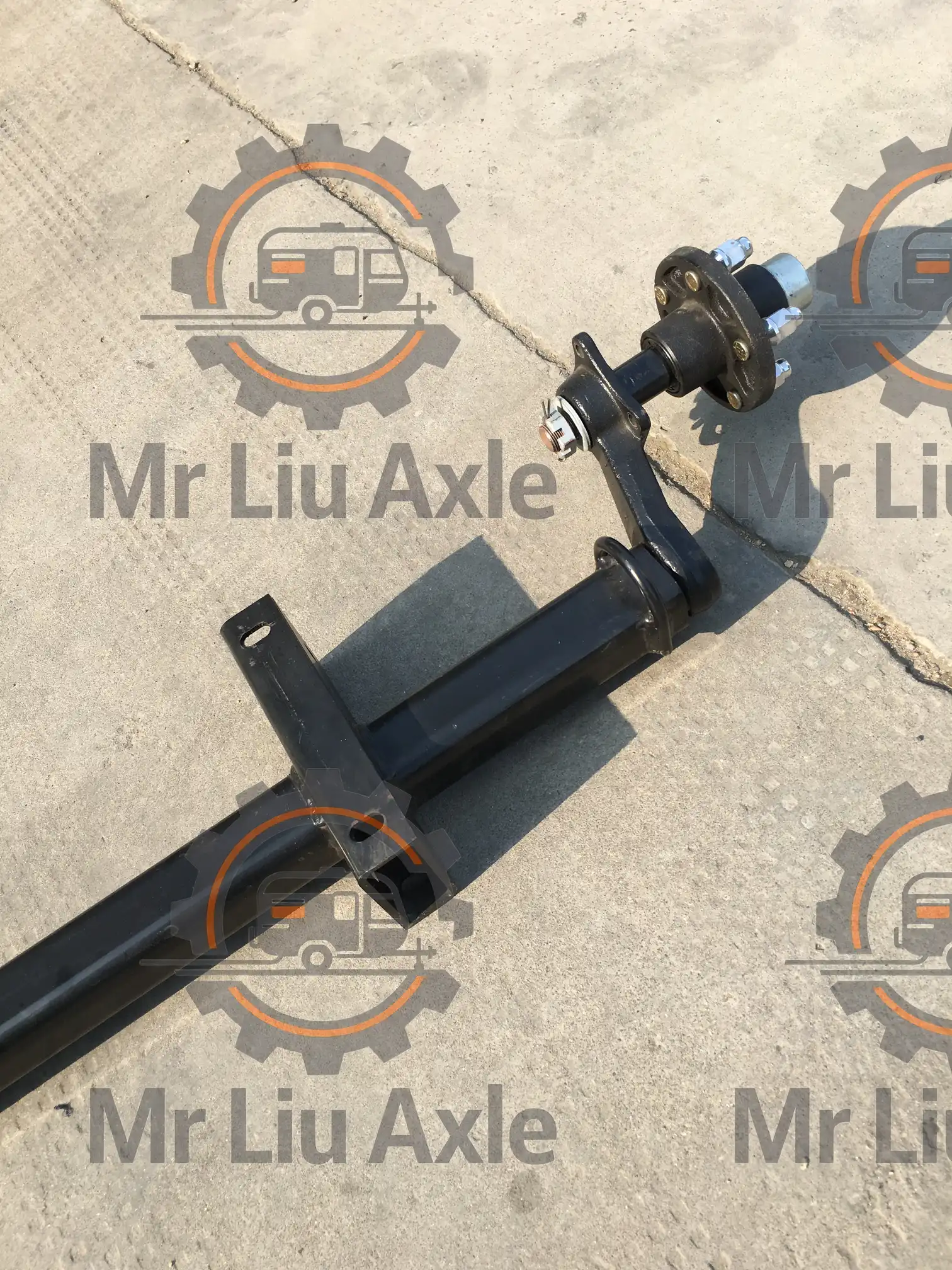
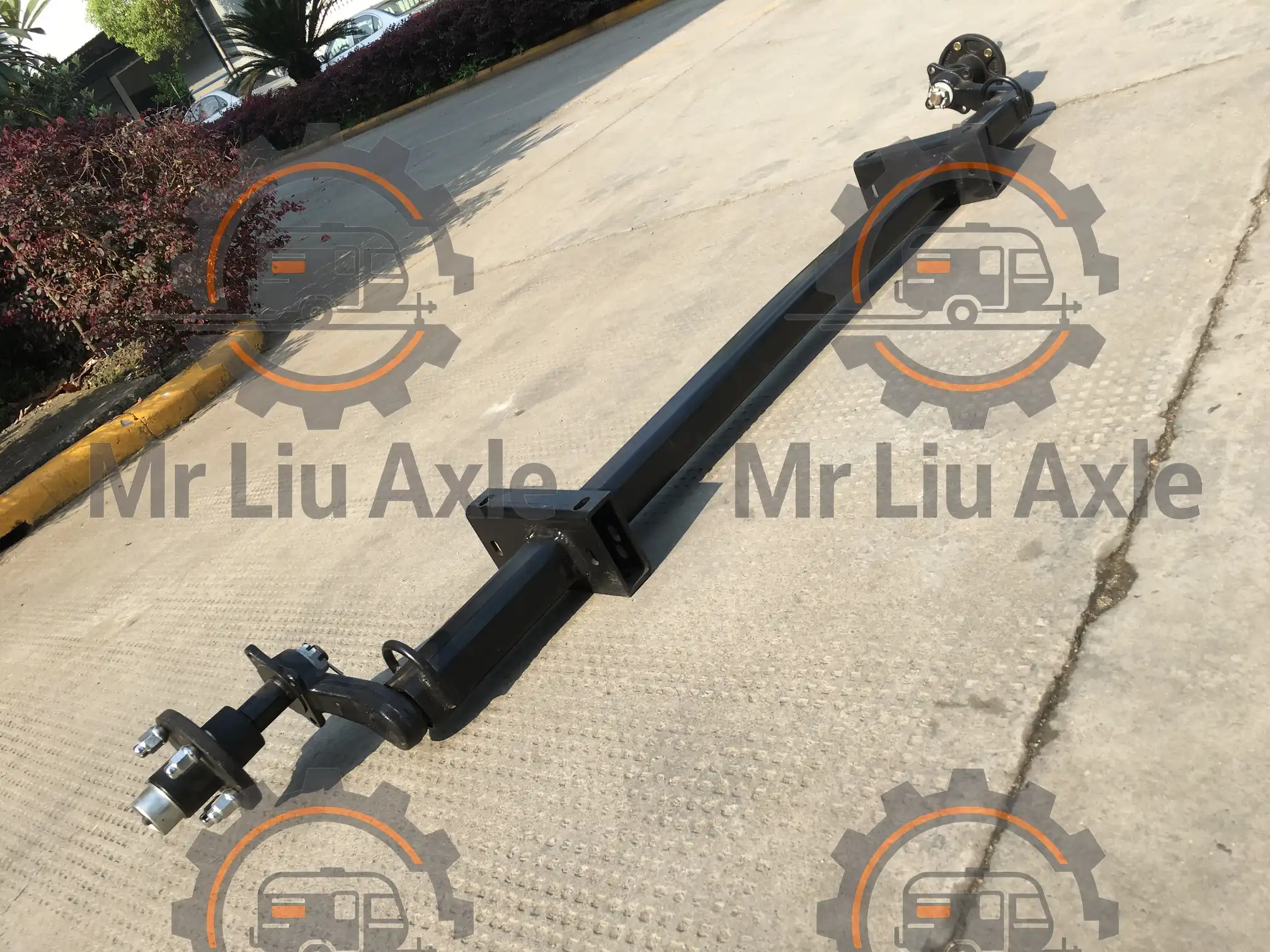
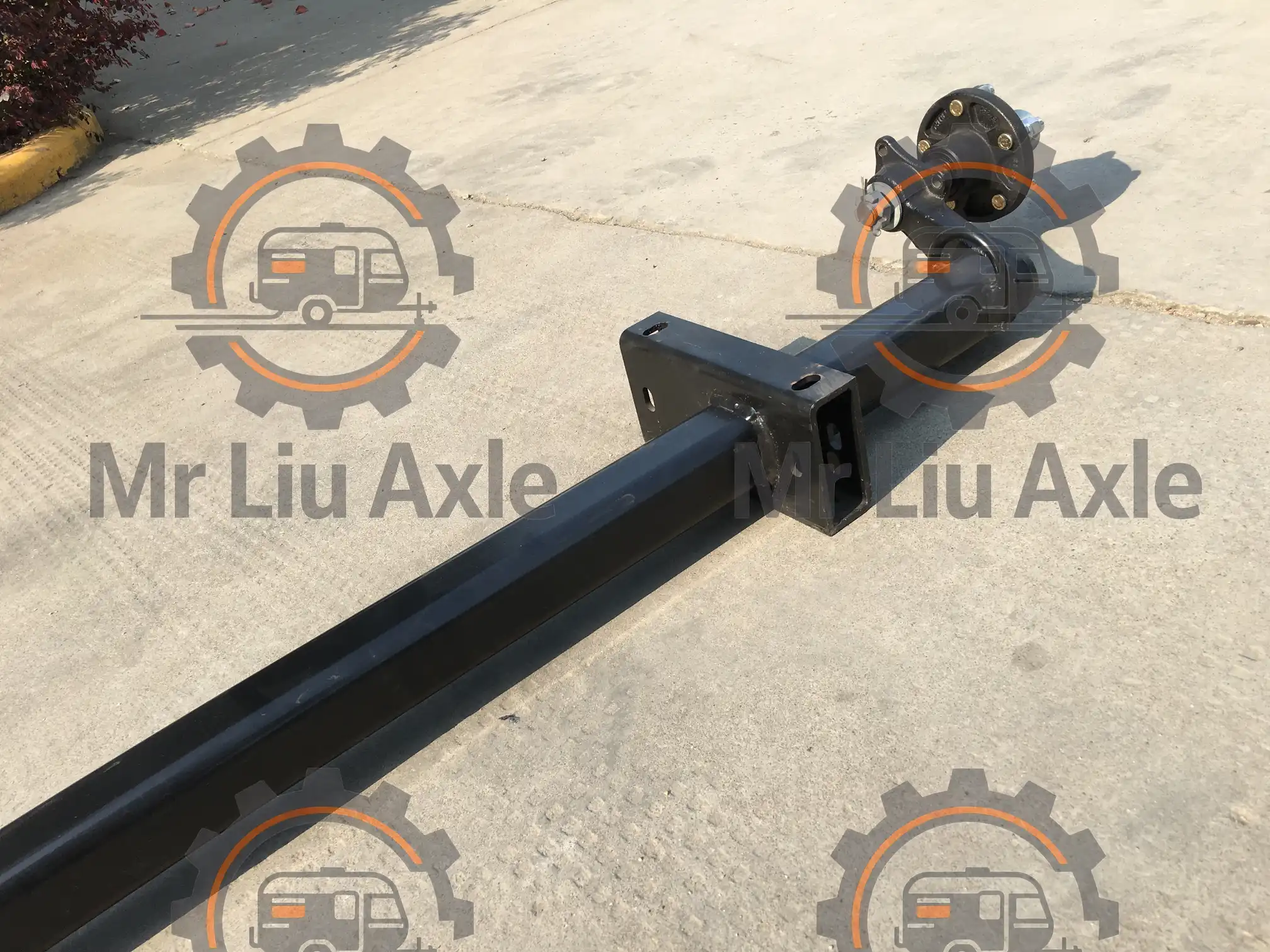
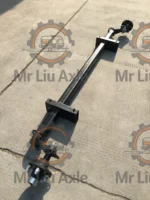
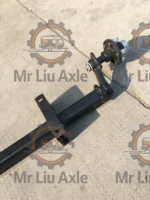
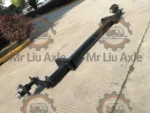
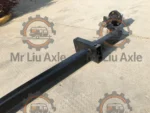
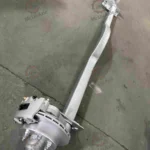
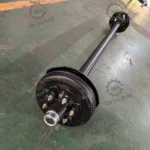
2200/3500/5200 lb Unbraked Torsion Axle For Motorcycle Trailer – OEM Replacement for United States Trailer Manufacturers
Price on Request
Load Capacity: 1500 KG
Brake Type: Unbraked
Finish: Black Painted
Hub Face to Hub Face: Can be customized
Distance of Outside Mounting Bracket: Can be customized
What Is This 2200/3500/5200 lbs Unbraked Torsion Axle?
This 2200/3500/5200 lbs unbraked torsion axle is a bolt-on OEM replacement axle for motorcycle
trailers, jet ski trailers and light utility trailers sold in the United States. It uses an
independent rubber-cord torsion suspension inside a sealed square tube, carries no brake
assembly (idler configuration), and is rated at 2,200 lbs, 3,500 lbs or 5,200 lbs per axle.
It is built for trailer builders and repair shops that need a direct-fit replacement without
brake plumbing, brake controllers or periodic leaf-spring service.
Product page:
2200/3500/5200 lbs unbraked torsion axle — OEM replacement for United States trailer manufacturers.
What Is a Motorcycle Trailer Torsion Axle and How Does It Work?
A motorcycle trailer torsion axle is an axle whose suspension is a set of rubber cords compressed
inside a square steel tube, with a trailing arm on each side carrying the spindle. There are no
leaf springs, no shackles, no U-bolts and no grease points in the suspension. When the trailer
wheel hits a bump, the trailing arm rotates and compresses the rubber cords, which absorb the
load and return the arm to its rest position.
Because the two arms work independently, each wheel tracks the road surface on its own. On a
motorcycle trailer this matters: the trailer stays level on crowned or patched pavement, the
bike stays upright, and the load is not transferred side-to-side the way a solid beam axle with
a shared leaf spring pack would transfer it.
What Does “Unbraked” or “Idler” Mean on This Axle?
“Unbraked” (also written “idler”) means the axle has no brake flange, no brake drum or disc, and
no hydraulic or electric brake actuator. The spindle carries the hub and wheel only. This keeps
the axle lighter, cheaper and simpler to install, and removes the need for a trailer brake
controller on the tow vehicle.
It is the correct configuration for light trailers that stay below the brake threshold set by
the state where the trailer is registered. If your loaded trailer will exceed that threshold,
this axle is the wrong part — order a braked axle instead.
What Are the Load Capacities Available for This Unbraked Torsion Axle?
This axle is available in three load capacities: 2,200 lbs, 3,500 lbs and 5,200 lbs per axle.
| Parameter | Specification |
|---|---|
| Load capacity | 2,200 lbs / 3,500 lbs / 5,200 lbs per axle |
| Suspension type | Rubber-cord torsion, independent trailing arm (no leaf springs) |
| Brake type | Idler — unbraked, no brake flange |
| Bolt pattern (PCD) | 5×4.5 in (2,200 lbs and 3,500 lbs); 6×5.5 in (5,200 lbs) |
| Tube size | Can be Customized |
| Spindle / bearing part numbers | Can be Customized |
| Hub face to hub face | Custom-built to your measured dimension |
| Mounting bracket center distance | Custom-built to your measured dimension |
| Finish | Powder coat ; hot-dip galvanized |
| Mounting style | Bolt-on, OEM replacement |
| Trailer types | Motorcycle trailers, jet ski / personal watercraft trailers, light utility trailers, small cargo trailers |
Which Load Capacity Should I Choose for My Trailer?
Match the axle capacity to the trailer’s gross loaded weight, not to the empty trailer weight —
2,200 lbs suits small single-bike and jet ski trailers, 3,500 lbs suits standard motorcycle and
light cargo trailers, and 5,200 lbs suits large or multi-bike trailers and tandem-axle utility
trailers.
| Capacity | Typical PCD | Typical trailer applications |
|---|---|---|
| 2,200 lbs | 5×4.5 in | Small motorcycle trailers, jet ski / PWC trailers, light single-axle utility trailers |
| 3,500 lbs | 5×4.5 in | Standard motorcycle trailers, light cargo trailers, landscape and utility trailers |
| 5,200 lbs | 6×5.5 in | Large motorcycle trailers, tandem-axle utility trailers, multi-bike haulers |
Note: total trailer capacity on a tandem-axle build is the sum of both axles minus tongue load.
Confirm your GVWR against your state’s brake requirements before ordering an unbraked setup.
Why Choose an Unbraked Torsion Axle Over a Leaf Spring Axle?
A torsion axle replaces the entire leaf spring stack with sealed rubber cords, which means fewer
parts, no suspension wear items, no grease points and a lower, cleaner ride height — while a leaf
spring axle needs springs, U-bolts, shackles and periodic inspection.
What Are the Practical Differences in Service?
- No suspension maintenance: torsion cords are sealed inside the tube and do not need lubrication or re-torquing.
- No sag over time: leaf springs flatten under load; rubber torsion cords hold their rate far longer.
- Independent wheel travel: each wheel reacts to the road separately, which keeps a motorcycle trailer stable on uneven pavement.
- Lower mounting profile: the axle mounts directly to the trailer frame with bolt-on brackets — no shackle hangers to weld or align.
- Fewer failure points: no leaf, no shackle bolt, no equalizer to break on a long tow.
When Is a Leaf Spring Axle Still the Better Choice?
A leaf spring axle is still the better choice when the trailer must carry extreme shock loads,
when the owner wants field-serviceable springs, or when the trailer already has a leaf-spring
frame geometry and the mounting points cannot be moved. For motorcycle and light utility
trailers, torsion is generally the cleaner answer.
How Do I Know If This Axle Fits My Motorcycle Trailer?
It fits if three measurements match: hub face to hub face, mounting bracket center distance, and
bolt pattern (PCD). All three can be custom-built, so the fastest path is to measure your
existing axle and send us the numbers.
How Do I Measure Hub Face to Hub Face for a Replacement Axle?
Measure from the wheel mounting surface (the flat face of the hub where the wheel sits) on one
side to the same surface on the other side. This is the hub face to hub face dimension, and it
determines the overall span of the axle.
How Do I Measure the Mounting Bracket Center Distance?
Measure from the center of one mounting bracket to the center of the opposite bracket, along the
axle tube. This must match your trailer frame’s existing bolt holes, or you will need to drill
new holes.
What Else Should I Check Before Ordering?
- Bolt pattern (PCD) of your existing hubs — 5×4.5 in or 6×5.5 in
- Required load rating per axle, based on loaded trailer weight
- Ride height / start angle of the torsion arm
- Finish requirement — powder coat or hot-dip galvanized for saltwater use
- Whether your state requires brakes at your trailer’s GVWR
Is This Axle a Direct Replacement for American Trailer Brands?
Yes — this axle is built as a direct OEM replacement for United States trailer manufacturers,
using the bolt patterns, hub face dimensions and bracket spacing common to American light
trailers. It is not a universal one-size part: the axle is built to your measurements so it
bolts onto the existing frame without adapter plates.
In our Tongxiang factory we build unbraked torsion axles for American trailer builders who need
a bolt-on replacement without brake complexity — the same spindle geometry, the same hub
registers, and the same bracket layout they already build frames around.
What Makes This Axle Suitable for OEM and Wholesale Programs?
- Custom hub face widths and bracket center distances on every order
- Consistent spindle and hub registers for repeat production runs
- Powder coat or hot-dip galvanized finish options
- Factory-direct supply from the manufacturing plant, not a trading intermediary
- Full specification sheet and dimensions confirmed before production
Full technical detail and ordering information:
unbraked torsion axle for motorcycle trailers — OEM replacement specifications.
Frequently Asked Questions About Unbraked Torsion Axles
Can this axle be used without brakes legally?
Trailer brake requirements are set by state law and are usually tied to the trailer’s gross
vehicle weight rating (GVWR), not to the axle’s rated capacity. Many states set the brake
threshold at 3,000 lbs GVWR or lower, and some set it higher. An unbraked torsion axle is
therefore the right part for motorcycle trailers, jet ski trailers and light utility trailers
that stay below your state’s threshold. Check your state’s requirement before ordering a
5,200 lbs unbraked configuration.
What is the difference between a torsion axle and a leaf spring axle for motorcycle trailers?
A torsion axle suspends the trailer on rubber cords compressed inside a sealed square tube,
with each wheel on an independent trailing arm. A leaf spring axle suspends the trailer on
steel springs bolted to the frame with U-bolts and shackles. Torsion gives independent wheel
travel, no lubrication points and no spring sag; leaf spring gives lower upfront cost and
field-replaceable springs.
How do I measure hub face to hub face for a replacement?
Measure from the wheel mounting surface on one hub to the wheel mounting surface on the
opposite hub. That number is the hub face to hub face dimension. Also measure the center of
one mounting bracket to the center of the opposite bracket. Send both dimensions and we build
the axle to match.
Can I get this axle in hot-dip galvanized finish for saltwater use?
Yes. Hot-dip galvanizing is available as an alternative to the standard powder coat finish and
is recommended for jet ski trailers, boat trailers and any trailer that sees saltwater or
constant moisture. Confirm availability and lead time when you place the order.
What is the MOQ and lead time for OEM wholesale orders?
MOQ and lead time depend on the load capacity, hub face width, bracket spacing and finish you
specify. Contact us with your required dimensions and annual volume for a quoted MOQ and
production schedule.
Do you offer customized hub face widths and mounting bracket distances?
Yes. Hub face to hub face and mounting bracket center distance are both built to your
measurements on every order, so the axle bolts directly onto your existing frame without
adapter plates or re-drilling.