

Blog
Ejes de torsión vs.. Ballestas: Por qué hice el cambio

Durante décadas, ballesta la suspensión era la única opción real para los remolques. es simple, barato, y hace el trabajo. Pero después de construir ejes para 20 años, He aprendido que «hace el trabajo» no es lo mismo que «hace bien el trabajo.».
He aquí por qué ahora recomiendo ejes de torsión para la mayoría de las aplicaciones.
Paseo más suave, Menos desgaste
Las ballestas dependen de la fricción entre láminas de metal.. Esa fricción crea fricción. — la suspensión no se mueve hasta que se acumula suficiente fuerza, luego se sacude. Tu carga siente cada golpe.
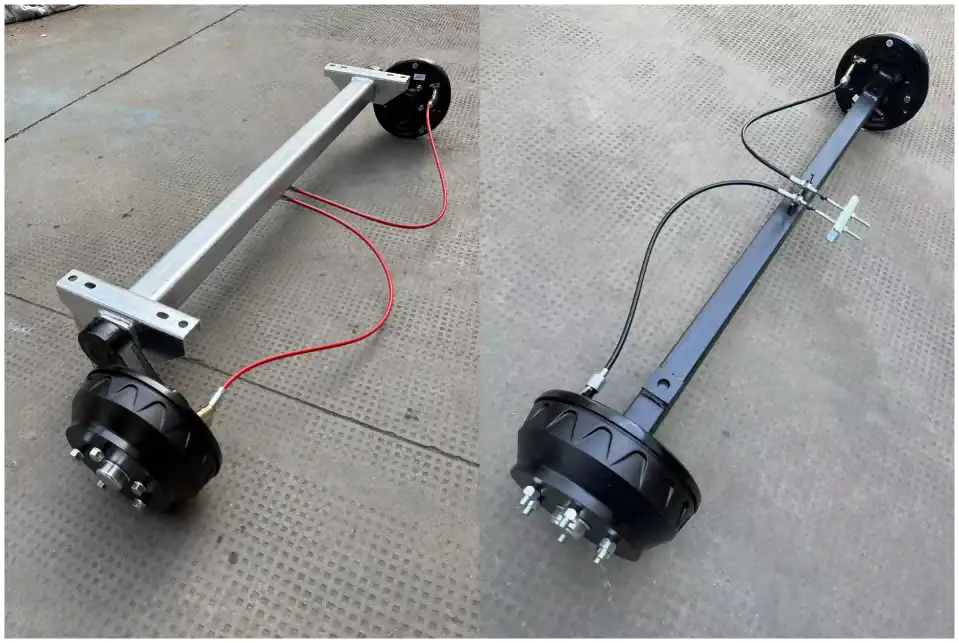
Los ejes de torsión utilizan un cordón de goma dentro de un tubo de eje cuadrado.. La goma se comprime y rebota suavemente., sin fricción metal contra metal. El resultado? Un viaje notablemente más suave. Menos transferencia de impacto significa menos daño a su remolque, tu carga, y su vehículo remolcador.
Es curioso cómo funciona realmente el mecanismo de goma en tubo.? Este Animación mecánica de un eje de torsión de remolque. muestra la compresión interna del caucho en acción.
Menos piezas móviles, Menos mantenimiento
Una configuración típica de ballestas tiene resortes, grilletes, pernos, casquillos, y a menudo ecualizadores. Cada articulación es un punto potencial de falla. He visto innumerables remolques marginados por una ballesta rota o un perno de grillete atascado..
Un eje de torsión tiene exactamente una parte móvil. — la goma dentro del tubo. Sin casquillos que engrasar. Sin tornillos que se oxiden. Sin resortes que romper. solo limpia, sellado, y confiable.
Altura de manejo más baja, Más espacio utilizable
Las ballestas se encuentran debajo del bastidor del remolque., ocupando espacio vertical. Los ejes de torsión se montan directamente al marco., permitiendo una altura de plataforma más baja. Eso significa una carga más fácil — especialmente para transportistas de automóviles, remolques de barcos, y remolques de equipos.
Una altura de plataforma más baja también significa un centro de gravedad más bajo., que mejora la estabilidad a velocidades de carretera.
La compensación
Los ejes de torsión cuestan más por adelantado. Y si falla un eje de torsión, reemplazas toda la unidad — no puedes simplemente cambiar una ballesta rota.
pero en 20 años de construcción de ejes, He visto muchas menos fallas en los ejes de torsión que fallas en las ballestas.. El costo inicial compra confiabilidad a largo plazo.
Mi recomendación
Para aplicaciones de servicio pesado con caminos en mal estado y cargas máximas, Las ballestas todavía tienen un lugar. Son reparables en campo y probados.
Pero para la mayoría de los remolques — vehículos recreativos, remolques de barcos, remolques utilitarios, transportistas de autos — Los ejes de torsión ofrecen una mejor experiencia.. Paseo más suave, menos mantenimiento, más espacio utilizable.
Si está construyendo o mejorando un remolque, dar ejes de torsión una mirada seria. Explore nuestra gama completa de kits de suspensión independiente y conjuntos de cubos para completar su configuración. tu carga (y tu espalda) te lo agradeceré.
Preguntas sobre qué eje se adapta a tu complexión? Contáctenos y te señalaré en la dirección correcta.