


Blog
Torsion Axles vs. Leaf Springs: Why I Made the Switch

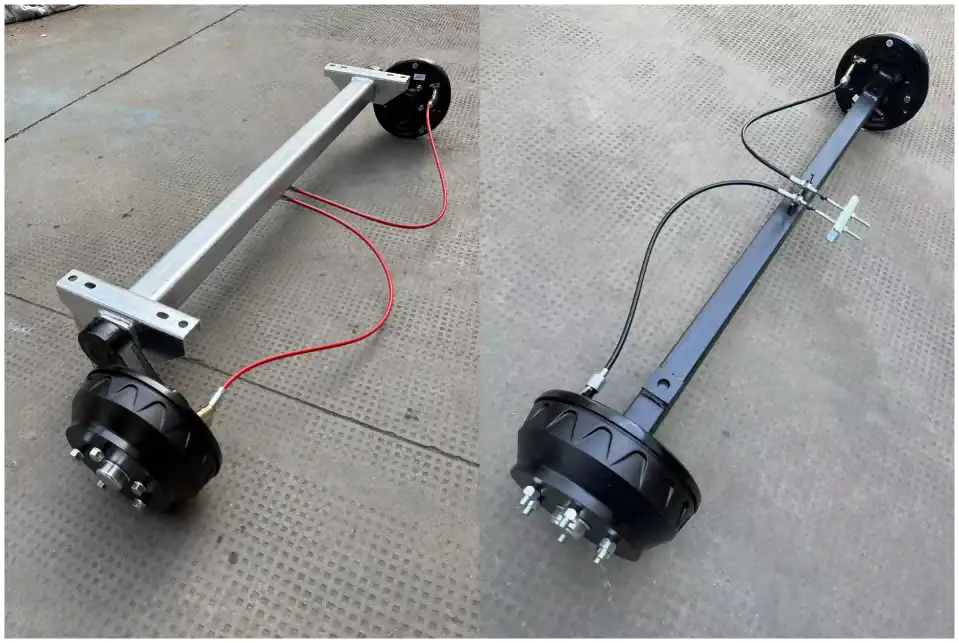
For decades, leaf spring suspension was the only real option for trailers. It’s simple, cheap, and gets the job done. But after building axles for 20 years, I’ve learned that “gets the job done” isn’t the same as “does the job well.”.
Here’s why I now recommend torsion axles for most applications.
Smoother Ride, Less Wear
Leaf springs rely on friction between metal leaves. That friction creates stiction — the suspension doesn’t move until enough force builds up, then it jerks. Your cargo feels every bump.
Torsion axles use a rubber cord inside a square axle tube. The rubber compresses and rebounds smoothly, with no metal-on-metal friction. The result? A noticeably smoother ride. Less shock transfer means less damage to your trailer, your cargo, and your tow vehicle.
Curious how the rubber-in-tube mechanism actually works? This mechanical animation of a torsion trailer axle shows the internal rubber compression in action.
Fewer Moving Parts, Less Maintenance
A typical leaf spring setup has springs, shackles, bolts, bushings, and often equalizers. Every joint is a potential failure point. I’ve seen countless trailers sidelined by a broken leaf spring or a seized shackle bolt.
A torsion axle has exactly one moving part — the rubber inside the tube. No bushings to grease. No bolts to rust solid. No springs to crack. Just clean, sealed, and reliable.
Lower Ride Height, More Usable Space
Leaf springs sit under the trailer frame, taking up vertical space. Torsion axles mount directly to the frame, allowing a lower deck height. That means easier loading — especially for car haulers, boat trailers, and equipment trailers.
Lower deck height also means a lower center of gravity, which improves stability at highway speeds.
The Trade-Off
Torsion axles cost more upfront. And if a torsion axle fails, you replace the whole unit — you can’t just swap a broken leaf spring.
But in 20 years of building axles, I’ve seen far fewer torsion axle failures than leaf spring failures. The upfront cost buys long-term reliability.
My Recommendation
For heavy-duty applications with rough roads and maximum loads, leaf springs still have a place. They’re field-serviceable and proven.
But for most trailers — RVs, boat trailers, utility trailers, car haulers — torsion axles deliver a better experience. Smoother ride, less maintenance, more usable space.
If you’re building or upgrading a trailer, give torsion axles a serious look. Browse our full range of independent suspension kits and hub assemblies to complete your setup. Your cargo (and your back) will thank you.
Questions about which axle suits your build? Contact us and I’ll point you in the right direction.