


Blog
Trailer Stub Axle vs Full Axle: When to Use Which

Trailer Stub Axle vs Full Axle: When to Use Which
A practical guide to understanding stub axles and full beam axles — their strengths, limits, and the right fit for your trailer build.Choosing between a stub axle and a full beam axle is one of the first decisions you’ll face when designing or upgrading a trailer. The choice affects load capacity, ride quality, ground clearance, installation complexity, and even maintenance frequency. In this guide, we’ll compare the two designs head-to-head, explain where each one excels, and help you make the right call for your build — whether you’re assembling a light utility trailer or a heavy-duty tandem setup.
1. What Is a Stub Axle?
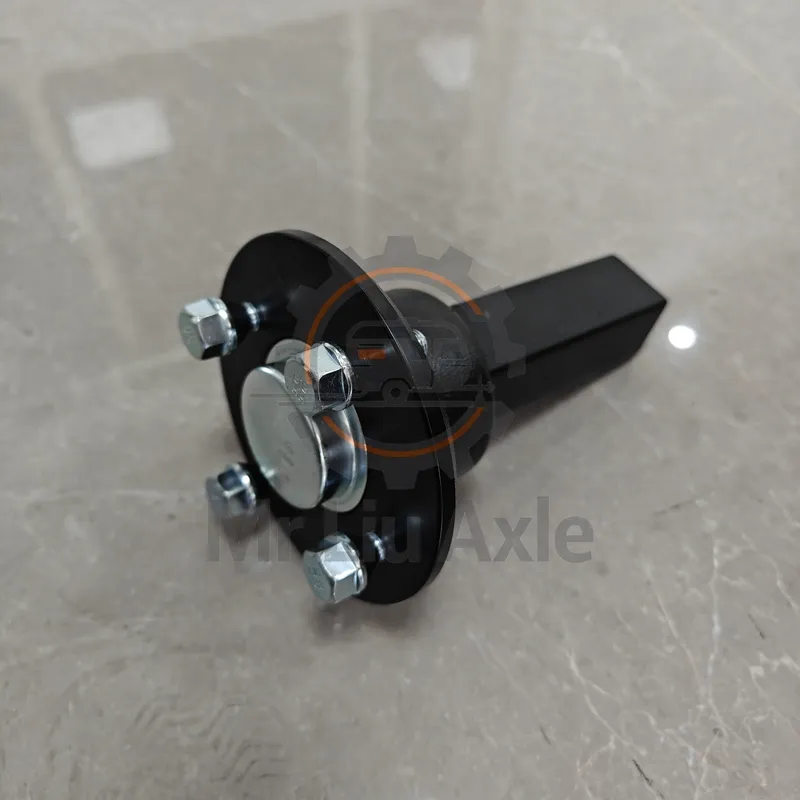
A stub axle is a short axle shaft — essentially just the spindle end — that mounts independently to the trailer frame or suspension arm. The wheel hub with its bearings rides directly on the machined spindle surface, and the axle is secured to the chassis via bolts, welding, or integrated into a trailing-arm suspension system.
Stub Axle Key Features
- Compact and modular. Because each wheel has its own axle shaft, stub axles are shorter, lighter, and easier to handle than full beam axles.
- Independent mounting. Each side attaches separately to the frame or suspension arm. This allows more design flexibility, especially for custom frames and off-road suspensions.
- Integrated with independent suspension. Stub axles are the standard choice for independent trailing-arm suspensions, where each wheel moves independently over terrain.
- Higher ground clearance potential. With no solid axle tube running between wheels, the chassis can sit lower relative to the wheel centres, reducing the overall height of the trailer.
- Easier to replace individually. If one spindle wears or is damaged, you only replace that side — not an entire axle beam.
- Load range: Typically from 500 lbs (227 kg) up to 3,500 lbs (1,588 kg) per pair, depending on spindle diameter and material.
2. What Is a Full Beam Axle?
A full axle (also called a straight beam axle or solid axle) is a single steel tube or beam that spans from one wheel to the other. The spindle ends are machined, welded, or forged onto each end of the beam, and the entire assembly is mounted to the trailer frame via leaf springs, torsion arms, or air suspension.
Full Axle Key Features
- One-piece construction. A solid beam connects both wheels. This simplicity means fewer mounting points and a very predictable load path.
- Higher load capacity. Full axles are available from 1,000 lbs (454 kg) all the way up to 10,000+ lbs (4,536+ kg), making them the go-to choice for heavy-duty commercial trailers.
- Leaf spring or torsion mounting. The beam axle is the standard platform for traditional leaf spring or torsion bar suspensions.
- Proven durability. With no complex linkages, full beam axles tolerate abuse well — corrugated roads, construction sites, farm use — and they’re straightforward to service.
- Easier alignment. Because both wheels are fixed to one rigid beam, toe and camber are inherently consistent. Camber is often pre-set into the beam during manufacturing.
- Cost-effective at higher ratings. For heavy loads, a single full axle is often cheaper than a pair of stub axles with independent suspension hardware.
Stub Axle vs Full Axle: Side-by-Side Comparison
| Feature | Stub Axle | Full Beam Axle |
|---|---|---|
| Construction | Short shaft per wheel, separate mounting | Single beam spanning both wheels |
| Typical load range | 500–3,500 lbs total | 1,000–10,000+ lbs |
| Suspension type | Independent trailing arm | Leaf spring, torsion, or air |
| Ground clearance | Excellent — no axle tube below frame | Limited by beam tube diameter |
| Off-road performance | Superior — wheels move independently | Good — beam handles abuse well |
| Installation complexity | Moderate — requires precise arm alignment | Simpler — bolt-on U-bolts or torsion brackets |
| Replacement cost | Replace one side at a time | Replace entire beam assembly |
| Maintenance | More pivot points to grease and inspect | Fewer moving parts, simpler schedule |
3. Light Trailer Use: When a Stub Axle Makes Sense
For trailers under 3,500 lbs GTM, a stub axle setup often delivers the best balance of performance and practicality — especially if your trailer ventures off sealed roads.
Best Applications for Stub Axles
- Off-road camper trailers (1,500–3,500 lbs). Independent suspension with stub axles keeps all four tyres in contact with uneven ground, improving traction and reducing chassis stress. If you’re building or upgrading an off-road camper, see our off-road independent suspension buyer’s guide for a deeper dive into trailing-arm configurations.
- Small boat trailers under 750 kg. Stub axles are lighter, so they add less un-sprung weight — important when launching and retrieving at boat ramps.
- Motorcycle and quad trailers. Compact dimensions and easy handling make stub axles ideal for lightweight personal-use trailers.
- Custom teardrop campers and overland builds. The design flexibility of stub axles lets builders optimise ground clearance and frame layout without being constrained by a full axle beam.
4. Heavy-Duty Use: When a Full Axle Is the Right Call
Once you cross into the 3,500–7,000 lbs range, full beam axles become the industry standard. Their simplicity, load capacity, and cost efficiency at higher ratings make them the practical choice for commercial and heavy recreational trailers.
Best Applications for Full Axles
- Heavy box trailers and plant trailers (3,500–7,000 lbs). Full axles handle construction equipment, generators, and tool loads without drama. The solid beam construction tolerates the knocks and vibration of work sites.
- Tandem-axle caravans and RVs. When you need matched axle pairs rated for 3,500+ lbs each, full beam axles are the proven solution. Learn more about proper axle matching in our guide on why tandem axle trailers need matched axle pairs.
- Car carriers and flatbeds. The higher load ratings and inherent camber of full axles help distribute weight evenly across the trailer deck.
- Horse floats and livestock trailers. Safety and stability are paramount. Full axles provide predictable handling and straightforward brake integration.
- Anything with a GTM over 3,500 lbs. At this point, stub axle options become limited, and full axles offer better value, availability, and proven track records.
5. Installation: What to Know Before You Mount
Whether you’re installing stub axles or a full beam axle, getting the fundamentals right is critical. A poorly installed axle won’t just ride badly — it can cause tyre wear, bearing failure, and dangerous handling.
Installing Stub Axles
- Arm alignment is everything. Each trailing arm or mounting bracket must be positioned at the exact same angle and distance from the frame centreline. Even a few millimetres of difference will cause toe misalignment and scrub tyres.
- Check camber and toe. With stub axles, camber is built into the arm geometry. Verify that both spindles are parallel when the trailer is at ride height. Use a laser alignment tool or toe plates for accuracy.
- Grease pivot bushings at installation. If your suspension arms use polyurethane or rubber bushings, grease them before the first drive. Dry bushings wear fast and squeak.
- Torque check after break-in. Just like full axles, re-torque all fasteners after the first 500 km of use. Suspension arms settle, and bolts can loosen.
Installing Full Beam Axles
- Measure hanger placement precisely. As Trailer Sauce’s axle building guide explains, an axle that is out of square by even a few millimetres will cause the trailer to “crab” sideways, leading to accelerated tyre wear and unsafe handling. Always measure diagonally from fixed points on the chassis to ensure perfect squareness before final welding.
- Set spring perch angle correctly. For leaf spring setups, the perch (where the spring sits) must be welded at the correct camber angle — typically 3–5 degrees upward at rest. This ensures the tyres sit flat on the road under load.
- U-bolt tension is non-negotiable. Use high-tensile U-bolts and torque them to the manufacturer’s specification. Undertightened U-bolts let the axle shift; overtightened ones can deform the spring.
- Break-in re-torque at 500 km. New springs settle during initial use. Re-torque all U-bolts and hanger fasteners after the first 500 km to prevent a loose axle.
Quick Reference: Which Axle for Your Build?
| Trailer Type | Estimated GTM | Recommended Axle |
|---|---|---|
| Small utility / garden trailer | Under 750 kg (1,650 lbs) | Stub axle or light full axle |
| Off-road camper / teardrop | 750–1,600 kg (1,650–3,500 lbs) | Stub axle (independent suspension) |
| Medium box trailer / boat trailer | 1,000–2,000 kg (2,200–4,400 lbs) | Full beam axle |
| Tandem caravan / car carrier | 2,000–3,200 kg (4,400–7,000 lbs) | Full beam axle (matched pair) |
| Heavy plant / livestock trailer | Over 3,200 kg (7,000+ lbs) | Heavy-duty full beam axle (7K+ rating) |
Custom Stub Axles and Full Axles from MrLiuAxle
Your Specs. Your Axles. Built to Order.
At MrLiuAxle, we manufacture both stub axles and full beam axles rated up to 7,000 lbs (3,175 kg) per axle — with full customisation available.
What we offer:
✅ Stub axles for independent trailing-arm suspensions — any spindle profile, any rating up to 3,500 lbs per pair
✅ Full beam axles — straight, overlay, or dropped profiles — from 1,000 lbs to 7,000 lbs
✅ In-house tooling and moulds — we can open new dies for your specific spindle or hub requirements
✅ Knott-compatible brake integrations — 200×50, 250×40, and custom sizes
✅ Hot-dip galvanising (70–90 μm), E-coat, or powder coat finishes
✅ Full chassis assembly service — axles, suspension, brakes, and hubs mounted to your frame spec
Whether you’re building a single off-road camper or scaling a fleet of box trailers, we can produce axles to your exact drawings. Send us your specs and we’ll quote within 24 hours.
Final Takeaways
- Stub axles are compact, modular, and ideal for light to medium trailers (under 3,500 lbs) where independent suspension and ground clearance matter.
- Full beam axles are the workhorse choice for heavy-duty trailers — higher load ratings, simpler installation, and proven durability from 3,500 lbs up to 10,000+ lbs.
- Installation precision matters for both types: alignment, squareness, and proper torque are non-negotiable.
- Re-torque all fasteners after the first 500 km break-in period, regardless of axle type.
- MrLiuAxle manufactures both stub axles and full beam axles up to 7,000 lbs, with in-house tooling for custom spindle profiles and dimensions.
Still unsure which axle fits your build? Contact the MrLiuAxle team with your trailer specs — GTM, frame width, suspension type, and intended use — and we’ll recommend the right axle configuration for your project.