

Blog
How to Inspect a Trailer Axle Before Buying?

How to Inspect a Trailer Axle Before Buying?
In this guide, I’ll walk you through five critical checkpoints to evaluate axle quality. These are the same inspection points experienced buyers use to separate reliable axles from substandard ones.
1. Inspect the Weld Seams
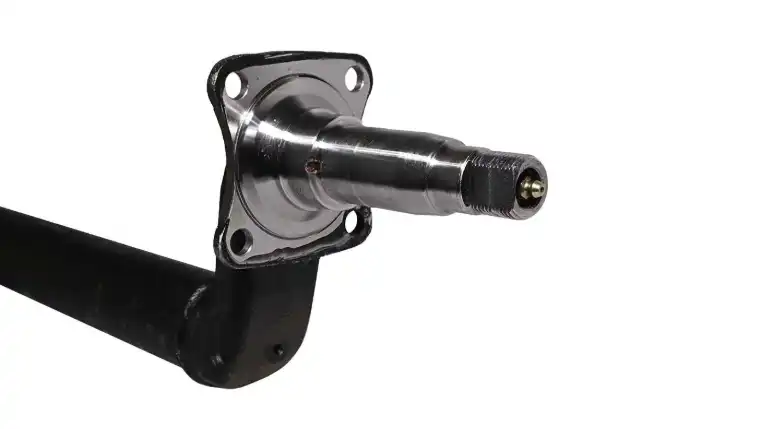
The weld seam is the backbone of axle integrity. Start by visually inspecting all weld joints — particularly where the spindle meets the axle tube and where mounting brackets are attached. Here’s what to look for:
- Consistent weld bead width — no gaps, cracks, or irregularities along the joint
- No porosity — tiny pinholes in the weld surface indicate poor shielding gas coverage or contamination
- Complete penetration — the weld should wrap fully around the circumference without skips
- Clean slag removal — leftover slag can hide cracks and weaken the joint
A quality weld should look uniform and slightly raised. If you’re inspecting spring axles, pay extra attention to the spring seat welds — these carry the full trailer load and experience constant vibration on the road. On torsion axles, the arm-to-tube weld handles the full torsional stress from the rubber suspension inside, making it the highest-stress point on the assembly.
2. Spin-Test the Bearings
The bearing spin test takes 30 seconds but reveals critical information about the hub assembly quality. Mount the hub onto the spindle and rotate it by hand. Evaluate it against these three criteria:
- Smoothness: The hub should rotate silently with no grinding, clicking, or rough spots. Any noise indicates poor bearing quality or incorrect preload
- Lateral play: There should be no wobble or side-to-side movement. Excessive play means the bearing fit is too loose
- Resistance: Rotation should feel consistent — not too tight (over-preload causes overheating) and not too loose (under-preload causes uneven wear)
Bearings are one component where cutting costs backfires quickly. A low-quality bearing may spin fine when new but degrade rapidly under road load and temperature cycles. At Mr Liu Axle, we use branded bearings from listed companies such as Sling and Wanxiang Group (万象集团) — the same suppliers trusted by major automotive OEMs. This ensures every hub assembly we ship delivers consistent, long-term performance rather than the short lifespan typical of unmarked generics.
3. Check the Brake Drum Surface
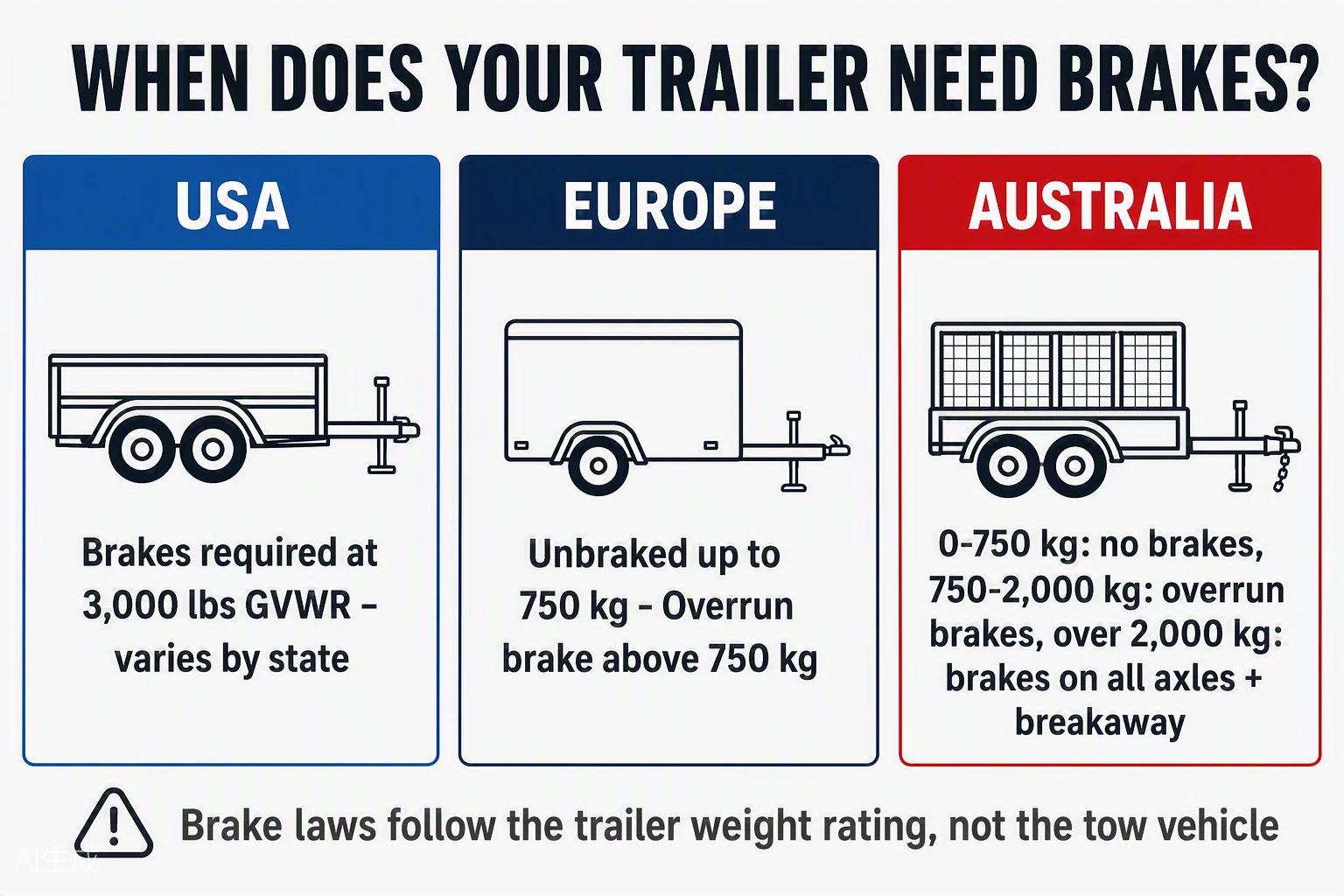
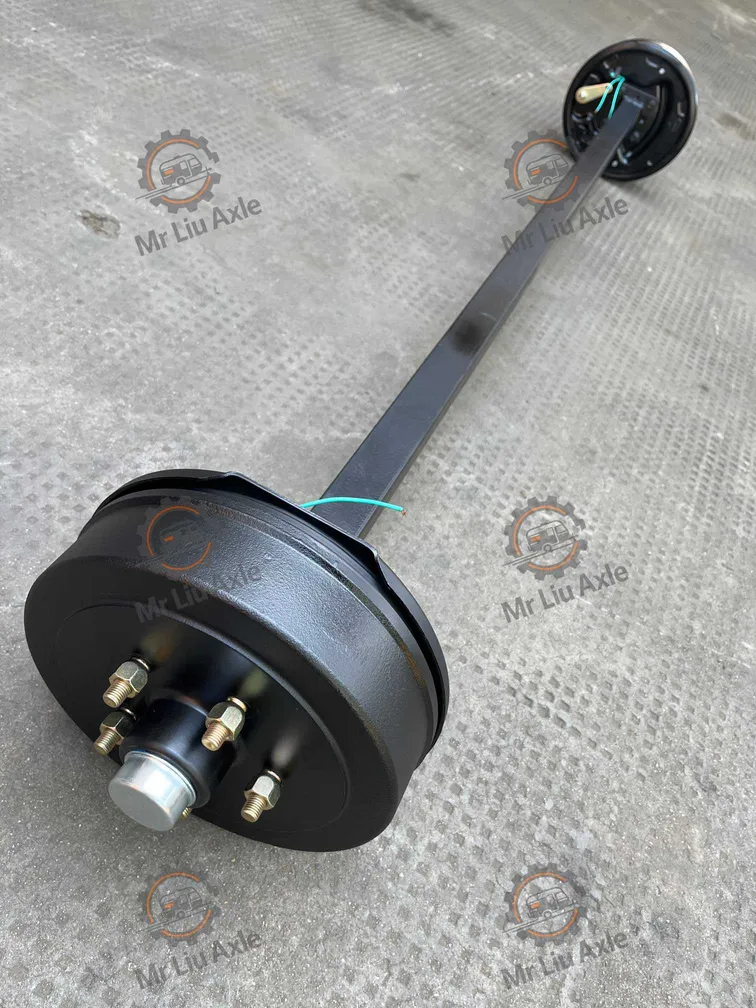
For braked axles (required on most trailers over 1,500 lbs), the brake drum surface demands careful inspection. Here’s your checklist:
- Surface finish: The machined inner surface should be smooth with even machining marks — no scoring, grooves, discoloration, or rust spots
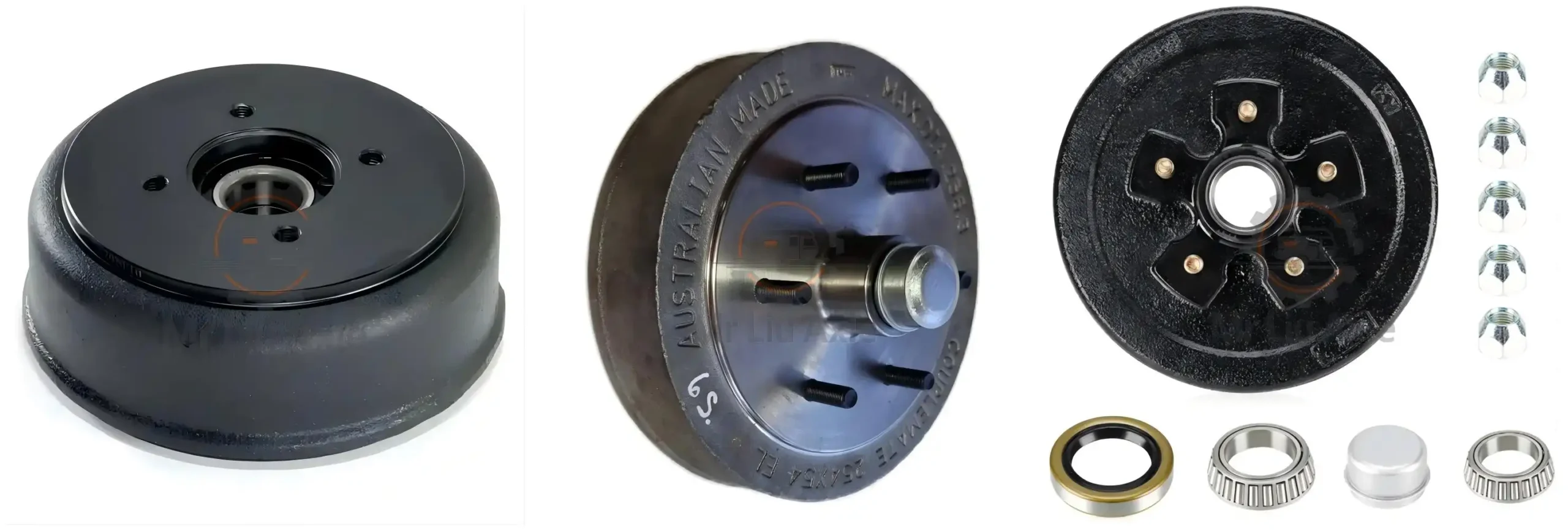
- Dimensional accuracy: Measure the drum inner diameter with a caliper and compare against specifications. Common sizes include 200×50 mm and 250×40 mm for European-style drums, and 10-inch or 12-inch for Australian and US markets
- Bolt pattern match: Verify the hub bolt pattern (4-bolt, 5-bolt, 6-bolt, or 8-bolt) matches your wheel configuration exactly. A mismatch here means the drum won’t mount properly
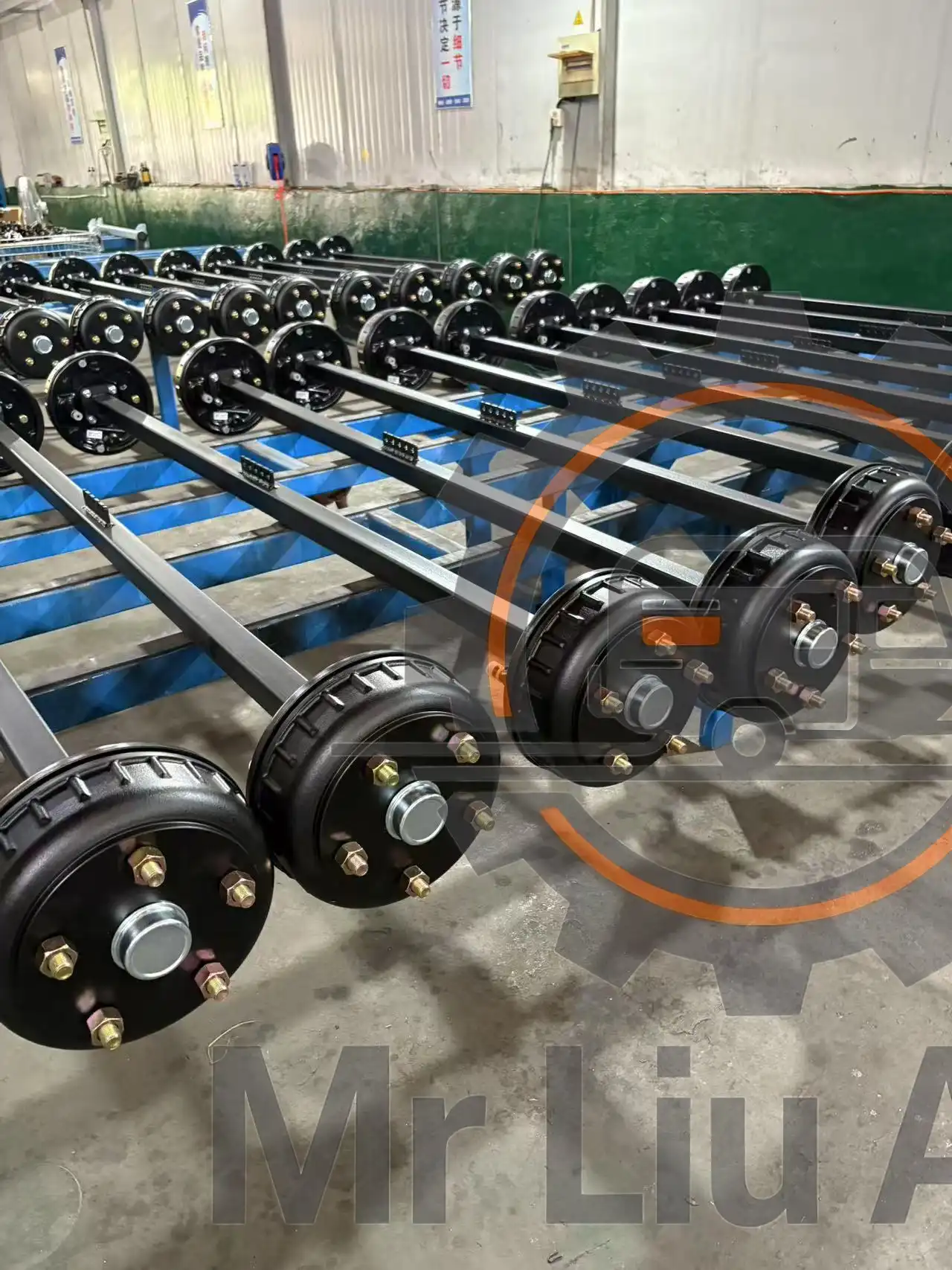
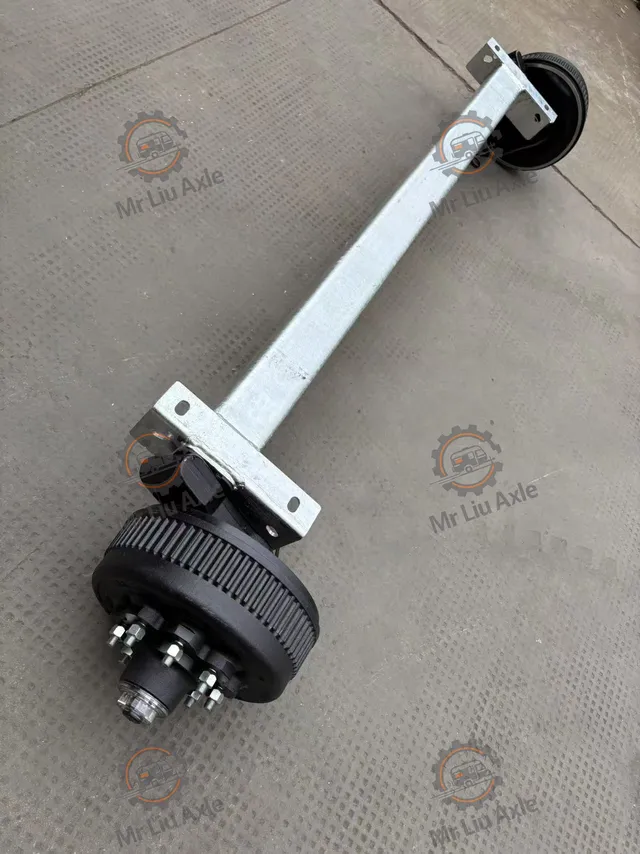
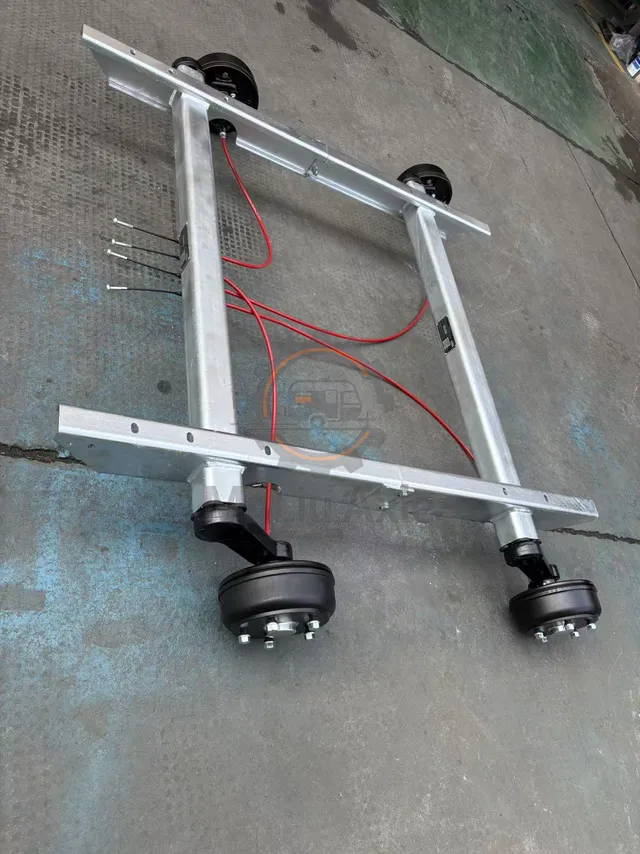
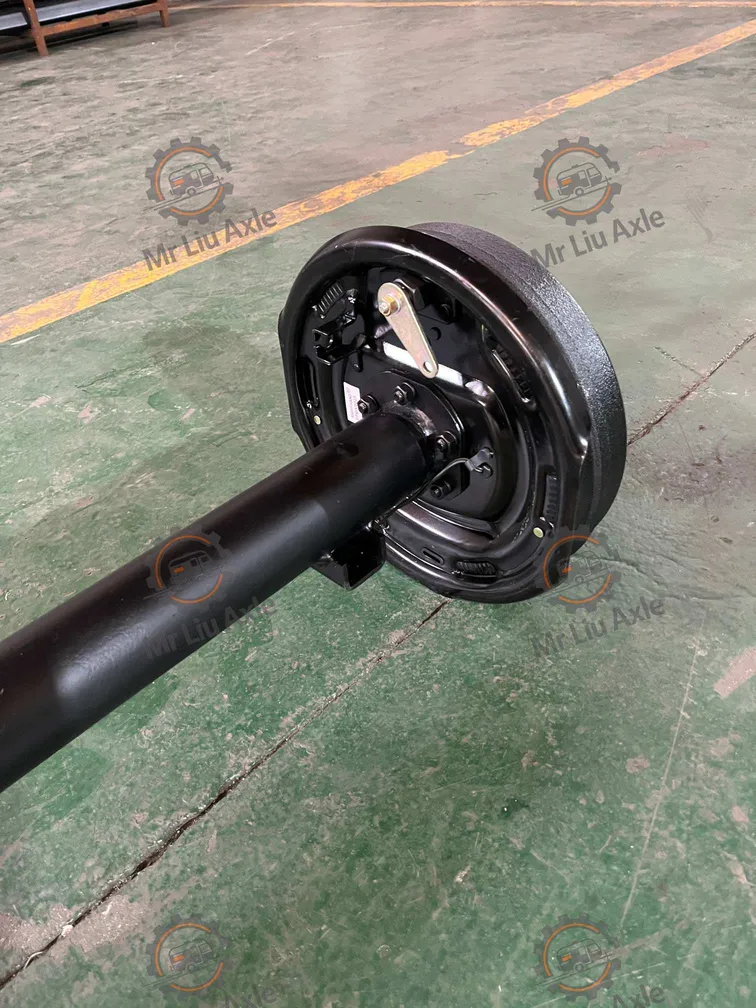
For heavy-duty builds requiring reliable braking performance, our 8,000 lb torsion axle with electric brake features precision-machined drums built to consistent tolerances. Even a slight deviation in drum diameter can cause uneven brake shoe contact and reduced stopping power.
4. Verify Galvanizing or Coating Quality
Corrosion protection directly determines how long an axle lasts — especially for boat trailers, coastal applications, or regions with heavy road salt use. If the axle is advertised as hot-dip galvanized, verify the following:
- Visual appearance: Hot-dip galvanizing should display a characteristic crystalline “spangle” pattern on the surface. Uniform dull-gray coverage indicates proper dipping
- Coating thickness: Use a magnetic coating thickness gauge to measure. Quality hot-dip galvanizing on axle tubes typically runs 60–100 microns (roughly 2–4 mils). Anything below 50 microns won’t provide long-term protection
- Coverage completeness: Check inside the axle tube ends, around welded joints, and on the spindle surfaces. These are the areas where budget manufacturers often leave bare metal exposed
Powder-coated or painted axles are acceptable for dry-climate utility trailers, but they offer significantly shorter corrosion protection compared to galvanizing. For any marine or all-weather application, insist on genuine hot-dip galvanizing — not spray-on zinc paint, which wears off within a season.
5. Confirm Load Markings and Traceability
Every axle must have clear, permanent load capacity markings. These are not optional — they are essential for safe matching to trailer weight. Verify the following information is present and legible:
- Load capacity rating — stamped or etched directly onto the axle tube (e.g., “3500 LB”, “7000 LB”). This must meet or exceed your trailer’s calculated gross vehicle weight
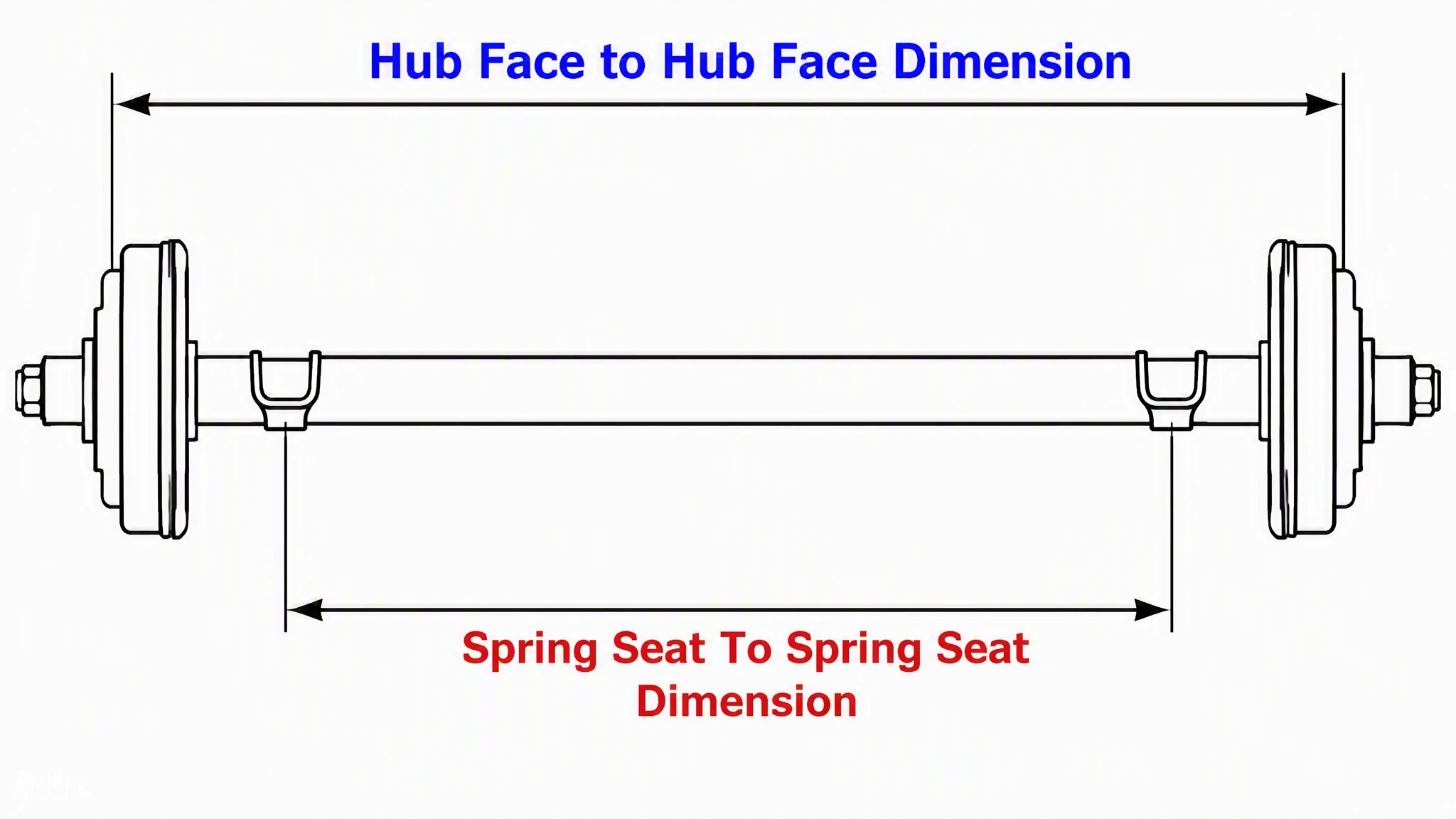
- Track width or hub-face measurement — ensures the axle matches your trailer frame width
- Production batch or date code — critical for traceability if a quality issue arises later
At Mr Liu Axle, we go a step further to support our B2B customers. Upon request, we install a riveted metal nameplate on every axle in the batch. Each plate is stamped with the product model number, production date, and batch number, giving you a reliable way to track every axle from delivery through its full service life. This makes warranty claims, after-sales service, and inventory management significantly easier — especially when you’re handling hundreds of axles across multiple production runs.
Our 3,500–7,000 lbs spring axle range ships with clear load markings on every tube and optional metal nameplates, making it easy to match the right axle to your build sheet and keep full traceability. If an axle arrives with no markings, no specifications, and no way to verify its rated capacity, that is a serious red flag — return it.
Quick Inspection Checklist Summary
Take this checklist with you on your next axle purchase or factory visit:
| Inspection Point | What to Check | Pass/Fail Criteria |
|---|---|---|
| Weld Seams | Spindle joints, spring seats, bracket welds | Uniform bead, no cracks or porosity |
| Bearings | Hub spin test by hand | Smooth, silent, no lateral play |
| Brake Drum | Surface finish, diameter, bolt pattern | Clean surface, spec-matched dimensions |
| Galvanizing | Visual spangle, thickness gauge | 60+ microns, full coverage |
| Load Markings | Capacity stamp on axle tube | Legible, matches spec sheet |
Additional Reading
For more guidance on axle inspection and maintenance after installation, I recommend reading How to Inspect Trailer Axles for Early Warning Signs of Failure from The Trailer Parts Outlet. It covers post-installation monitoring — a useful complement to the pre-purchase checks outlined above.
Browse Our Axle Range
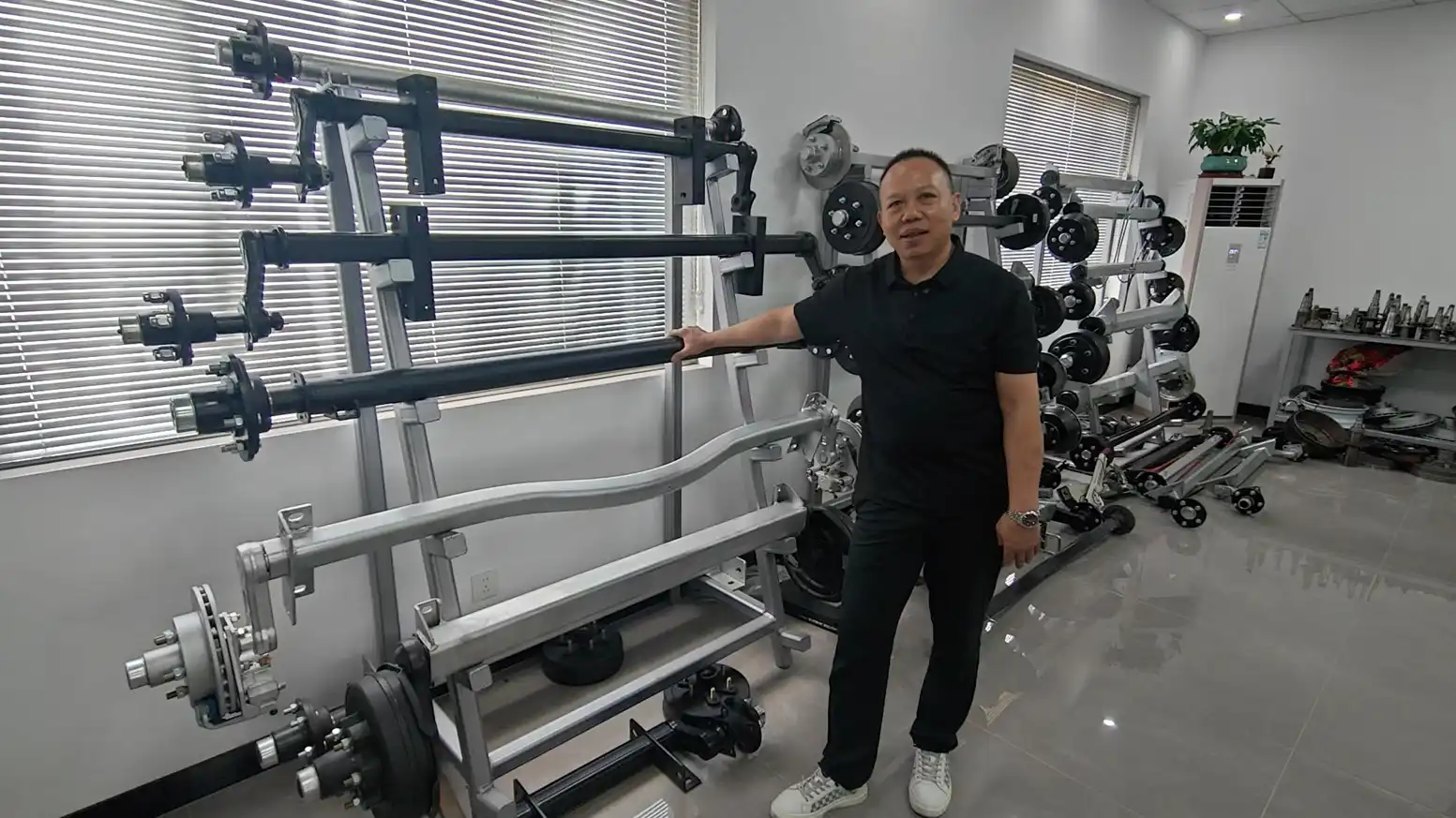
At Mr Liu Axle, we build torsion axles and spring axles for trailer manufacturers, distributors, and OEM customers across the US, European, and Australian markets. Every axle is inspected at multiple production stages before shipment. Contact us for a product catalog and wholesale pricing.