


Blog
Trailer Axle Torque Cheat Sheet: Every Nut and Bolt, and When to Re-Torque

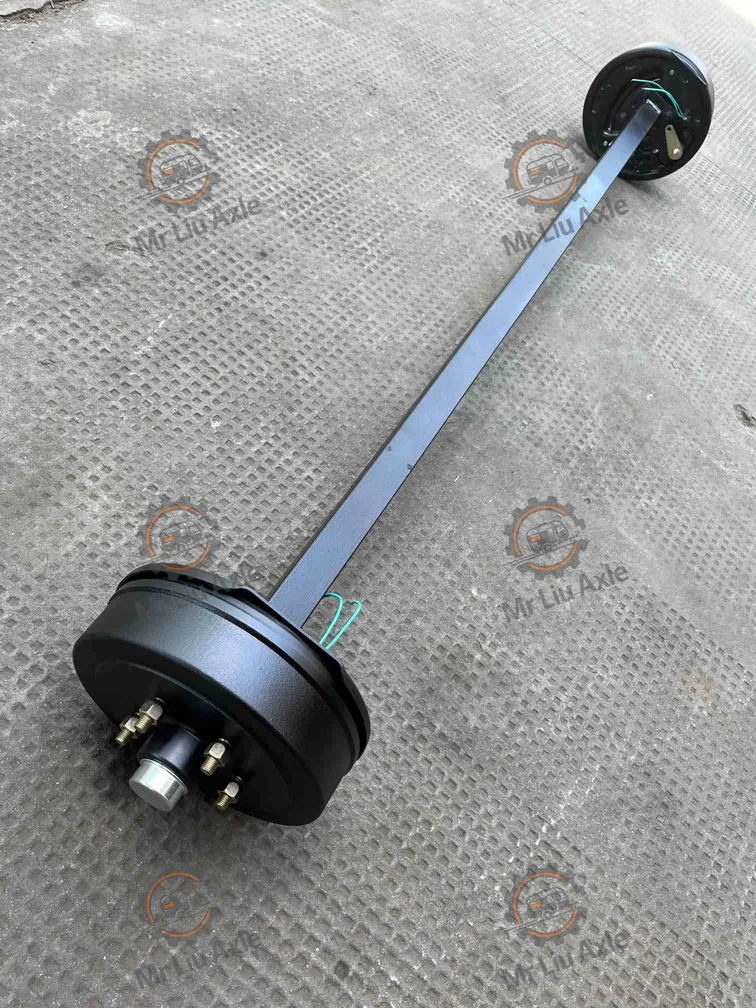
Trailer Axle Torque Cheat Sheet: Every Nut and Bolt, and When to Re-Torque
Every fastener on a trailer axle has a designed clamping force, and torque is how you set it. Torque too low lets a fastener work loose under vibration. Torque too high stretches or cracks the bolt, and on an axle it can crush the tube or deform the hub flange. The numbers below are a working reference — the values for your axle come from the axle and hub manufacturer, and their spec always wins over any table.
Why torque matters on a trailer axle
An axle is a matched set: tube, spindles, hubs, springs and brakes all rely on the fasteners holding them in a defined position. Get a fastener right and it carries load evenly for thousands of miles. Get it wrong and you get a wobble that grows, a bearing that runs hot, or a wheel that works loose. You do not need to be an engineer to set this — you need a torque wrench and the right value.
Lug nut torque by stud size
Lug nuts hold the wheel to the hub, and the torque is set by the stud size and grade, not by the wheel size. Use a calibrated torque wrench and tighten in a star (crisscross) pattern. Do not use an impact gun for the final pass — it can overshoot by a wide margin.
The ranges below are a typical reference for common light-trailer studs. Confirm the value for your specific hub before you rely on it.
| Stud size | Typical reference (imperial) | Typical reference (metric) |
|---|---|---|
| 1/2″-20 | 75–85 ft-lb | 100–115 N·m |
| 9/16″-18 | 120–135 ft-lb | 160–180 N·m |
| 5/8″-18 | 150–170 ft-lb | 200–230 N·m |
| M12×1.5 | — | 85–95 N·m |
| M14×1.5 | — | 110–125 N·m |
Table 1. Indicative lug-nut torque ranges for a trailer axle. The manufacturer spec overrides any table.
One thing people miss: lubricated threads need a lower torque than dry threads. Most specs assume clean, dry threads. If a spec is given for lubricated threads, use that value and do not mix the two.
Spindle castle nut: set-and-back-off procedure
On a tapered-spindle hub, the castle nut sets the wheel-bearing preload. The set-and-back-off method is the standard way to set it without overloading the bearing:
- Tighten the nut to seat the bearing while rotating the hub, using the manufacturer’s seating torque.
- Back the nut off until it is free of load.
- Re-tighten to the manufacturer’s preload setting, or finger-tight plus the specified fraction of a turn.
- Align a castle slot with the cotter-pin hole and fit the pin. If it will not align, use the next slot — do not back the nut off more than the allowed fraction to force alignment.
Wheel-bearing preload is not a torque you can guess. Over-tightening burns the bearing. Under-tightening lets the wheel wobble and damages the spindle. Use the hub manufacturer’s procedure for your axle.
U-bolt torque
U-bolts clamp the axle to the leaf-spring stack. The correct torque is the balance between holding the axle in place and not crushing the axle tube. U-bolts settle as the spring stack compresses, so they must be re-torqued after the first loaded run.
- Torque U-bolts in a crisscross sequence so the axle does not tilt in the spring seats.
- Tighten to the manufacturer’s spec for the U-bolt diameter and axle tube.
- Re-torque after the first loaded trip, then at the interval in the maintenance schedule.
Over-tightened U-bolts dent or crush the axle tube. Under-tightened U-bolts let the axle rotate in the spring seats, which pulls the brake geometry out of alignment.
Brake mounting flange bolts
The brake assembly bolts to the axle flange. These bolts hold the brake square to the drum and keep the actuation geometry correct. Torque them to spec, apply thread treatment only if the manufacturer specifies it, and re-check them with the rest of the running-gear fasteners.
- Use the torque value for the bolt grade and thread size.
- Apply threadlocker only when the manufacturer specifies it — some assemblies require it, others forbid it.
- Re-check flange-bolt torque in the first re-torque pass after 50 km, alongside the lug nuts and U-bolts.
Re-torque after the first 50 km
New or rebuilt running gear settles in the first tens of kilometres. Spring stacks compress, gaskets seat and fasteners relax. That is why the first re-torque matters more than any later one.
- After roughly 50 km (30 miles), re-torque the lug nuts, U-bolts and brake flange bolts in a crisscross pattern.
- Then re-check at the interval in the manufacturer’s maintenance schedule, and before long trips.
- Re-torque on a cold assembly, on level ground, with the trailer at the weight it was specified for.
A torque wrench is cheap insurance. The axle, hub and brake are designed as one matched set — keeping every fastener at its specified torque is what keeps the running gear aligned and the bearings alive.
We build leaf spring axles, and we see these questions daily
The torque questions above come straight from the workshop floor. Because we have been producing leaf spring axles for years, the U-bolt torque, spring-seat and brake-flange issues in this sheet are the ones we handle on a regular basis. If you are working on a leaf spring setup, the leaf spring axle range covers the running-gear configurations we build and ship.
FAQ
What torque do I use for my trailer axle lug nuts?
Use the torque specified by the hub or stud manufacturer for the stud size and grade. If you do not have the spec, the typical ranges in the table above are a starting reference — but confirm the value for your specific hub, and remember lubricated threads need a lower torque than dry threads.
What is the set-and-back-off method for a castle nut?
It is a procedure to set wheel-bearing preload on a tapered spindle: tighten the nut to seat the bearing while rotating the hub, back it off until free of load, re-tighten to the manufacturer’s preload setting, then align a castle slot with the cotter-pin hole and fit the pin. It avoids both an over-tight bearing and a loose wheel.
How often should I re-torque after installing new running gear?
Re-torque lug nuts, U-bolts and brake flange bolts after the first roughly 50 km (30 miles), because new components settle. After that, re-check at the interval in the manufacturer’s maintenance schedule and before long trips. Always re-torque on a cold assembly on level ground.
Can I use an impact gun to torque my lug nuts?
Not for the final pass. An impact gun can overshoot the value by a wide margin and does not give repeatable clamping force. Use a calibrated torque wrench and tighten in a star pattern so the wheel seats evenly.
Do I need to re-torque U-bolts after the first loaded trip?
Yes. U-bolts settle as the leaf-spring stack compresses, so they lose tension after the first loaded run. Re-torque them in a crisscross sequence to the manufacturer’s spec, or the axle can tilt or rotate in the spring seats.