


Blog
Trailer Axle Failures: The 5 Most Common Causes and How to Prevent Them

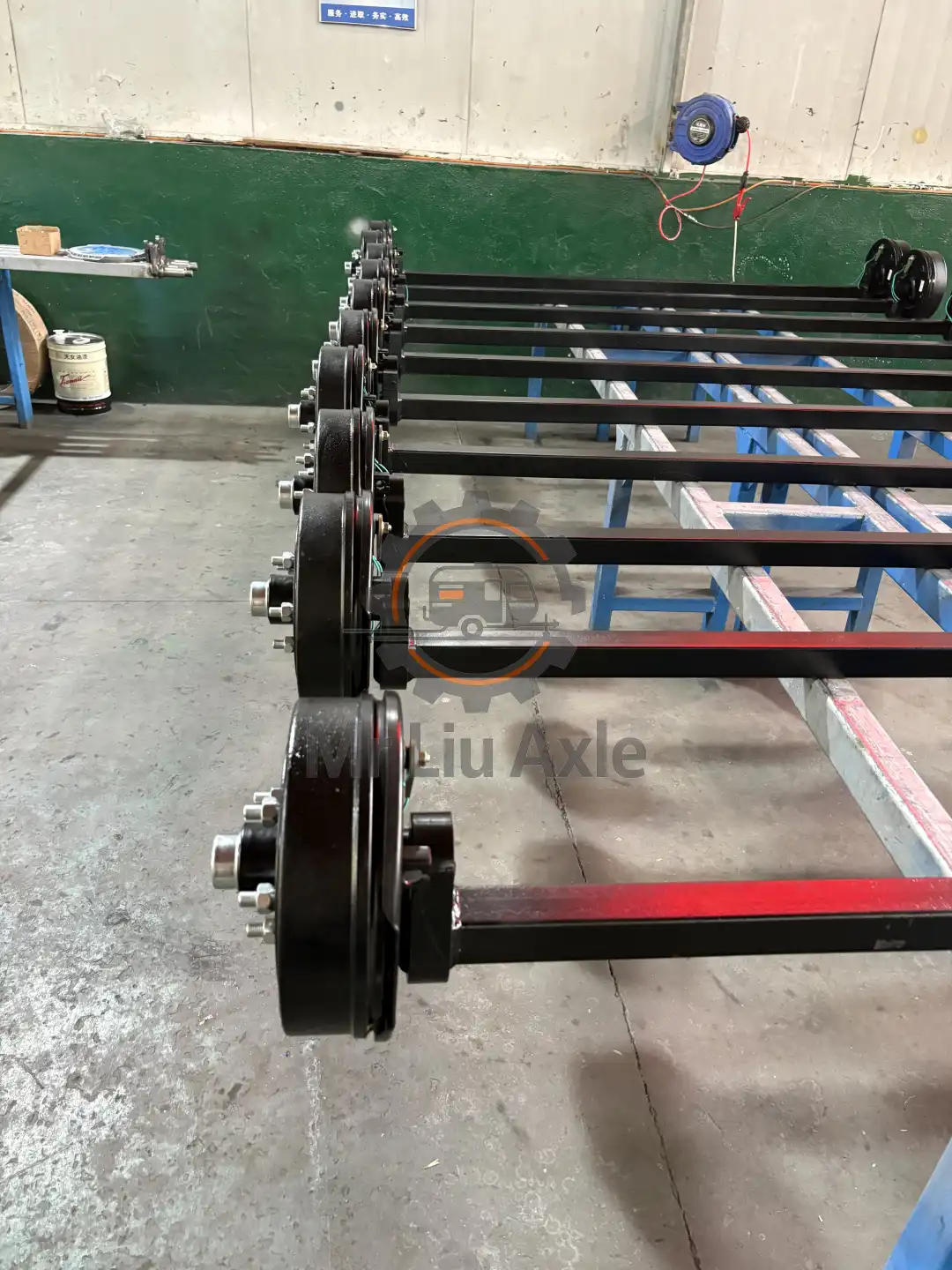
Trailer Axle Failures: The 5 Most Common Causes and How to Prevent Them
Most trailer axle failures are not random. They come from a small set of repeatable causes — overloaded spindles, starved bearings, cracked welds, corrosion under chipped coatings and misadjusted brakes — and each one has a straight prevention. This guide walks the five failures we see most often and what stops them.
Why trailer axles fail in predictable places
An axle is a beam with load at the wheels and springs, and bearings at each end. Every mile puts the same forces on the same spots: the spindle, the weld toes, the bearing seats and the brake. Failures are not a lottery — they follow the load and the maintenance. Get the basics right and most of the list below never shows up.
1. Spindle bending from overload
A bent spindle is almost always a load problem. When an axle sees more than its rated capacity, the spindle yields at the bearing seat and the hub starts running out of true. You usually feel it as a wobble that gets worse, or you see uneven tyre wear that does not move when you rotate the tyre.
Prevention: stay under the per-axle rating (GAWR) for the tyre and hub combination, and never load to “just a bit more.” If a spindle is already bent, straightening is not a repair — the hub cannot run true again reliably, so replace the axle.
2. Bearing seizure from poor grease
Wheel bearings fail in two ways: no grease, or the wrong grease. Wrong grade, a seal that lets water in, or a repack interval that got stretched too far — each one ends the same way, with a blue, seized bearing and a scored spindle.
Prevention: use the bearing grease the hub manufacturer specifies, repack on the schedule in the manual, and replace a seal the moment it looks compromised. A hot hub on a normal run is a warning, not a coincidence.
3. Fatigue cracks at weld toes
Cyclic load finds stress concentrations. On a trailer axle, that is usually where the spindle meets the tube, or at the toe of the spring-seat weld. A fatigue crack starts as a hairline, grows a little each loaded trip, and only becomes visible when it is well into its life.
Prevention: inspect the weld toes at service intervals — clean the area and look for hairline arcs along the weld edge. A crack caught early stays at the surface; one left alone grows through the tube.
4. Corrosion under chipped coatings
A chip in the galvanizing or paint lets salt and moisture get under the film. The corrosion spreads sideways underneath, then the coating peels back and you find a pitted tube underneath. By the time it looks bad on the outside, the section loss has already started.
Prevention: touch up chips early with the right coating, and wash road salt off on a regular basis. On an axle that has been running coastal or winter-salt routes for years, check the tube surface where water pools — under the spring seats and near the brake brackets.
5. Brake drag from misadjustment
Over-adjusted brakes drag. The shoes stay in contact, the drum overheats, and the heat bakes the grease out of the nearby bearing. A hub that runs hot is often an adjustment problem, not a bad bearing — check the brake before you blame the bearing.
Prevention: set drum clearance to the value in the manual and re-check it at the standing inspection. The brake should pull up firmly, not stay in contact when released.
Prevention at a glance
| Failure mode | Typical cause | Prevention |
|---|---|---|
| Spindle bending | Overload beyond the axle rating | Stay under GAWR; replace, never straighten |
| Bearing seizure | Wrong grease, water ingress, overdue repack | Specified grease, schedule, seal at first doubt |
| Fatigue cracks at weld toes | Cyclic load on stress concentrations | Inspect spindle-to-tube and spring-seat weld toes |
| Corrosion under chipped coatings | Salt and moisture under damaged film | Touch up chips early, wash salt off |
| Brake drag | Over-adjusted shoes holding contact | Set drum clearance to manual spec |
Table 1. The five common trailer axle failures with their typical cause and the prevention for each.
Where to learn more about trailer axles
An axle gives you its failures early if you know where to look. If you want more on trailer axle selection, maintenance and running gear, our blog page covers the topics we get asked about most — check it for the full library.
FAQ
How can I tell if a trailer axle spindle is bent?
The usual signs are a wobble that gets worse with speed, uneven tyre wear that stays on the same spot when you rotate the tyre, and a hub that runs hot on one side. If a spindle is bent, do not try to straighten it — the hub cannot run true again reliably, so the axle should be replaced.
What grease should I use for trailer axle bearings?
Use the grease the hub manufacturer specifies for the bearing type and service. The grade matters — mixing or substituting a general grease can change how the bearing runs. Repack on the schedule in the manual and replace a seal the moment it looks compromised.
How do I check for fatigue cracks on a trailer axle?
Clean the weld toes where the spindle meets the tube and at the spring seats, then look for hairline arcs along the weld edge at service intervals. A crack caught early stays at the surface; one left alone grows through the tube. If in doubt, have a shop with NDT access confirm it.
Why do trailer brakes drag, and how do I stop it?
Brakes drag when the shoes stay in contact after release — usually over-adjustment, sometimes a sticky linkage or a weak return spring. Set the drum clearance to the value in the manual and re-check it at the standing inspection. A hot hub is often an adjustment problem, not a bad bearing.
What is the most common cause of trailer axle failure?
Overload is the one that shows up most consistently, because it drives several failures at once — spindle bending, bearing stress and weld fatigue all get worse beyond the axle rating. Stay under the per-axle rating and the other causes stay easier to manage.