

Blog
Camber del eje: Por qué el eje de su remolque tiene una curvatura hacia arriba incorporada

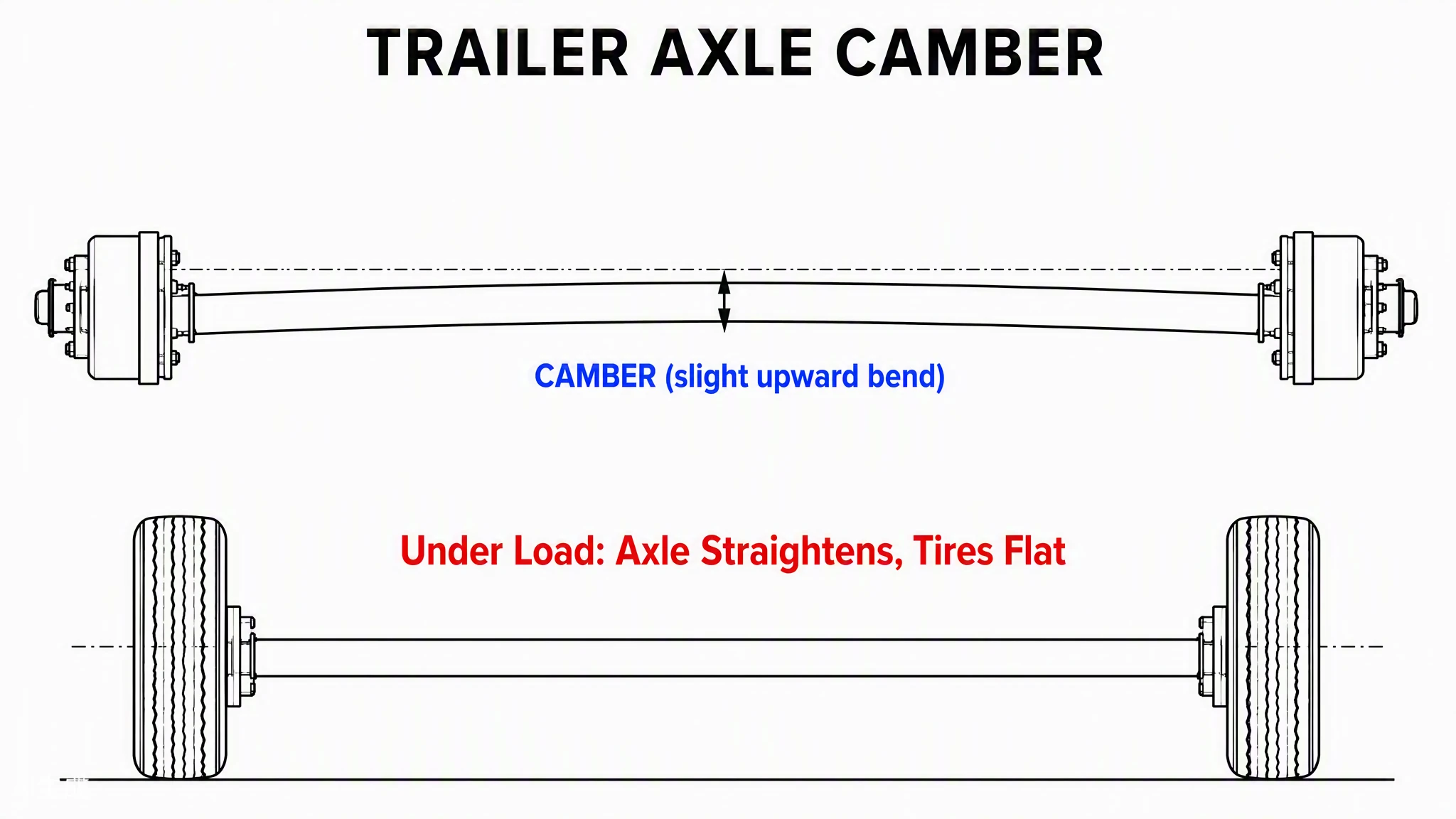
Camber del eje: Por qué el eje de su remolque tiene una curvatura hacia arriba incorporada
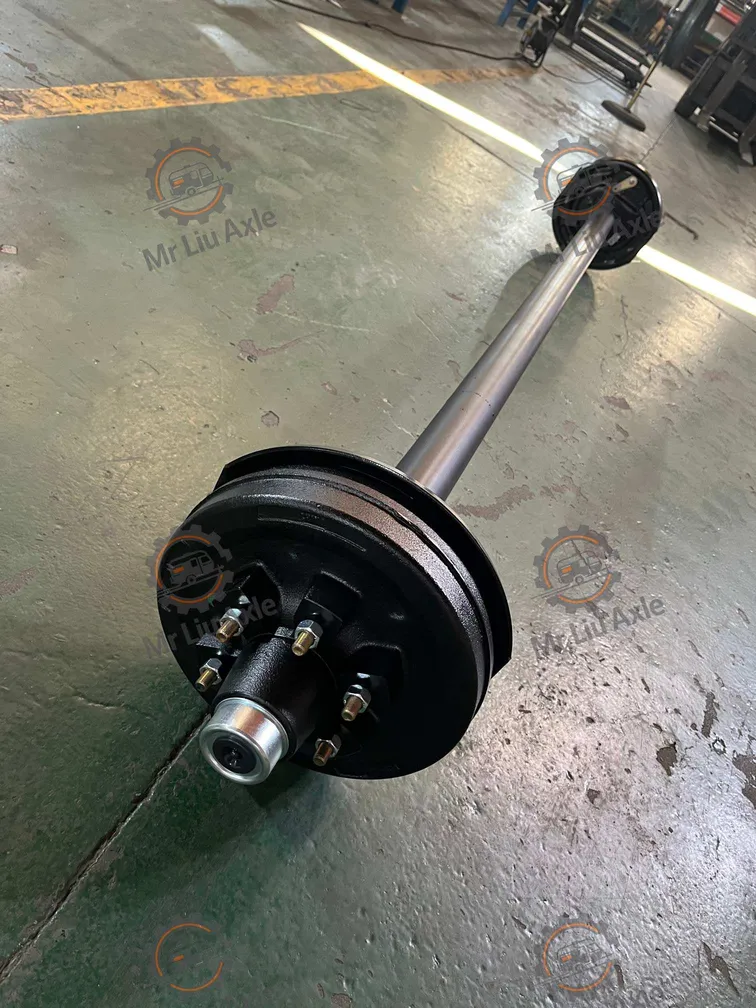
El año pasado, un importador primerizo me envió un correo electrónico preocupado con fotos adjuntas: «Half the axles in my container are bent. The tubes curve upward in the middle. Was this shipping damage?» I get some version of this question every few months, and I understand why — a brand-new axle with a visible arch looks wrong. But that bend has a name, and it is supposed to be there.
What is trailer axle camber?
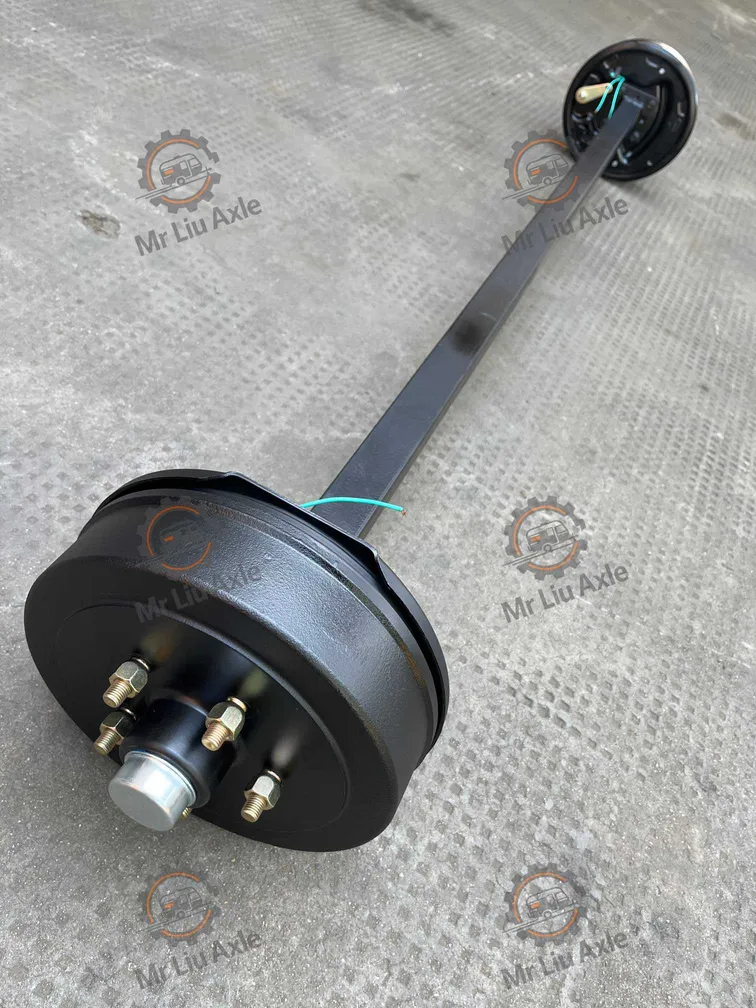
Camber is a slight, intentional upward bend built into the center of the axle tube during manufacturing. On an unloaded trailer, if you sight along the axle from one end, you will see the middle of the tube sitting a fraction of an inch higher than the two spindle ends. It is subtle — from across the yard, the axle still looks nearly straight.
The key word is intentional. This is not a tube that sagged or got dropped. It is a precisely formed arch, identical on every axle of the same model, and it exists because of what happens next: the load.
Why do trailer axles bend upward in the middle?
A trailer axle doesn’t work empty. It works with a boat, a cargo box, or a couple of tons of equipment sitting on it. Steel flexes under weight — that is physics, not a defect. When you load a trailer to its rated capacity, the axle tube deflects downward at the middle.
Camber is the pre-emptive answer to that deflection. The upward arch is sized so that under normal load, the tube flexes down into a nearly straight line. The spindles end up level, the wheels stand vertical, and the tires meet the road exactly the way they were designed to. Without camber, a loaded axle would bow downward instead — and that is where the tire trouble starts.
How does camber affect tire wear?
Tires are engineered to roll on their full tread width. When an axle bows the wrong way under load, the wheels tilt — the tops lean inward — and the tire’s contact patch shifts to the inner shoulder of the tread. The result is the classic trailer problem: inside-edge tire wear, overheating shoulders, and blowouts on tires that still have 80% of their tread elsewhere.
Correct camber keeps the contact patch flat and centered under load, which means:
- Even tread wear across the full width of the tire
- Lower rolling resistance and slightly better fuel economy for the tow vehicle
- Cooler-running tires, which directly reduces blowout risk on long highway hauls
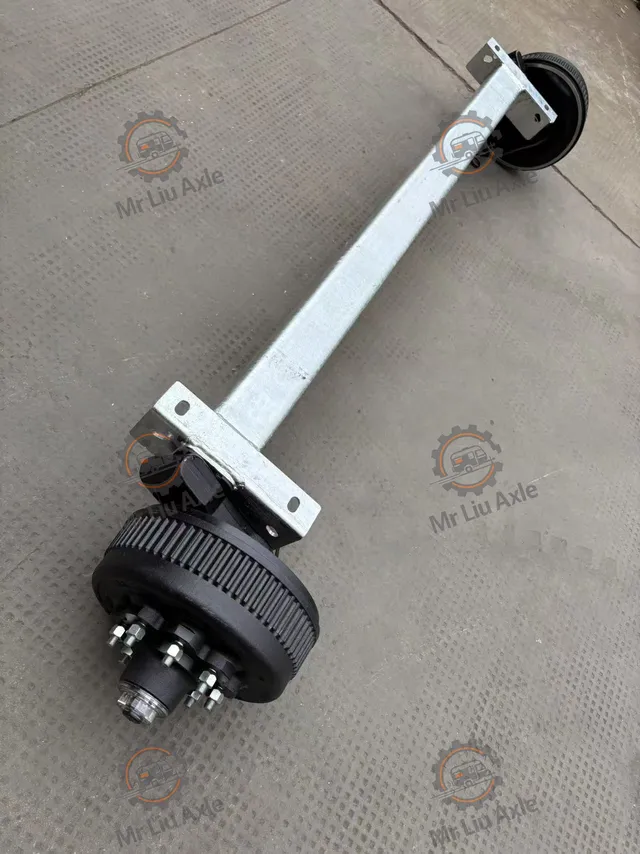
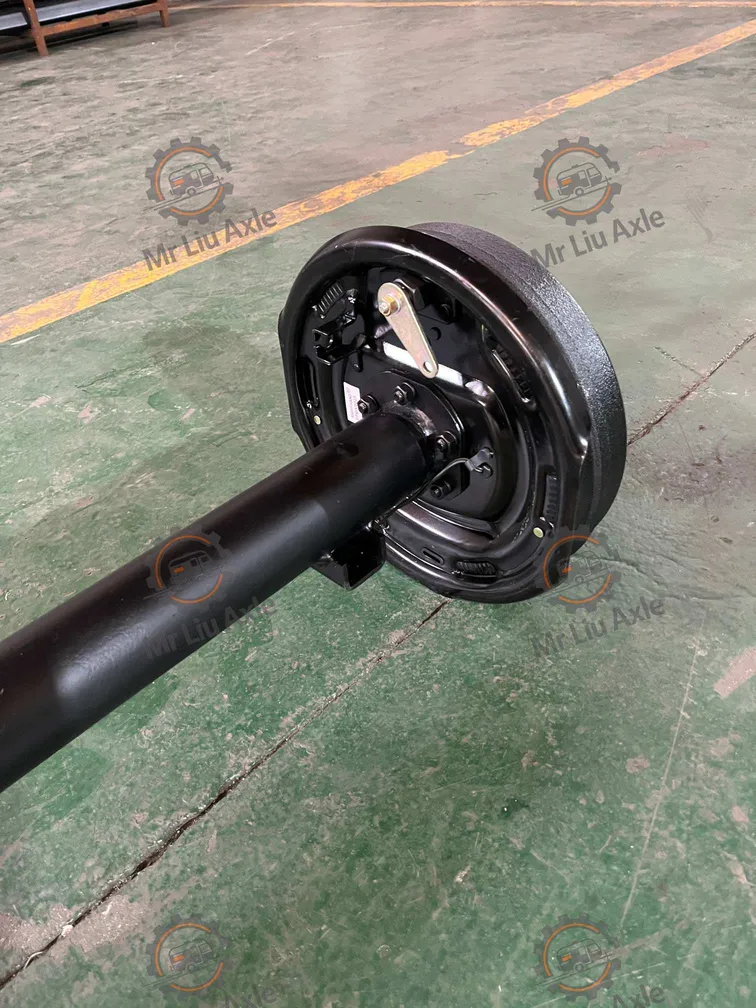
This is also why the capacity rating matters so much — an axle’s camber is engineered around its rated load. Nuestro 3,500–7,000 lbs trailer spring axles, for example, are cambered so the tube sits flat right in the middle of that working range, not at empty weight and not at overload.
How is camber built into the axle tube?
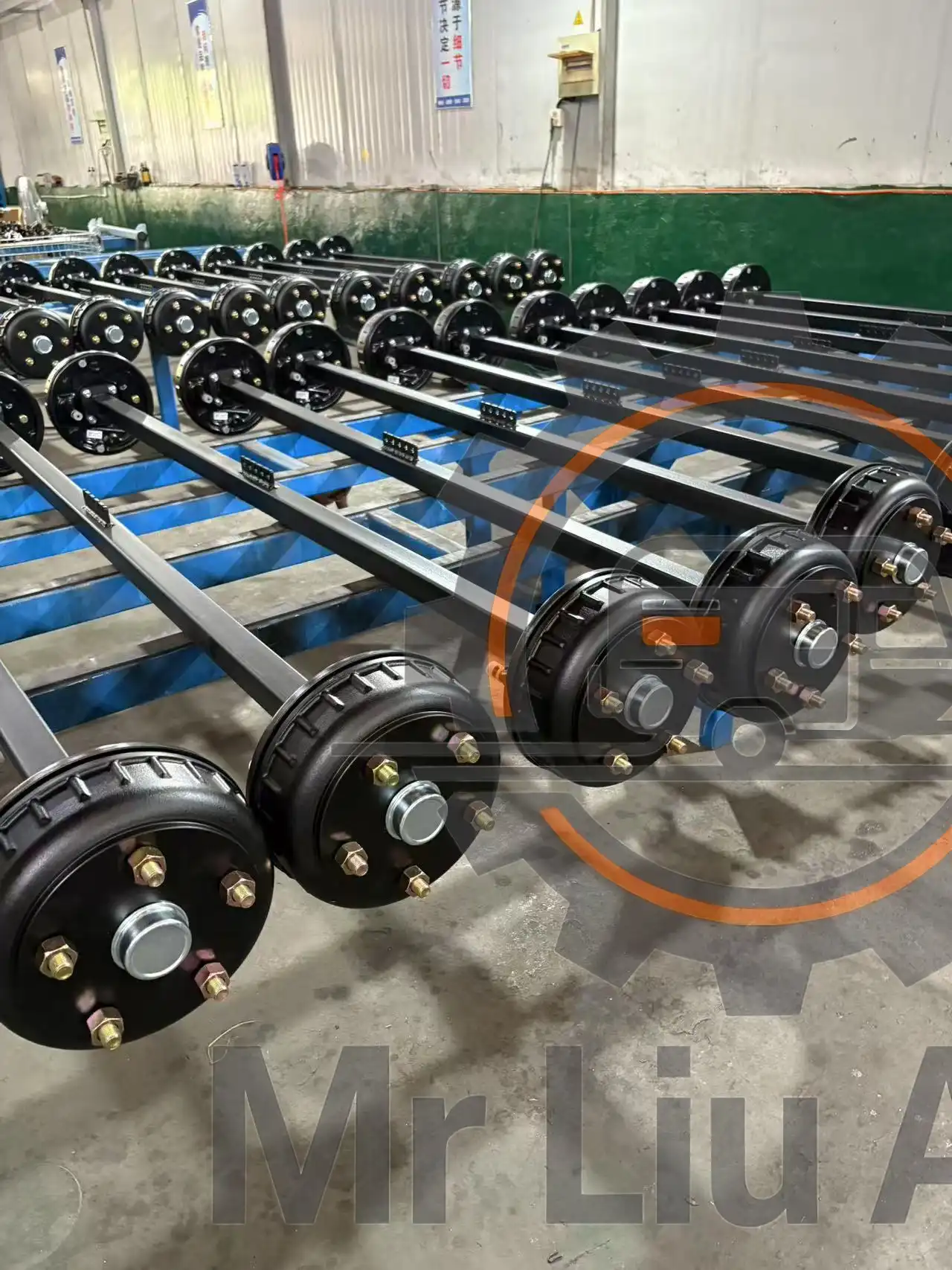
Camber isn’t welded, bolted, or machined on — it is formed into the tube itself. In production, the straight tube passes through a press that applies a controlled bend at the center, then the spindles are aligned and welded so both sides share the same geometry. After welding, every axle goes through an alignment check: we sight the tube, measure the arch height at center, and confirm both spindles sit at the same angle.
The tolerances are tight. Too little arch and the axle sags under load; too much and the tires ride on their outer shoulders when the trailer runs empty. Either error shows up as uneven tire wear — just on opposite edges.
How can I tell healthy camber from a damaged axle?
Three quick checks separate engineering from damage:
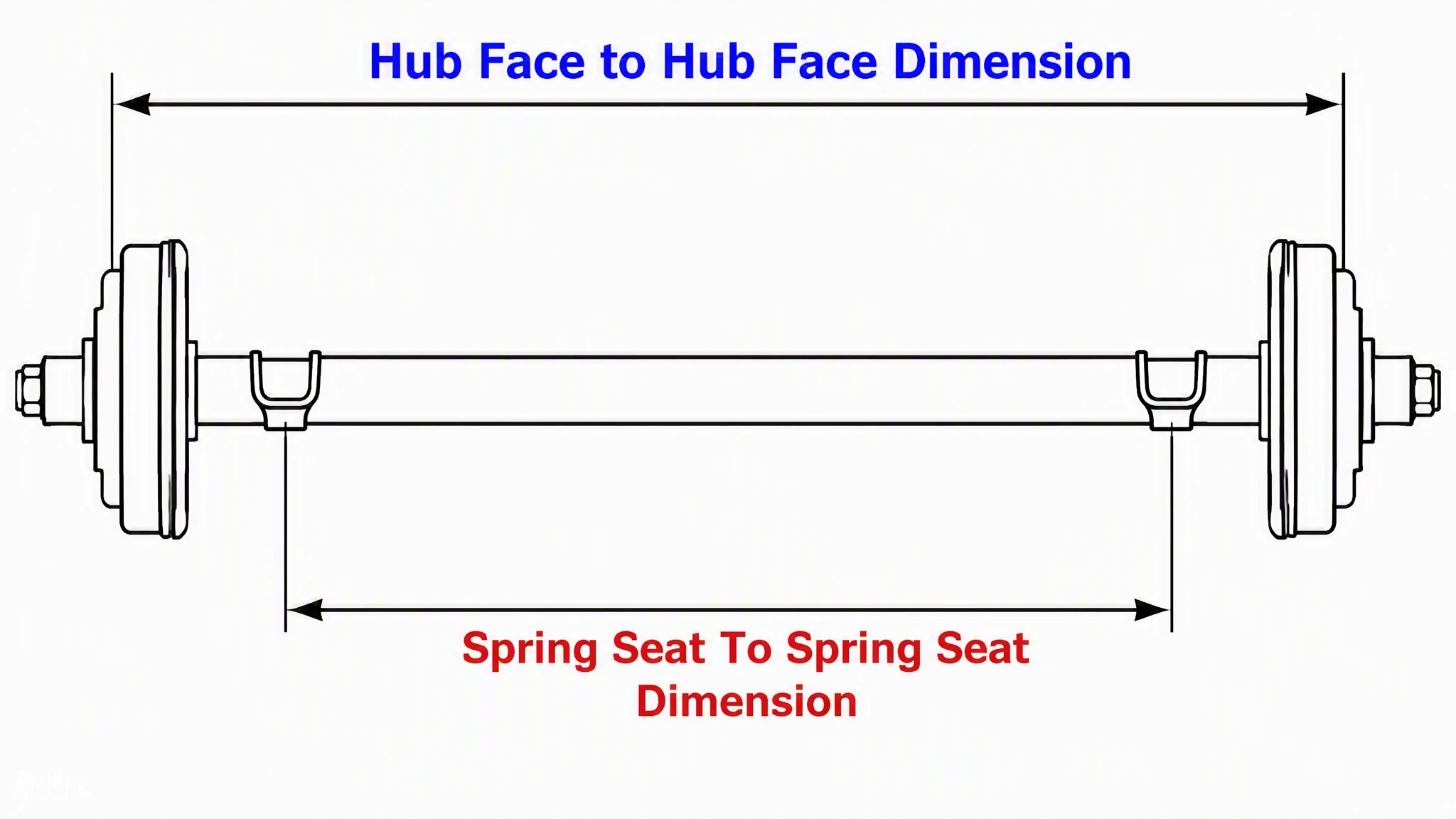
- Direction. Camber arches up, centered between the spring seats. A tube that bends down, or bends anywhere off-center, is damaged.
- Symmetry. Stand at one end and sight along the tube. Both halves should mirror each other. A kink, twist, or one-sided dip means the axle took a hit.
- Tire wear pattern. Even wear across the tread means camber is doing its job. One-edge wear on both tires — especially appearing suddenly — means the axle geometry has changed.
A genuinely bent axle can’t be «bent back» reliably — the steel has already yielded once. Replacement is the safe answer.
En nuestro taller
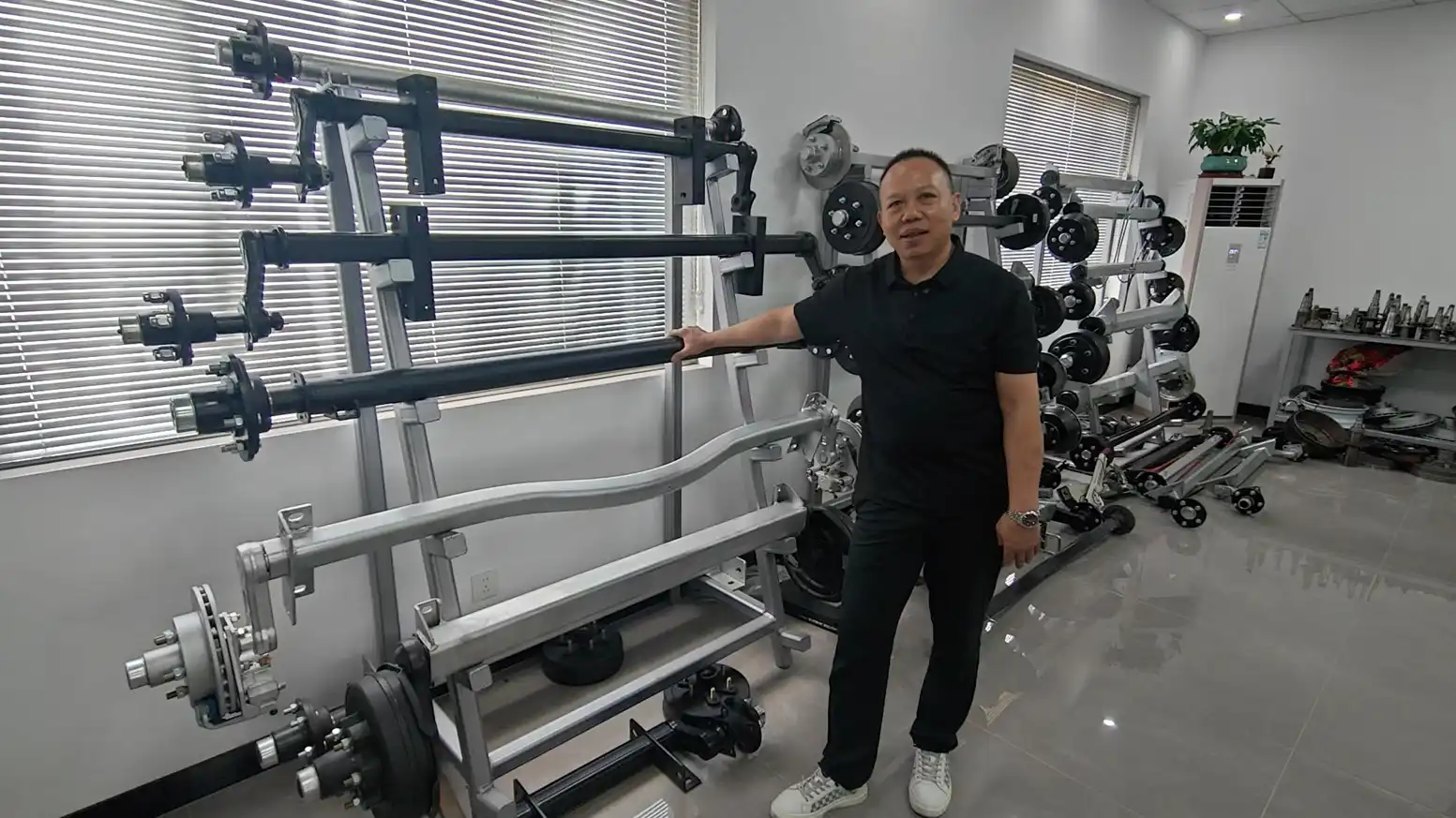
Después 20 años de construcción de ejes, I’ve learned that camber questions almost always come with a photo — a customer squinting at a tube, trying to decide if they’re looking at engineering or damage. So we’ve made it a habit: before any axle leaves our factory, it gets a final alignment check against the reference line, and we keep photos of the measurement on file for every batch.
I share a lot of this kind of production detail — alignment checks, tube forming, weld inspection — on my LinkedIn. If you’d like to see how these axles are actually built, paso a paso, follow my LinkedIn for more production details from the workshop floor.
Preguntas frecuentes
What is trailer axle camber?
Camber is a slight, intentional upward arch formed into the center of the axle tube at the factory. It exists so the tube flexes into a straight line under load, keeping the wheels vertical and tire wear even.
Is a trailer axle supposed to be bent?
Sí — a slight upward bend centered between the spring seats is normal and intentional. A tube that bends downward, off-center, or asymmetrically is damaged and should be replaced.
Can a bent trailer axle be straightened?
No, not reliably. Once the steel has yielded, bending it back does not restore its original strength or geometry. Replacement is the safe fix for a genuinely bent axle.
Does axle camber cause tire wear?
Correct camber prevents it. The arch keeps the tire contact patch flat under load; worn or overloaded axles that have lost their camber are what causes inside-edge tire wear and blowouts.
Speccing Axles for a Build or a Replacement?
Tell us your trailer’s load and tire size, and we will recommend the right capacity with camber matched to your working weight. Navega por nuestro 3,500–7,000 lbs rango de eje de resorte, or send us your measurements for a factory-direct quote — la mayoría de las respuestas salen dentro 24 horas.