


Blog
Trailer Brake Drum Sizing: Knott 200×50 vs 250×40

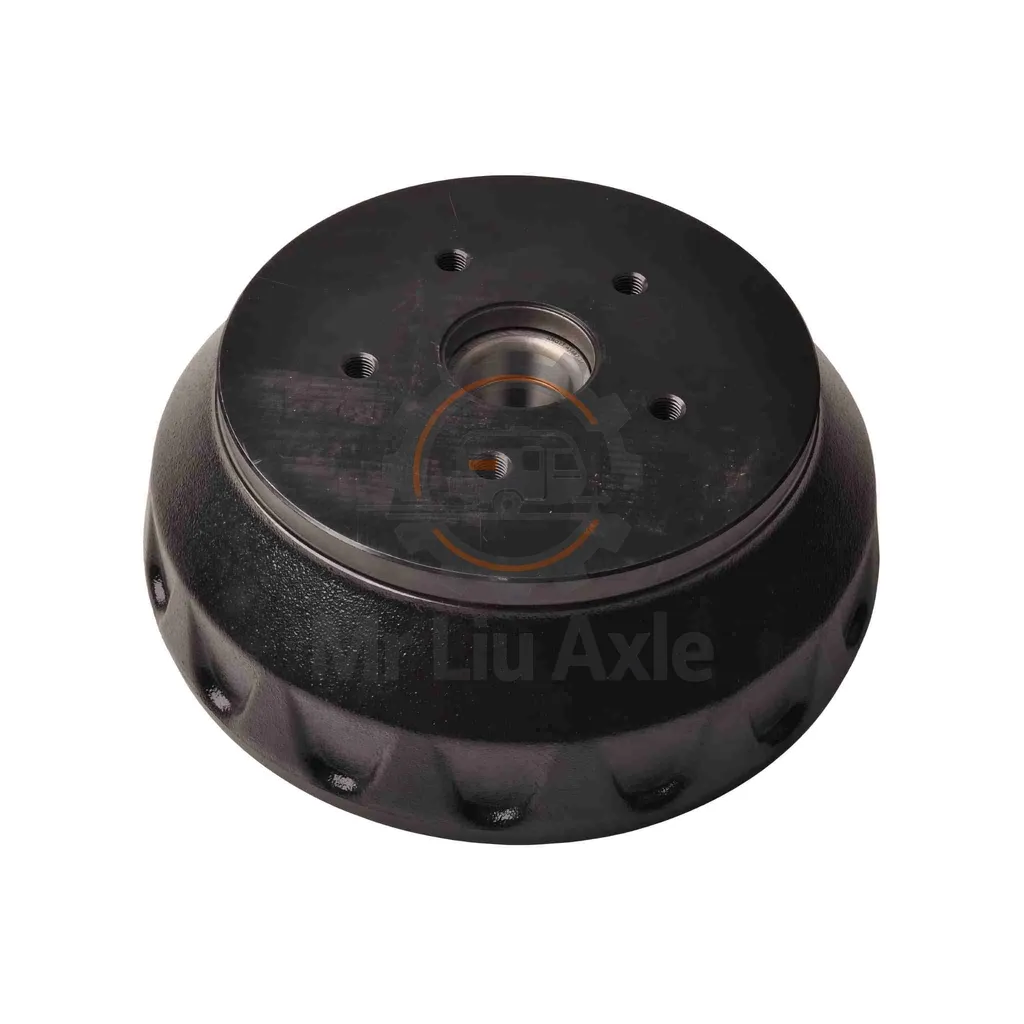
How to Match Brake Drum Dimensions to Axle Load, Application, and Regional Standards.Choosing the right brake drum is not just a matter of bolt pattern and hub diameter. The drum’s internal dimensions — specifically its inner diameter and lining width — directly determine how much braking torque the system can generate, how effectively it dissipates heat, and how long it lasts under real-world loads. For European and Australian trailer manufacturers, the two most common configurations are the Knott 200×50 and Knott 250×40 brake drums. Understanding the difference between them is the first step in building a compliant, safe, and durable trailer braking system.
The official Knott brake drum catalog provides complete OEM specifications for both sizes. This guide translates those specifications into practical selection criteria for builders and importers.
200×50 Brake Drum: The Lightweight Standard
The 200×50 drum is the workhorse of the European light-trailer segment. Its 200 mm internal diameter and 50 mm brake lining width are optimized for axles rated up to 1,500 kg. The generous lining width relative to drum diameter provides excellent heat dissipation for lighter loads, making this drum particularly resistant to brake fade on long descents.
Technical Specifications
- Inner drum diameter: 200 mm (max. machined diameter)
- Brake lining width: 50 mm
- Max axle load: 1,500 kg
- Compatible brake mechanisms: Knott 20-2425 series
- Max. wear limit: 2 mm (replace, do not re-machine)
- Cam type: Ribbed (self-cleaning)
Typical Applications
- Touring caravans and campers up to 1,300 kg MTPLM
- Light utility trailers for passenger vehicles
- Mobile holiday cabins and park homes on single axles
- Small boat trailers and jet-ski carriers
- Food vending trailers and promotional display units
The 50 mm lining width is the standout feature of this drum. In a 1,000 kg trailer descending a 6% Alpine grade, the 50 mm surface area provides enough thermal mass to keep brake temperatures below 250°C under sustained braking. This margin is critical for preventing lining glazing and loss of friction coefficient.
For replacement drums and compatible hub assemblies, browse the MrLiuAxle brake drum catalog.
250×40 Brake Drum: Heavy-Duty Capacity
When the axle load climbs above 1,500 kg, the 200×50 drum runs out of thermal headroom. The 250×40 addresses this by increasing the drum diameter to 250 mm, which dramatically expands the braking surface area. The 40 mm lining width is narrower than the 200×50’s 50 mm, but this is a deliberate design choice optimized for the Knott 25-2025 brake mechanism geometry.
Technical Specifications
- Inner drum diameter: 250 mm (max. machined diameter)
- Brake lining width: 40 mm
- Max axle load: 1,800 kg
- Compatible brake mechanisms: Knott 25-2025 series
- Max. wear limit: 2 mm
- Cam type: Ribbed (self-cleaning)
Typical Applications
- Large family caravans and campers 1,600–1,800 kg
- Twin-axle touring trailers with full amenities
- Off-road campers and expedition trailers with water/plumbing systems
- Construction equipment trailers and mobile workshops
- Toy haulers with internal garage bays
The 56% increase in drum surface area (250 mm vs. 200 mm diameter) gives the 250×40 significantly better heat rejection capacity. On a fully loaded 1,800 kg caravan braking repeatedly on mountain descents, the larger drum keeps peak temperatures 40–60°C lower than a 200×50 would under the same conditions. This directly translates to longer lining life and more consistent brake pedal feel.
Full specifications for the 250×40 are available in the Knott technical documentation.
Load-to-Drum Matching Table
| Parameter | 200 × 50 | 250 × 40 |
|---|---|---|
| Drum diameter | 200 mm | 250 mm |
| Lining width | 50 mm | 40 mm |
| Max axle load | 1,500 kg | 1,800 kg |
| Compatible mechanism | Knott 20-2425 | Knott 25-2025 |
| Braking surface area | 31,400 mm² | 49,100 mm² |
| Heat capacity | Standard | +56% vs. 200×50 |
| Ideal trailer type | Light caravans, utility | Heavy caravans, twin axle |
| Max wear limit | 2 mm | 2 mm |
| PCD compatibility | 98×4, 100×4, 112×5, 139.7×5 | 98×4, 100×4, 112×5, 139.7×5 |
Regional Comparison: How Drum Choice Varies by Market
Different regions have developed distinct brake preferences based on terrain, regulation, and trailer culture. Understanding these patterns helps manufacturers and importers select the right drum for their target market.
Europe (Germany, France, Netherlands, Nordic)
European markets overwhelmingly favor overrun (surge) drum brakes on caravans up to 3,500 kg. The 200×50 dominates the sub-1,500 kg segment, while the 250×40 is standard on larger family caravans. ECE R13 type approval is mandatory in all EU member states. Twin-axle configurations are increasingly common on 2,000+ kg models to meet stability requirements under Regulation (EU) 2018/858.
The 112×5 PCD is the most common bolt pattern across Europe, used by AL-KO, BPW, and Knott hub assemblies. The Knott brake drum reference chart lists all European PCD combinations for both drum sizes.
Australia
The Australian market demands higher thermal capacity due to Outback conditions and heavier average trailer weights. The 250×40 is the preferred drum even on some sub-1,500 kg trailers, because Australian caravans frequently carry 200+ liters of water, dual battery systems, and solar arrays that push real-world axle loads close to maximum ratings. Electric brakes are standard, though Knott-compatible drums are increasingly used on European-imported chassis.
North America
North American camper trailers typically use 10-inch or 12-inch electric brake drums (Dexter pattern) rather than metric Knott sizing. However, the Knott 200×50 and 250×40 are gaining traction in the North American import and custom build market, particularly for European-style caravans and teardrop trailers sold into Canada, where ECE-style braking systems are preferred by some manufacturers for their simplicity and reliability.
Russia and CIS
Russian and CIS markets face the most severe brake operating conditions globally due to road salt and chloride reagents used during winter. Both 200×50 and 250×40 drums are used, but the 250×40 is increasingly specified even for mid-weight trailers because its larger thermal mass provides a safety margin on roads where brake components are constantly exposed to corrosive chemicals and extreme temperature swings. Hot-dip galvanizing (70–90 µm) on all brake backing plates and axle components is considered essential, not optional.
For galvanized axle and brake assemblies rated for harsh climates, see the MrLiuAxle product range.
When to Replace: Wear Limits and Inspection
Both drums share the same critical wear limit: 2 mm maximum diameter increase from the as-new dimension. Beyond this limit, the drum must be replaced — not re-machined. Attempting to cut a worn drum below the manufacturer’s minimum specified diameter compromises structural integrity and can lead to catastrophic drum failure under heavy braking.
Inspect brake drums every 15,000 km or 12 months, whichever comes first. Measure at the centerline of the lining contact area using an internal caliper or drum gauge. Signs that replacement is needed include:
- Grooves or scoring deeper than 1 mm on the friction surface
- Blue discoloration indicating overheating
- Cracks radiating from the mounting bolt holes
- Ovality exceeding 0.15 mm
Conclusion
The choice between Knott 200×50 and 250×40 is not arbitrary. It is dictated by axle load, trailer configuration, target market regulations, and thermal requirements. The 200×50 remains the right choice for lightweight caravans and utility trailers up to 1,500 kg. The 250×40 is mandatory for anything above that threshold, particularly for twin-axle builds, off-road campers, and trailers operating in hot or mountainous terrain.
Both drums are available from MrLiuAxle with ribbed cam profiles, full Knott mechanism compatibility, and PCD options covering 98×4, 100×4, 112×5, and 139.7×5 bolt patterns. All drums ship with dimensional certification and ECE R13 compliance documentation on request.
Knott-Compatible Brake Drums 200×50 & 250×40
Full Knott mechanism compatibility. Ribbed cam. PCD 98×4 through 139.7×5. Dimensional certification included.
References