


Blog
Why My Torsion Axles Come Standard with Hot-Dip Galvanizing?

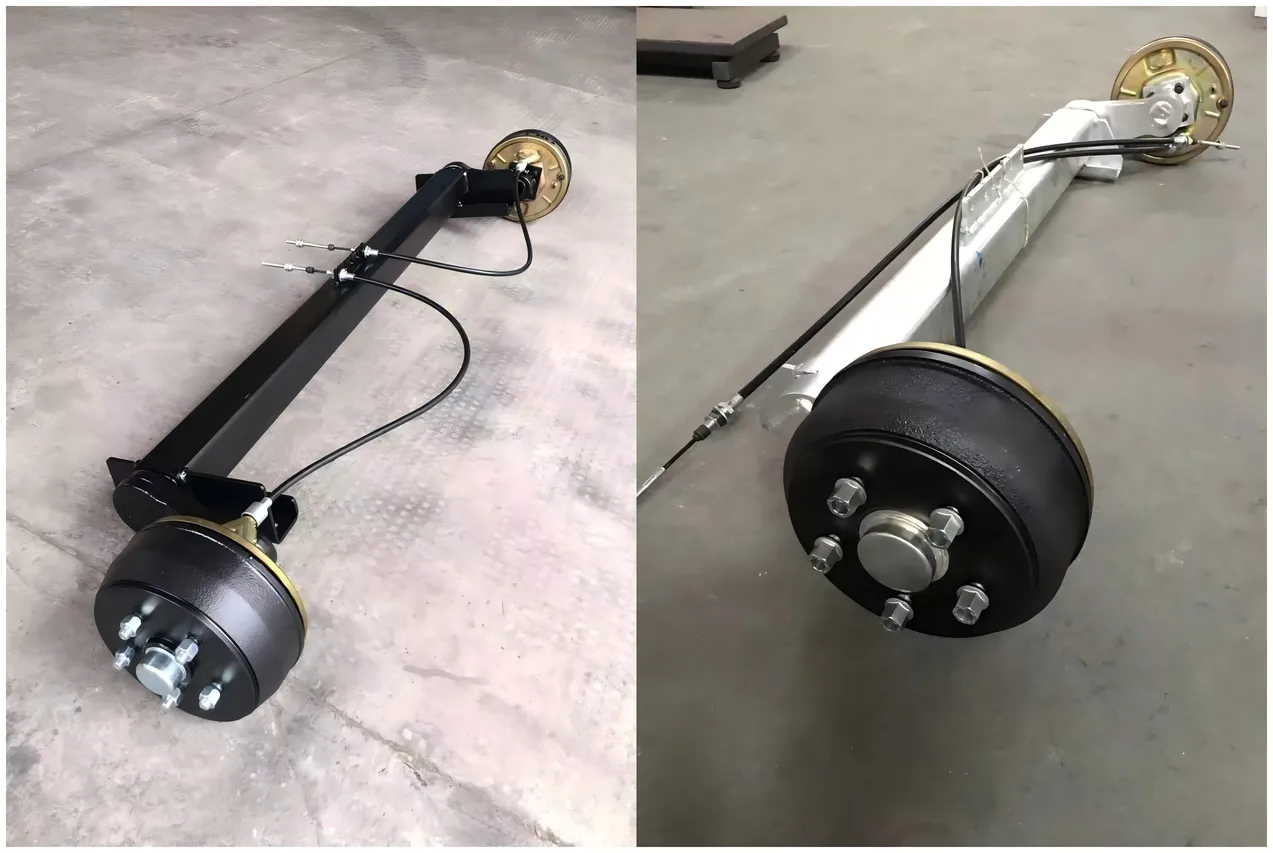
If you’ve been shopping for trailer or RV axles, you’ve probably noticed that most manufacturers offer paint as a standard finish, with galvanizing as an expensive upgrade. At Mr Liu Axle, we do the opposite. Every torsion axle we ship comes standard with hot-dip galvanizing. This isn’t just a preference—it’s a decision based on 20 years of seeing axles come back after years of hard use.
I’ve seen painted axles that looked perfect leaving the factory, only to return a few years later with rust creeping under the coating. I’ve also seen galvanized axles pulled from trailers that have spent a decade on the road, still showing bare, unrusted steel where the coating was scratched. That real-world experience is what drives our choice.
Hot-dip galvanizing isn’t just a coating—it’s a metallurgical bond. When an axle is dipped into molten zinc at around 450°C, the zinc and steel form a series of intermetallic layers that become part of the metal itself. Paint, no matter how well applied, sits on top of the surface. That difference determines how an axle survives its first rock chip, its first winter, its first decade of service.
For a deeper technical explanation of how hot-dip galvanizing creates a metallurgical bond with steel, see the Hot-Dip Galvanizing resource from the American Galvanizers Association.
The practical advantages of galvanizing over paint become obvious once you understand how axles are used in the real world. A torsion axle is not a decorative part—it lives under a trailer, constantly exposed to road spray, salt, gravel, and physical impacts. With a painted finish, the moment a stone chips the surface, moisture begins working its way under the surrounding paint film. Corrosion spreads invisibly beneath the coating, often causing more damage than if the axle had been left bare.
With hot-dip galvanizing, a scratch or chip does not create a corrosion trap. The zinc layer provides cathodic protection—meaning even if the steel is exposed, the surrounding zinc corrodes sacrificially to protect the base metal. This is why galvanized axles can be scratched during installation or while on the road and still continue protecting themselves for years.
Beyond corrosion resistance, galvanizing also offers superior adhesion and uniformity. A paint system—even a high-quality one—depends on surface preparation, primer application, and careful curing. Any inconsistency in the process creates a weak point. Hot-dip galvanizing, by contrast, is a controlled chemical process that produces a consistent, bonded coating across the entire axle, inside and out. That includes internal tube surfaces where paint cannot reach but moisture inevitably finds its way.
For buyers who are evaluating suppliers, the choice between galvanizing and paint often comes down to total cost of ownership rather than initial price. A painted axle will almost always have a lower upfront cost, but that saving disappears the first time it needs to be replaced prematurely or when corrosion leads to bearing failure, seal damage, or compromised structural integrity. A galvanized axle costs more to produce, but its service life is reliably longer—often two to three times longer in harsh environments.
At our factory, we made the decision to make galvanizing our standard finish because we believe in building axles that last. We are not trying to win a price competition on a spec sheet. We want our customers to install an axle, forget about it, and have it still performing a decade later. That is what hot-dip galvanizing delivers.
It is not the cheapest option upfront, but it is the least expensive option over the life of the axle. And for anyone who makes a living with their trailer, or who trusts their RV to carry what matters most, that is the only kind of value that counts.
Looking for galvanized torsion axles, spring axles, or matching brake drums and hub assemblies? Browse our full product range or contact us for a wholesale quote.