


Blog
Rubber Cord Aging: How Long Does a Torsion Axle Really Last?

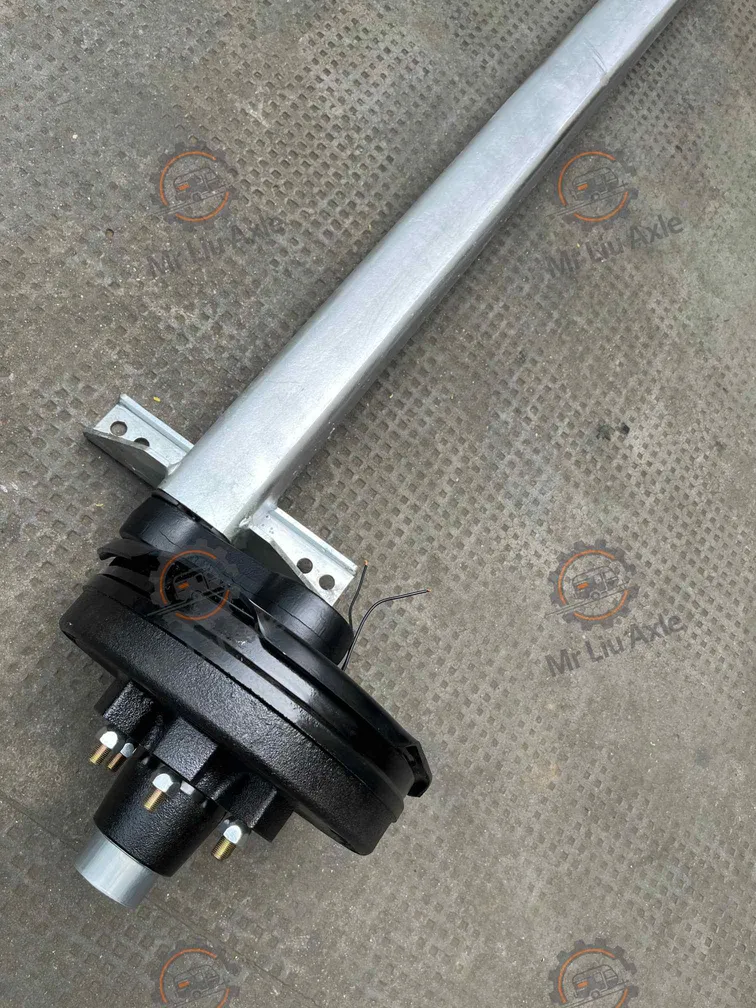
Rubber Cord Aging: How Long Does a Torsion Axle Really Last?
A boat trailer owner once asked us why his trailer suddenly sat “lower on the left” after eight seasons. Nothing had broken. Nothing was bent. The answer was hiding inside the axle tube, where four rubber cords had quietly shrunk, cracked, and lost their grip. Torsion axles rarely fail with a bang — they fade. Here is how long they really last, and how to read the signs before your trailer tells you the hard way.
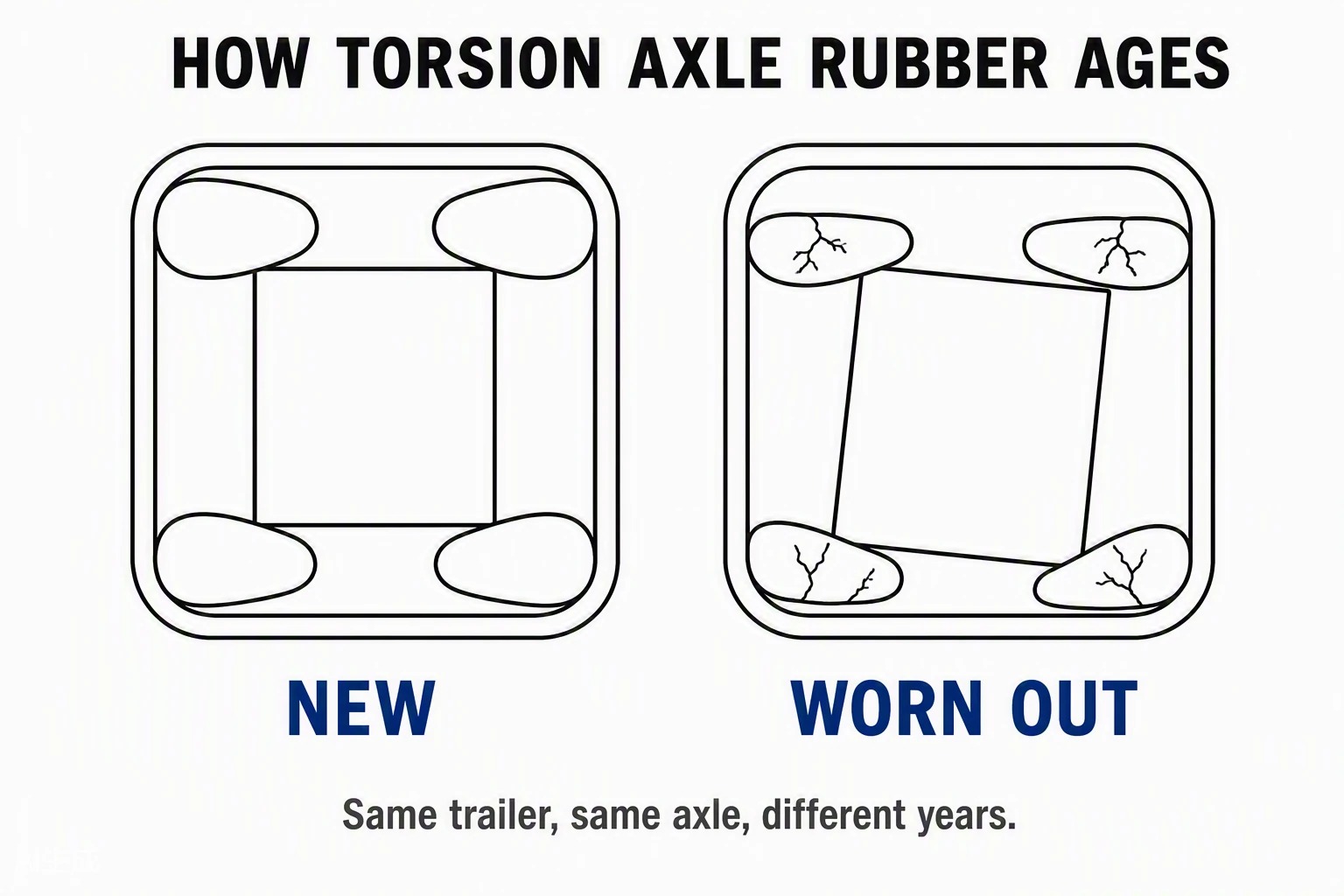
Figure 1: Inside a torsion axle — a square inner bar suspended by four rubber cords.
How does a torsion axle work?
A torsion axle suspends the trailer on rubber, not steel springs. Inside the outer tube, a square inner bar is held by four rubber cords pressed into the corners. When a wheel hits a bump, the trailing arm twists the inner bar, and the rubber cords compress to absorb the shock. The rubber is the spring, the shock absorber, and the bushing — all in one. That is why the axle’s lifespan is really the rubber’s lifespan.
How long do torsion axle rubber cords last?
The rubber cords are the wear item, and their life depends far more on storage conditions than on mileage. Typical service life by usage pattern:
| Usage Pattern | Typical Rubber Cord Life | Main Aging Driver |
|---|---|---|
| Regular use, stored unloaded under cover | 12–15+ years | Slow natural oxidation only |
| Regular use, stored outdoors | 8–12 years | UV and ozone exposure |
| Stored loaded for long periods | 6–10 years | Constant static compression (“compression set”) |
| Coastal / road-salt environments | 6–8 years | Salt, moisture, and chemical attack |
Mileage matters less than people expect. A torsion axle that tows 20,000 highway miles a year but sleeps unloaded in a barn will usually outlast one that tows 2,000 miles and then sits fully loaded in the sun for ten months.
What actually kills the rubber?
Four aging mechanisms, in order of how much damage we see in returned axles:
- 1. Static loading (compression set). Rubber that sits squeezed for months never fully springs back. The cords permanently deform, ride height drops, and suspension travel shrinks. Parking a loaded trailer for the off-season is the single biggest lifespan killer.
- 2. UV and ozone. Sunlight and atmospheric ozone attack the rubber’s polymer chains, causing surface cracks that grow inward. Axles on trailers stored outside age measurably faster — even if they are rarely towed.
- 3. Heat cycles. Repeated heating and cooling accelerates oxidation and hardens the compound, so the cords lose the elasticity they need to absorb bumps.
- 4. Chemical contamination. Road salt, leaking bearing grease, oil, and solvents soften or embrittle rubber on contact. A failed grease seal can quietly ruin the cords on one side of an otherwise healthy axle.

What are the warning signs of a worn-out torsion axle?
Rubber aging announces itself gradually. Watch for these five signs, in the order they usually appear:
- Dropped ride height. The trailer sits lower than it used to — the clearest sign of compression set in the cords.
- Changed torsion arm angle. With the trailer unloaded, the trailing arm should sit near its original angle (commonly 10–25° below horizontal, depending on design). An arm that has sagged well below spec means the rubber no longer supports the load.
- Uneven tire wear. As cords lose shape, wheel camber changes and tires begin wearing on one edge.
- Harsh or bottoming ride. Hardened rubber stops absorbing, so bumps that used to disappear now bang through the frame.
- One corner sitting low. Cords rarely age evenly; a visible lean points to the worst side.
Can you replace just the rubber cords?
In most torsion axle designs, no — the cords are pressed and bonded inside the tube at the factory and are not a serviceable part. When the rubber is done, the practical and safe fix is replacing the complete axle assembly. The good news: a replacement torsion axle bolts to the existing frame brackets in an afternoon, and you get fresh rubber, new spindles, and a full reset of the clock. For manufacturer engineering data on service limits, the Dexter Axle literature library is the reference we keep on the workshop shelf.
In Our Workshop
After 20 years of building torsion axles, we can date a cord set within a couple of years just by cutting a tube open. Barn-stored axles come apart with rubber that still smells fresh and rebounds under a thumb. Axles from loaded storage tell a different story — cords flattened into the corners, surfaces crazed like dry riverbeds, inner bars sitting a quarter-turn off square.
That experience shapes two pieces of advice we give every customer. First, take the load off for long storage — jack stands under the frame cost almost nothing and can add years to the cords. Second, if you are replacing one aged axle on a tandem trailer, replace both: the surviving axle has lived the same life and is rarely far behind. Our torsion axle range covers the common capacities and bracket patterns, and we are glad to match a replacement to your frame measurements.
Frequently asked questions
How long does a torsion axle last?
The steel housing typically lasts 10–20 years; the rubber cords inside usually reach the end of their service life first — around 10–15 years with regular use, or sooner for trailers stored loaded, outdoors, or near the coast.
What is the single best way to extend torsion axle life?
Unload the suspension during long storage. Supporting the trailer frame on jack stands removes static compression from the rubber cords, which is the biggest single driver of premature aging.
Is a torsion axle or a leaf spring axle longer-lived?
Leaf springs can be rebushed and re-arched almost indefinitely, so the suspension itself can outlast a torsion system. Torsion axles trade that serviceability for a smoother, quieter, maintenance-free ride for 10–15 years — after which the whole unit is swapped.
Should I replace both axles on a tandem trailer at once?
Yes. Both axles have experienced identical storage and loading conditions, so when one set of cords is worn out, the other is almost always close behind.
Replacing an Aged Torsion Axle?
Send us your axle capacity, hub-face measurement, and bracket type — we will match a replacement with fresh rubber and the correct arm angle. Browse our torsion axles or contact the workshop directly.