

Blog
Understanding European Caravan Axle Standards

A Complete Guide to Compliance, Safety, and Market Access
MrLiuAxle Technical Team | May 2026
Europe represents one of the world’s largest markets for touring caravans and leisure trailers, with annual sales exceeding 200,000 units across the EU. For manufacturers, importers, and dealers operating in this space, understanding european caravan axle standards is not merely a regulatory formality. It is the foundation of product safety, market access, and long-term business sustainability. This guide provides a comprehensive overview of the standards every caravan axle must meet to be legally sold and operated within the European Union.
Why European Caravan Axle Standards Matter
European trailer regulations are among the most stringent globally. A caravan axle sold in Germany, France, or the Netherlands must comply with a web of interrelated directives covering braking performance, material strength, corrosion resistance, and towing compatibility. Non-compliance does not just risk fines. It can lead to product recalls, insurance voidance, and in worst-case scenarios, catastrophic roadside failures.
The regulatory landscape centers on United Nations Economic Commission for Europe (UNECE) regulations, EU directives, and harmonized European Norms (EN). For caravan axles specifically, three regulatory pillars dominate: ECE R13 for braking systems, ECE R55 for towing equipment, and EN 1647 for leisure accommodation vehicle safety.
Key Regulatory Frameworks
ECE R13 – Braking System Requirements
UNECE Regulation No. 13 (Uniform Provisions Concerning the Approval of Vehicles of Categories M, N and O with Regard to Braking) is the cornerstone of European trailer brake safety. For caravan axles, compliance with ECE R13 is mandatory in nearly all EU member states.
The regulation specifies minimum braking performance, including stopping distances, brake force distribution, and compatibility between towing vehicles and trailers. Key requirements include:
▶ Service braking systems must act on all wheels and distribute braking force appropriately among axles.
▶ Trailers exceeding 10 tonnes gross weight must be equipped with an Anti-lock Braking System (ABS) meeting Category A requirements.
▶ Compatibility limits ensure that the trailer’s braking force is proportionally matched to the towing vehicle under both laden and unladen conditions.
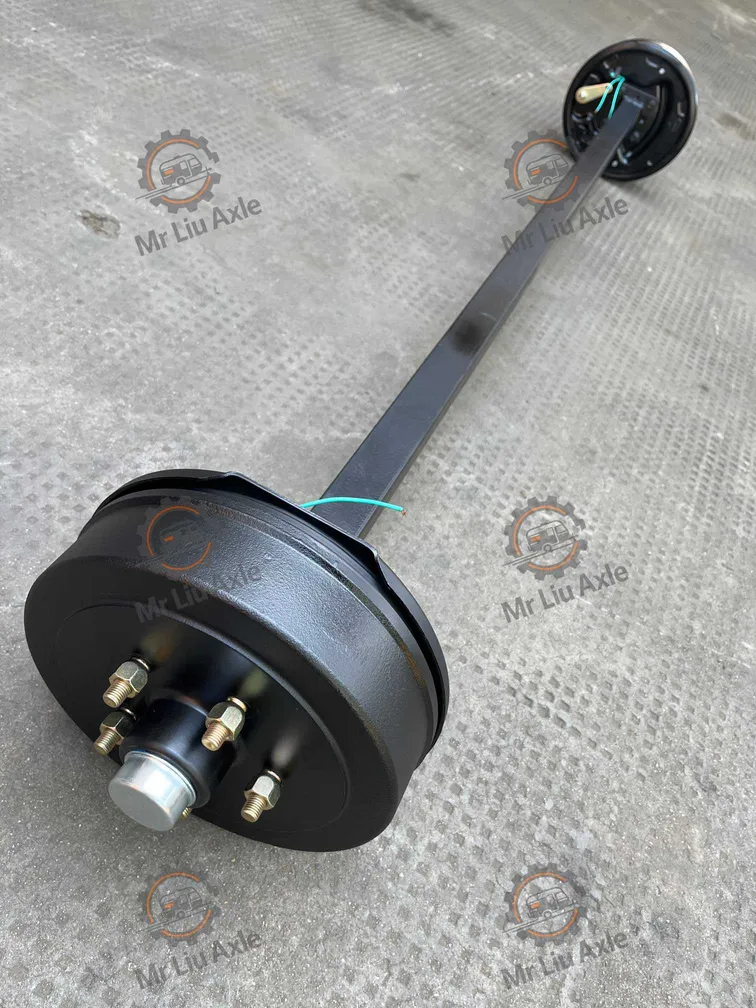
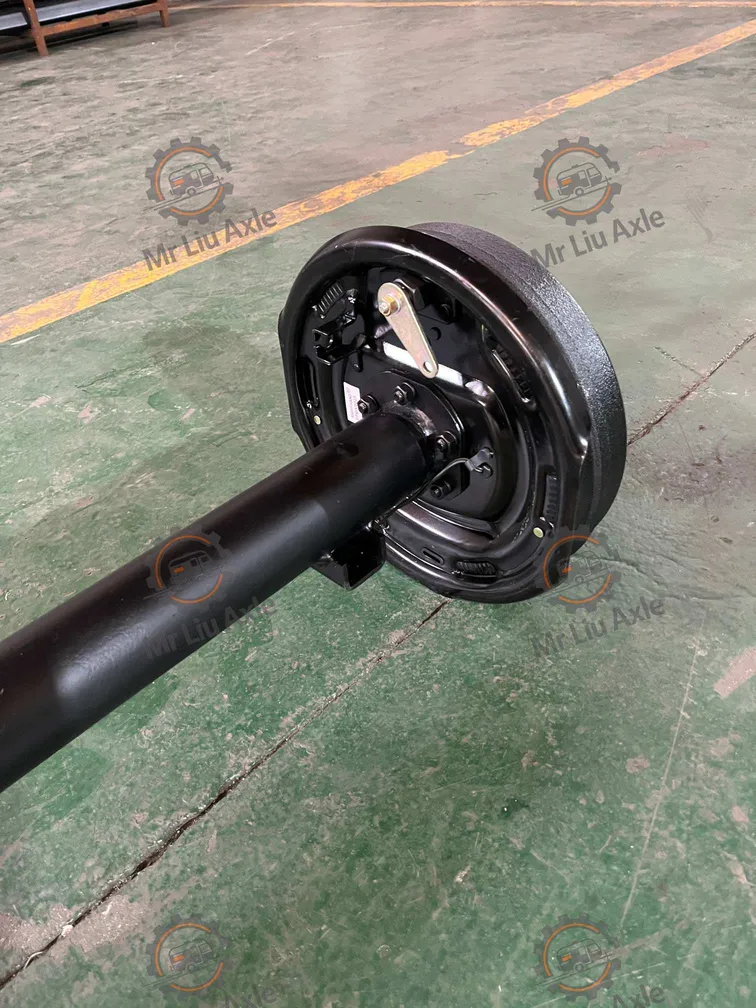
For caravan manufacturers, this means that the axle’s integrated brake system, whether drum or disc, must undergo rigorous type-approval testing by a certified body such as TUV or DEKRA.
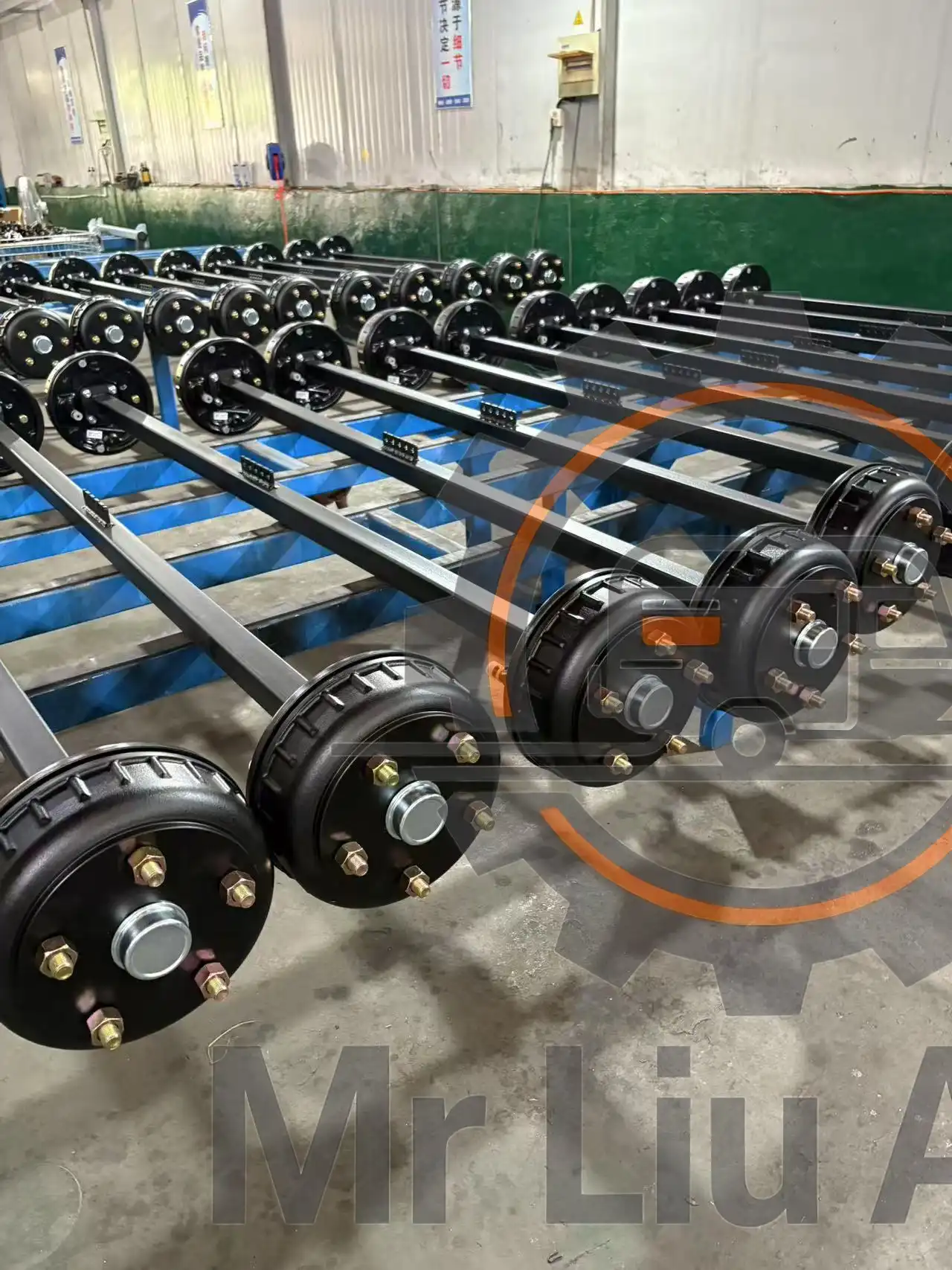
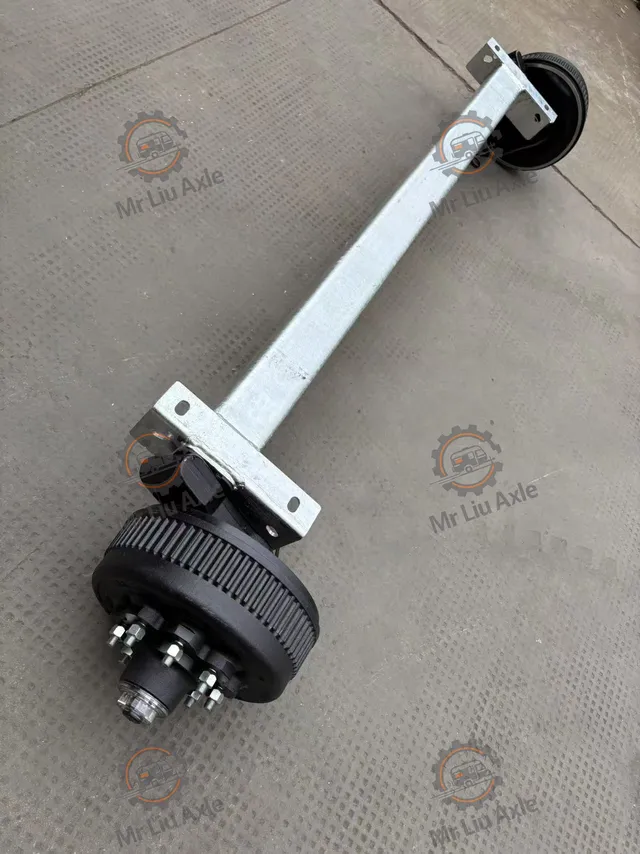
The braking systems integrated into ourare engineered to meet ECE R13 adhesion utilization and compatibility thresholds across all load categories.galvanized torsion axles
ECE R55 – Towing Equipment Approval
While ECE R13 governs what happens at the wheel, ECE R55 regulates what happens at the hitch. This standard covers coupling devices, tow balls, drawbars, and mounting assemblies. For caravan registration in Germany, Belgium, and the Netherlands, ECE R55-01 type approval is mandatory for all vehicle connecting parts.
The regulation ensures that coupling equipment can withstand dynamic loads, fatigue cycles, and corrosion environments typical of European road conditions. A critical parameter derived from ECE R55 is the permissible nose weight, the downward force exerted on the tow ball by the caravan hitch. Exceeding this value compromises both stability and legality.
EN 1647 – Leisure Accommodation Vehicle Safety
EN 1647:2004 specifies health and safety requirements for leisure accommodation vehicles, including static caravan holiday homes. While this standard primarily addresses habitation aspects such as ventilation, fire safety, and gas installation, it also defines structural stability requirements that directly impact axle specification.
Static caravans built to EN 1647 must feature twin-axle pre-galvanized steel chassis capable of supporting specified snow load classes. The axle load rating must account for not only the caravan’s tare mass but also the additional weight of furnishings, water tanks, and occupants. Professional axle selection requires calculating the Aggregate Trailer Mass (ATM) and ensuring each axle’s Gross Axle Weight Rating (GAWR) provides at least a 15 percent safety margin.
ADR – Dangerous Goods Transport
The European Agreement Concerning the International Carriage of Dangerous Goods by Road (ADR) applies to caravans and trailers transporting hazardous materials, including LPG cylinders. ADR Chapter 9.2 mandates that such trailers must comply with ECE R13 or Directive 71/320/EEC braking requirements. Additionally, electrical connections between the towing vehicle and trailer must meet IP54 protection per IEC 529, with connectors conforming to ISO 12098 or ISO 7638.
Although most touring caravans do not routinely transport dangerous goods, manufacturers targeting the commercial trailer sector or specialized caravan builds must ensure axle and brake configurations meet ADR provisions for endurance braking and anti-lock systems.
Material and Manufacturing Standards
Hot-Dip Galvanizing Requirements
European caravans operate in diverse climatic conditions, from Mediterranean salt air to Nordic road salt exposure. Corrosion protection is therefore non-negotiable. The industry standard for steel caravan axles is hot-dip galvanizing to EN ISO 1461, with zinc coating thickness between 70 and 90 micrometers.
This thickness provides sacrificial corrosion protection for 15 to 20 years under normal operating conditions. Axles with thinner coatings, typically below 55 micrometers, risk premature rust formation at weld points and sharp edges. When sourcing axles, always request a coating thickness certificate verified by magnetic gauge testing (ASTM D7091).
ISO 9001 Quality Management
ISO 9001 certification has become the baseline expectation for axle manufacturers supplying the European market. The standard ensures consistent quality in material procurement, production processes, and final inspection. Leading axle suppliers such as AL-KO, BPW, and Knott maintain not only ISO 9001 but also IATF 16949, the automotive sector’s stricter quality standard.
At, our manufacturing facilities operate under ISO 9001-certified quality management systems. Every axle undergoes 100 percent ultrasonic testing of weld seams, dynamic load testing to 1.2 times rated capacity, and salt spray validation per ASTM B117 for 1,000 hours.MrLiuAxle
Axle Load Categories for European Trailers
European trailer classification follows UNECE vehicle category codes. Caravan axles fall primarily within the O1 and O2 categories, though larger static holiday homes may approach O3 limits.
| Category | Description | Max Gross Weight | Braking Requirement |
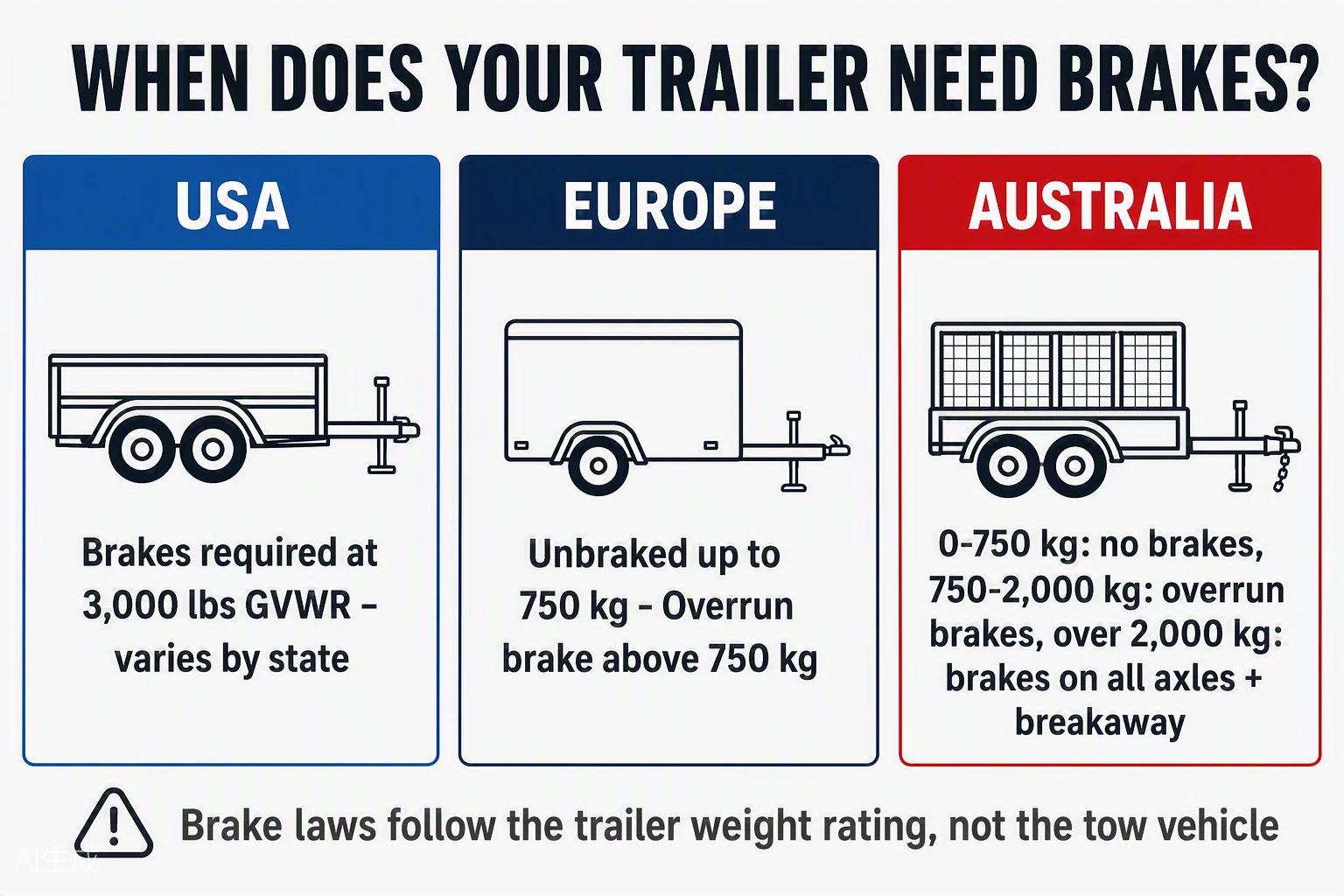
| O1 | Light trailers (caravans) | ≤ 750 kg | Unbraked permitted |
| O2 | Medium trailers (caravans) | 750 kg – 3,500 kg | Overrun or continuous braking |
| O3 | Heavy trailers | 3,500 kg – 10,000 kg | Continuous braking (ECE R13) |
| O4 | Very heavy trailers | > 10,000 kg | Continuous braking + ABS |
Source: Consolidated Resolution on the Construction of Vehicles (R.E.3), UNECE
Selecting the correct axle category is critical. An O1-class caravan with a Maximum Technically Permissible Laden Mass (MTPLM) of 750 kg can legally operate without a braked axle in most EU countries. However, once the MTPLM exceeds 750 kg, overrun or continuous braking becomes mandatory under ECE R13.
How to Verify Compliance When Sourcing Axles
When procuring caravan axles for the European market, request the following documentation from your supplier:
- ECE R13 Type Approval Certificate– Confirms the brake system meets European braking performance requirements.
- ECE R55-01 Type Approval (for coupling components)– Required for towbar and hitch assemblies in most EU member states.
- CE Declaration of Conformity– Mandatory for placing trailer parts on the EU market under Regulation (EU) 2018/858.
- Coating Thickness Report– Verifies galvanizing meets EN ISO 1461 specifications.
- Material Test Certificate (MTC)– Confirms axle tube and spindle steel grades comply with EN 10083 or equivalent.
Failure to obtain these documents can result in customs clearance delays, type approval rejection by national authorities, and liability exposure in the event of product failure.
Conclusion
European caravan axle standards represent a comprehensive framework designed to protect road users, ensure product interoperability, and maintain quality benchmarks across the single market. From ECE R13 braking requirements to EN 1647 structural specifications and ISO 9001 manufacturing protocols, compliance demands attention to every link in the supply chain.
For manufacturers entering or expanding within the European caravan market, partnering with an axle supplier that understands and certifies to these standards is not optional. It is a strategic necessity.
| Need ECE-Certified Caravan Axles? MrLiuAxle supplies hot-dip galvanized torsion axles and straight axles fully compliant with ECE R13, ECE R55, and EN ISO 1461. Request a quote with full certification package. |
References
[1]UNECE Vehicle Regulations – R13 Braking
[2]Regulation (EU) 2018/858 – Vehicle Type Approval