

Blog
Winterizing Your Trailer Axle: Storage and Maintenance Tips

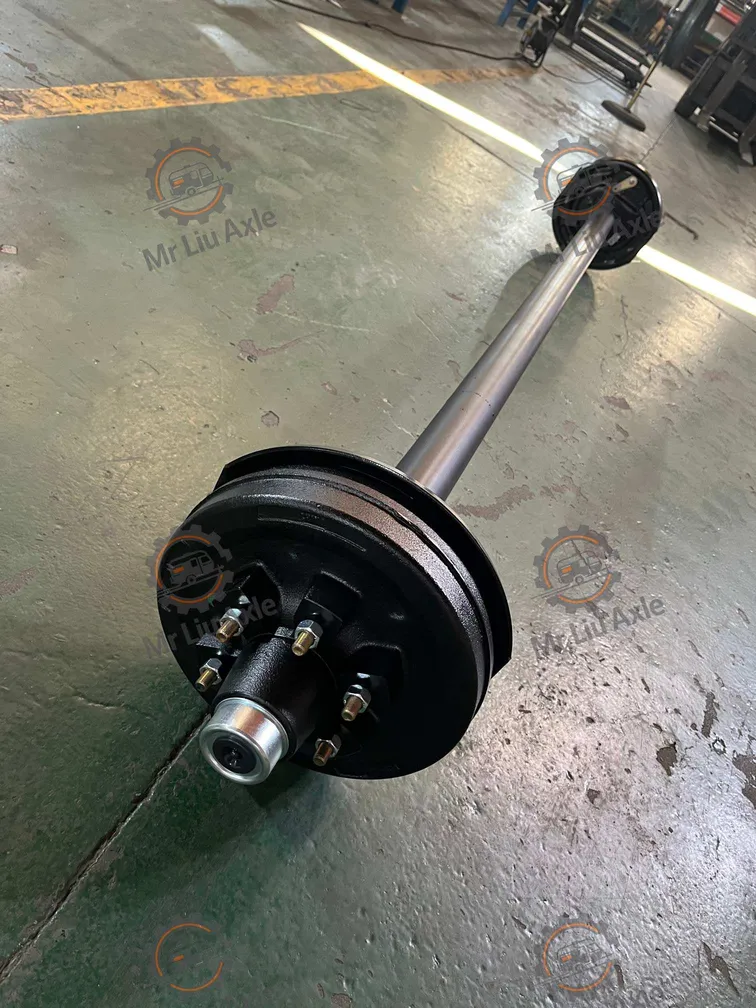
Winterizing Your Trailer Axle: Storage and Maintenance Tips
Canadian and Northern US winters are brutal on trailer axle. Road salt, freezing temperatures, standing moisture, and months of inactivity create a perfect storm for corrosion, bearing damage, and brake failure. If you park a trailer in October and expect it to roll out problem-free in April, you are betting against chemistry and physics — and you will lose.
The good news is that proper winter preparation is straightforward and inexpensive. Whether you are a trailer manufacturer advising your customers, a distributor building seasonal inventory, or an owner-operator storing a single unit, the following four-step routine will protect your axle investment through the harshest months.
1. Winter Bearing Care
Wheel bearings are the most vulnerable component during winter storage. Here’s why: when a trailer sits idle, the grease settles. Any moisture trapped inside the hub — from a humid autumn day, a stream crossing, or condensation — pools at the bottom of the bearing cavity. Come spring, that moisture has etched microscopic pits into the bearing races. The first road trip reopens those pits into full-blown spalling, and within 500 miles you have a hub running hot or seized solid.
Before storage:
- Remove the hub and inspect the bearings. If the grease is milky, discolored, or gritty, the seal has already leaked. Replace both the seal and the bearings — patching with fresh grease only traps the moisture inside
- Clean the bearings thoroughly with solvent. Dry completely with compressed air (do not spin the bearing with the air nozzle — centrifugal force can launch rollers)
- Repack with high-quality wheel bearing grease rated for your operating temperature range. For extreme cold (below -20°C / -4°F), use a grease formulated specifically for low-temperature performance — standard lithium-based greases thicken and channel poorly in deep freeze
- Install a fresh grease seal. The seal lip is your only barrier against moisture ingress. A $3 seal is cheaper than a $200 hub rebuild
During storage:
- Rotate each wheel 90 degrees once per month. This redistributes the grease film and prevents the rollers from sitting in the same position for months on end
- If the trailer is stored outside, place a plastic bag or waterproof cover over each wheel to shield the hub from direct snow and rain exposure
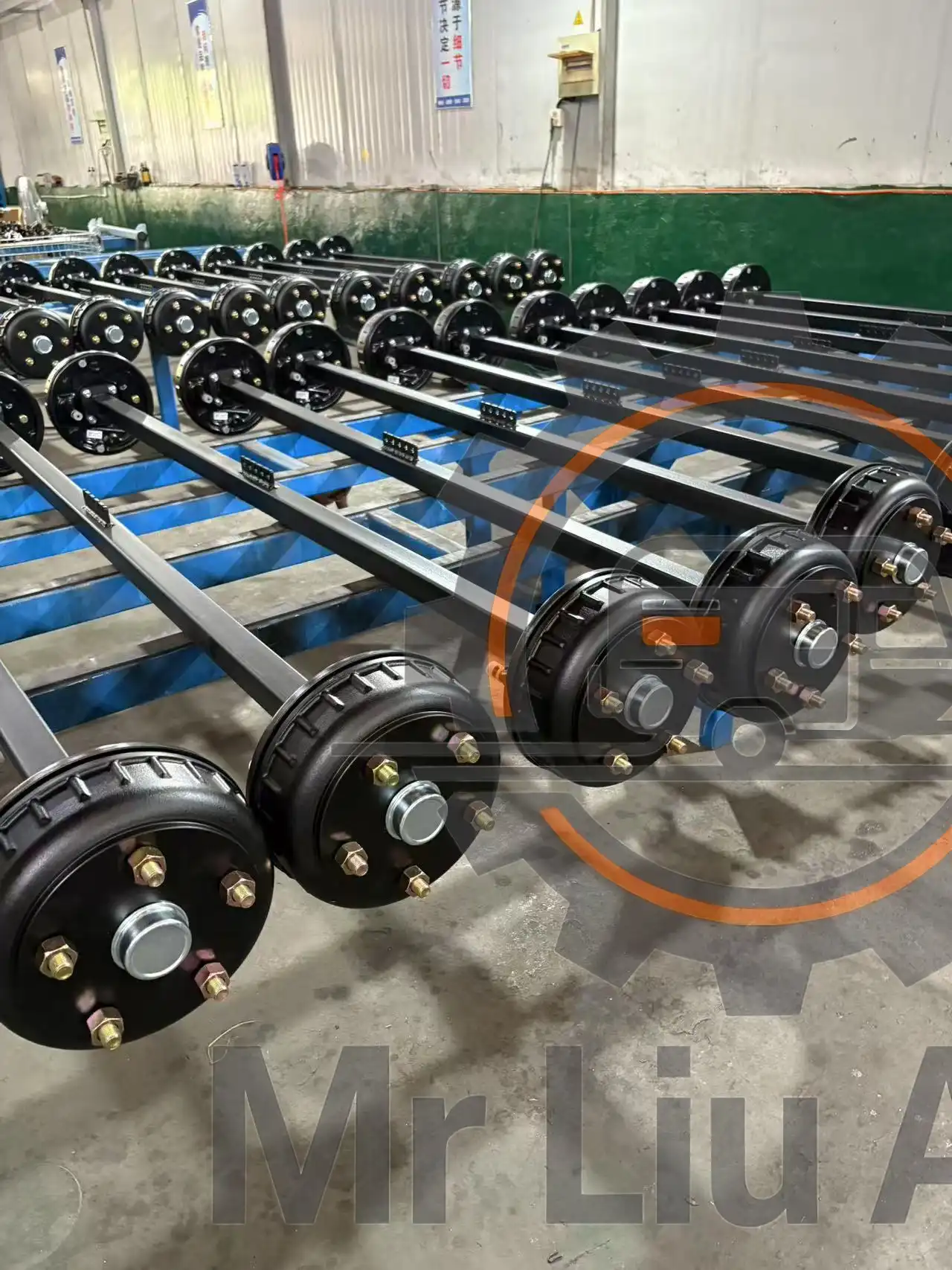
At Mr Liu Axle, we use Sling and Wanxiang Group bearings — listed-company brands with consistent quality and proven cold-climate performance. A quality bearing packed with fresh grease and sealed properly will survive winter without issue. A cheap bearing with old, contaminated grease will not.
2. Brake Moisture Protection
Brake assemblies absorb moisture all summer long — from creek crossings, rain, and high humidity. When winter arrives and temperatures drop, that moisture freezes inside the drum or disc. The brake shoes rust to the drum. The actuator linkage seizes. The pads bond to the rotor. Spring inspection turns into a full brake rebuild.
Electric drum brakes (most US and Canadian caravans, utility trailers):
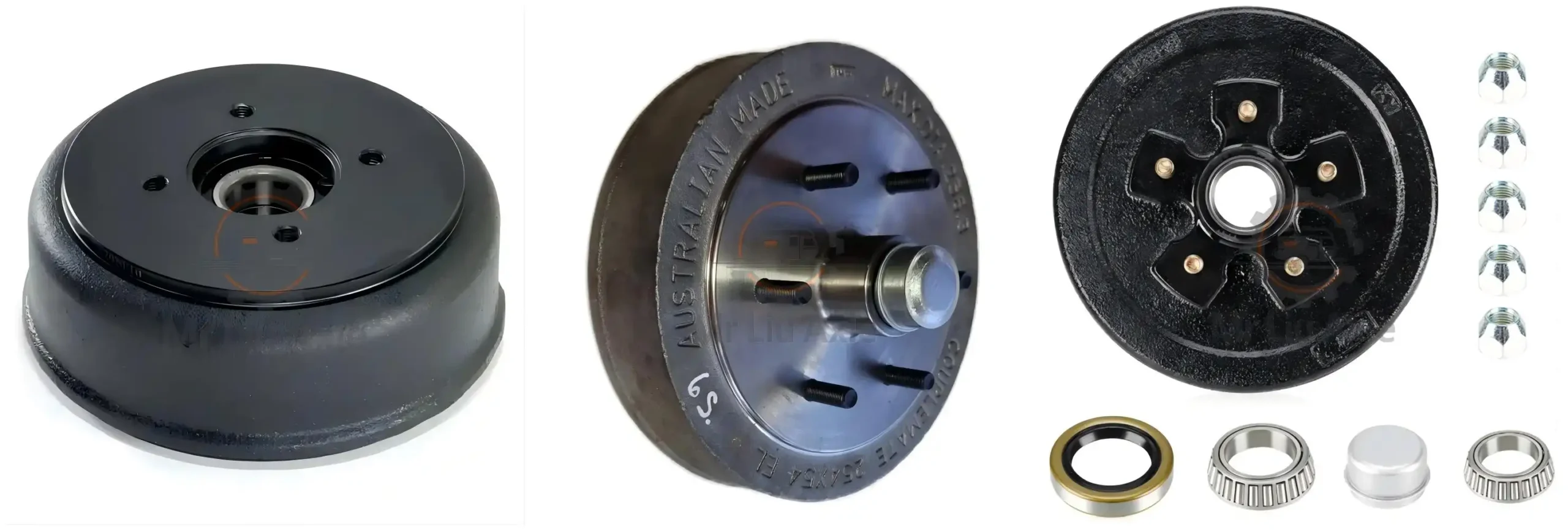
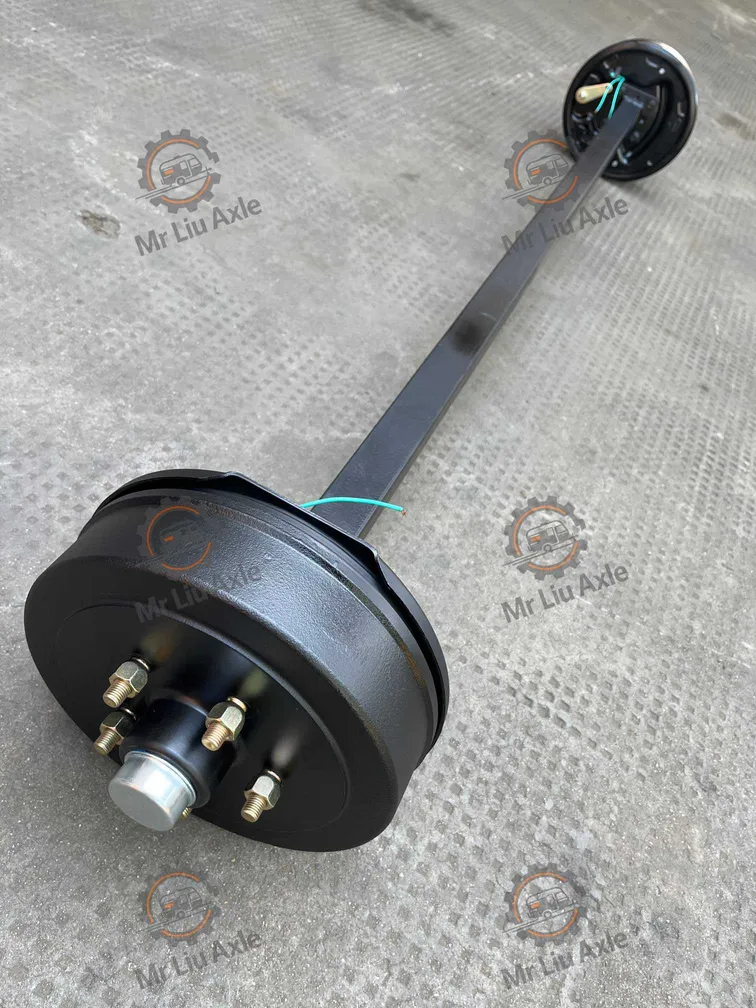
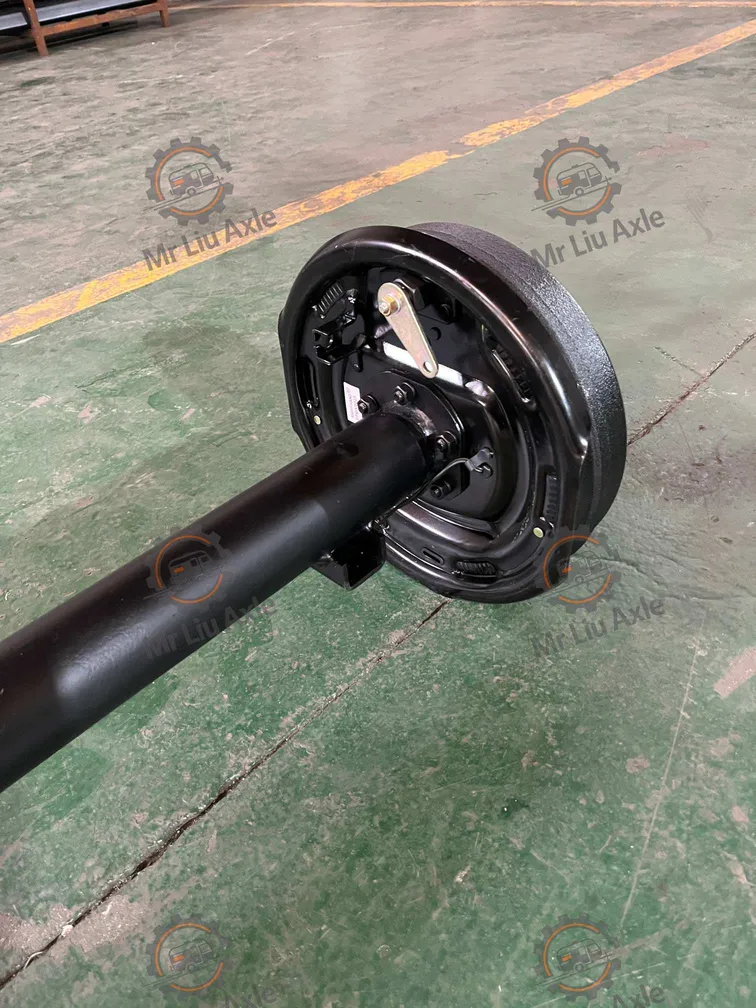
- Remove the brake drum. Inspect the shoes, magnets, and springs. Any shoe material below 3 mm thickness should be replaced before storage
- Clean the drum interior with brake cleaner. Dry thoroughly
- Apply a light coat of rust-preventive spray to the backing plate surface and adjuster mechanism — not on the friction material or drum braking surface
- Store the drum off the hub if possible, or at minimum verify the shoes are not contacting the drum surface under storage load
Hydraulic disc brakes (boat trailers, premium builds):
- Inspect caliper pistons and seals for corrosion. If the piston has surface rust, the seal will tear on first brake application
- Bleed the hydraulic lines. Old brake fluid absorbs moisture over time, lowering its boiling point and causing internal corrosion in the master cylinder and lines
- Apply caliper lubricant to guide pins. Store with a block of wood or spacer between the pads to prevent them from bonding to the rotor under pressure
Storage tip for all brake types: If your trailer will sit on grass, gravel, or bare ground, place wooden blocks or a parking pad under the tires. Ground moisture wicks upward through the tire and wheel, concentrating in the hub and brake cavity over weeks of contact.
3. Long-Term Storage Lift
The single most effective thing you can do for axle longevity over winter is also the simplest: get the weight off the tires and suspension.
Why it matters: When a trailer sits in one position for months, the tires develop flat spots as the rubber settles under constant load. More critically for the axle itself, the suspension — whether torsion or spring — remains compressed. In torsion axles, the rubber cord inside the tube sits under shear stress. In spring axles, the leaf stack stays deflected. Months of static compression accelerate material fatigue and reduce ride quality come spring.
Best practice:
- Jack up the trailer using the frame (never the axle tube or suspension arms) and place jack stands at the frame rails. Remove the wheel and hub assembly entirely if storing for more than 60 days
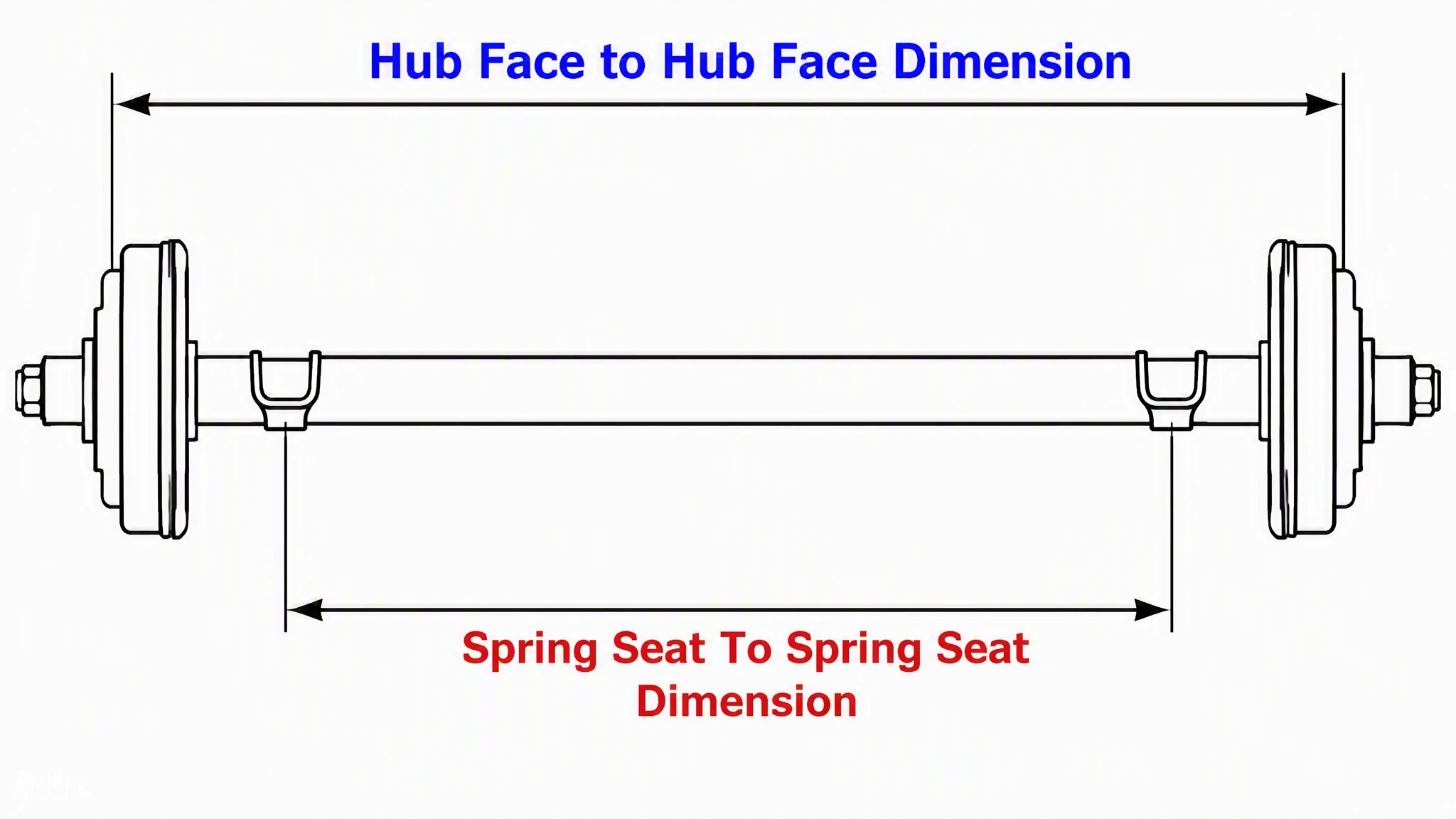
- If jack stands are not available, use axle stands placed under the spring seats or designated jacking points. Never place a jack or stand on the axle tube itself — the tube wall can dent or deform
- Store wheels indoors in a dry location, laid flat or hung on wall hooks. Do not lean them against a concrete wall — concrete wicks moisture and promotes tire sidewall cracking
- For torsion axles, the lift unloads the rubber suspension completely, allowing it to return to its neutral position. This significantly extends the service life of the internal rubber element
If you cannot lift the trailer: At minimum, move it one trailer-length forward or backward every 3–4 weeks. This rotates the tires onto a new contact patch and shifts the suspension load to a different compression point.
4. Rust Prevention
Road salt is the biggest threat to trailer axles in the Northern US and Canada. Salt accelerates galvanic corrosion by 10–20x compared to freshwater exposure. An axle that would survive 15 years in Arizona can rust through in 3–4 years on salted Ontario roads.
Pre-storage wash:
- Pressure-wash the entire undercarriage — axle tube, suspension, springs, u-bolts, brackets — with fresh water. Pay special attention to the inside of the axle tube ends, where salt and mud collect and are rarely rinsed out during normal use
- Dry thoroughly with compressed air or allow a full day in dry conditions before storing
Post-wash protection:
- Apply a thin coat of fluid film, lanolin-based spray, or dedicated corrosion inhibitor to the axle tube, spring seats, and all hardware. Avoid the brake friction surfaces and grease seals — you want rust protection, not contamination
- Inspect u-bolts and spring hangers. If surface rust is already present, wire-brush it off and apply a cold galvanizing spray (zinc-rich paint) to restore the protective coating
Galvanizing check: If your axle is hot-dip galvanized, inspect the coating for chips, scratches, or worn spots. Hot-dip galvanizing provides sacrificial protection — exposed steel will corrode preferentially while the surrounding zinc sacrifices itself. But once the zinc is gone, the steel rusts fast. Touch up any bare spots with zinc-rich paint before winter. If your axle is painted and the paint is bubbling or peeling, strip and recoat before moisture gets underneath.
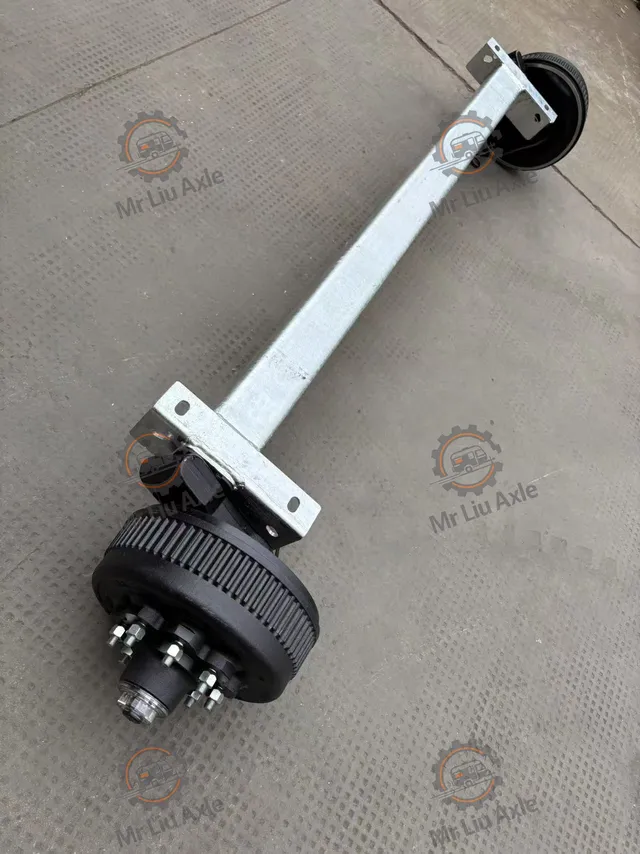
At Mr Liu Axle, we hot-dip galvanize all axles intended for North American customers to 60–100 microns — thick enough to survive real-world salt exposure, not just look good in a warehouse photo. For painted finishes, we recommend an annual inspection and touch-up cycle if the trailer sees salted roads.
Spring Checklist: Before the First Trip
When you pull the trailer out of storage, run through this checklist before hitting the road:
- ☐ Reinstall wheels and torque lug nuts to specification
- ☐ Spin-test each hub — smooth, silent rotation, no play
- ☐ Check tire pressure (cold tires will read low after winter)
- ☐ Inspect brake operation — electric brakes should energize and release cleanly; hydraulic brakes should feel firm with no sponginess
- ☐ Walk around and inspect all hardware, u-bolts, spring hangers, and shackles for rust or looseness
- ☐ Grease any zerk fittings (spring shackles, equalizer pivots)
- ☐ Test lights and electrical connections — corrosion loves trailer wiring
Axles Built for Real Climates
At Mr Liu Axle, we supply torsion axles and spring axles to small and mid-sized trailer manufacturers and distributors across Canada and the Northern United States. We understand that your customers do not store their trailers in climate-controlled garages — they sit in driveways, barns, and job sites through -30°C January nights.
That is why we build axles that can handle it: thick-wall steel tubing from our proprietary dies, hot-dip galvanizing to spec, listed-company bearings, and full customisation of load rating, hub face width, and brake configuration to match whatever your customers tow — snowmobiles, ice fishing huts, construction equipment, or cattle.
Need axles spec’d for a specific trailer line or looking for a reliable supplier for the upcoming build season? Contact us — we will quote to your exact specification with a sample option so you can validate fit and finish before committing to volume.