

Blog
How to Replace a Trailer Axle Bearing: Step-by-Step Guide

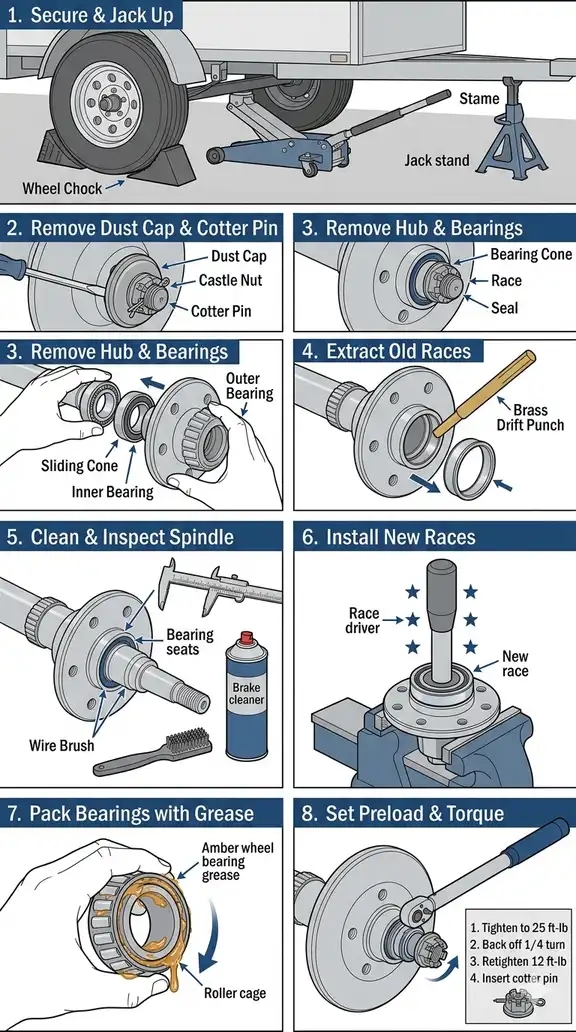
How to Replace a Trailer Axle Bearing: Step-by-Step Guide
A complete DIY tutorial for safely removing, inspecting, and installing trailer hub bearings — with torque specs, tool lists, and pro tips.
Direct Answer: How Do You Replace a Trailer Axle Bearing?
To replace a trailer axle bearing, remove the wheel and hub, extract the old bearing and race with a brass drift, clean and inspect the spindle, press in new races, pack new bearings with NLGI #2 grease, and set the preload by torquing the castle nut to 25 ft-lb, backing it off 1/4 to 1/2 turn, then retightening to 12–15 ft-lb. The job takes about 90 minutes per wheel with a socket set, a torque wrench (50–150 ft-lb), and a bearing packer. This guide covers the two most common bearing sets: 1-1/16″ × 1-3/8″ (LM48548/10 + LM67048/10) and 1-3/8″ × 1-3/4″ (25580/20 + 15123/15245).
Quick Summary
Replacing a trailer axle bearing requires removing the hub, extracting the old bearing and race, cleaning the spindle, installing new components with fresh grease, and torquing the castle nut to specification.
What Tools and Materials Do You Need to Replace a Trailer Axle Bearing?
You need a 1/2″-drive socket set with a 1-1/4″ or 1-1/2″ castle-nut socket, a torque wrench rated 50–150 ft-lb, a seal puller or flat-head screwdriver, a brass drift punch, and a replacement bearing set matched to your axle load rating.
Tools
- Socket set (1/2″ drive, including 1-1/4″ or 1-1/2″ socket for castle nut)
- Torque wrench (50–150 ft-lb range)
- Flat-head screwdriver or seal puller
- Brass drift punch or hardwood block (for race installation)
- Dead-blow hammer
- Wire brush + shop rags
- Bearing packer (or grease-proof gloves for hand-packing)
Materials
- Replacement bearing set (inner + outer bearing + races + seal)
- High-temperature wheel bearing grease (NLGI #2, marine-grade if boat trailer)
- Replacement cotter pin or tang washer
- Brake cleaner or mineral spirits
- Disposable gloves and shop towels
Never reuse a cotter pin. They are designed for single-use torque retention. A reused pin can fatigue and back the castle nut off.
How Do You Identify Your Trailer Bearing Size?
Identify your bearing size by reading the part number stamped into the bearing cone face; if the numbers are worn off, measure the spindle seat diameters with a caliper and match them to a bearing set by axle load capacity.
Trailer bearings are not one-size-fits-all. The two most common configurations on American trailers are:
| Capacity | Inner Bearing | Outer Bearing | Seal ID |
|---|---|---|---|
| 2,000–3,500 lb | LM48548 / LM48510 | LM67048 / LM67010 | 1.50″ (171255TB) |
| 5,200–7,000 lb | 25580 / 25520 | 15123 / 15245 | 2.13″ (21333TB) |
Bearing numbers per standard trailer axle bearing catalog. Verify stamped cone numbers on your existing bearings before ordering.
If the bearing numbers are worn off, measure the spindle seat diameters with a caliper. The trailer axle bearing catalog on our site matches spindle measurements to bearing sets by load capacity.
📺 Visual Learner? This excellent walkthrough video demonstrates the entire hub removal and bearing replacement process on a typical 3,500 lb trailer axle: https://www.youtube.com/watch?v=77j_BogeU30. We recommend watching the full video before starting your own repair, especially the section on setting bearing preload.
Step-by-Step Bearing Replacement
How Do You Safely Secure the Trailer Before Starting?
Park on level concrete, chock the opposite wheel, loosen the lug nuts before jacking, and raise the trailer with a floor jack under the frame — never the axle tube.
Support the trailer with jack stands and remove the wheel. If your trailer has electric brakes, disconnect the wiring harness to the magnet before proceeding.
How Do You Remove the Hub and Drum Assembly?
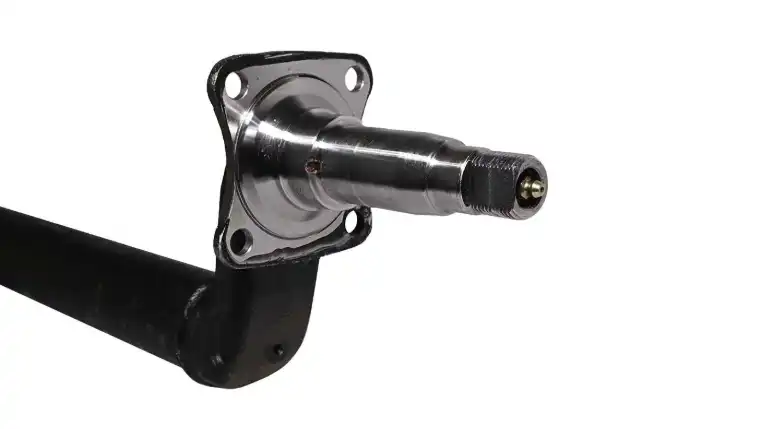
Remove the hub by prying off the dust cap, pulling the cotter pin, and unscrewing the castle nut with a 1-1/4″ or 1-1/2″ socket; the hub then slides straight off the spindle.
Pull the rubber dust cap off the hub center. A flat screwdriver tapped into the gap usually pops it free. Remove the cotter pin from the castle nut using pliers or side cutters. Unscrew the castle nut (lefty-loosey). Remove the washer and outer bearing cone — it should slide out by hand or with a gentle twist of the hub.
Pull the hub/drum straight off the spindle. The inner bearing and seal will come out with it. Set the hub face-down on a clean surface to avoid contaminating the brake shoes.
Pro tip: Take a photo of the spindle and nut stack before disassembly. The order is: castle nut → flat washer → outer bearing → hub → inner bearing → grease seal.
How Do You Remove the Old Bearings and Races?
Pry out the grease seal with a seal puller, drop out the inner bearing, and drive each race out of the hub from the opposite side using a brass drift punch.
Pry the grease seal out from the back of the hub using a seal puller or flat screwdriver. Work carefully around the perimeter to avoid scoring the hub bore. The inner bearing will fall out once the seal is removed.
Remove the bearing races (the steel cups pressed into the hub). Most DIYers don’t own a slide hammer and race puller — and that’s fine. Place the edge of the hub over a vise or wooden block so the race is supported, then drive it out from the opposite side using a brass drift punch. Strike the opposite race, not the hub itself. The race should pop out in 4–6 firm hits. Repeat for the outer race.
Never install new bearings into old races, or old bearings into new races. They wear as a matched set. Mixing used and new components voids the warranty and guarantees premature failure.
How Do You Clean and Inspect the Spindle and Hub?
Spray the hub with brake cleaner, scrub the spindle with a wire brush, and replace the spindle or axle if you find deep grooves, blueing discoloration, or pitting on the bearing seats.
Inspect the spindle for:
- Scoring or galling on the bearing seats — light scratches are acceptable; deep grooves mean spindle replacement
- Discoloration (blueing) — indicates prior overheating; the spindle hardness may be compromised
- Pitting or rust — minor surface rust cleans off; pitting means replacement
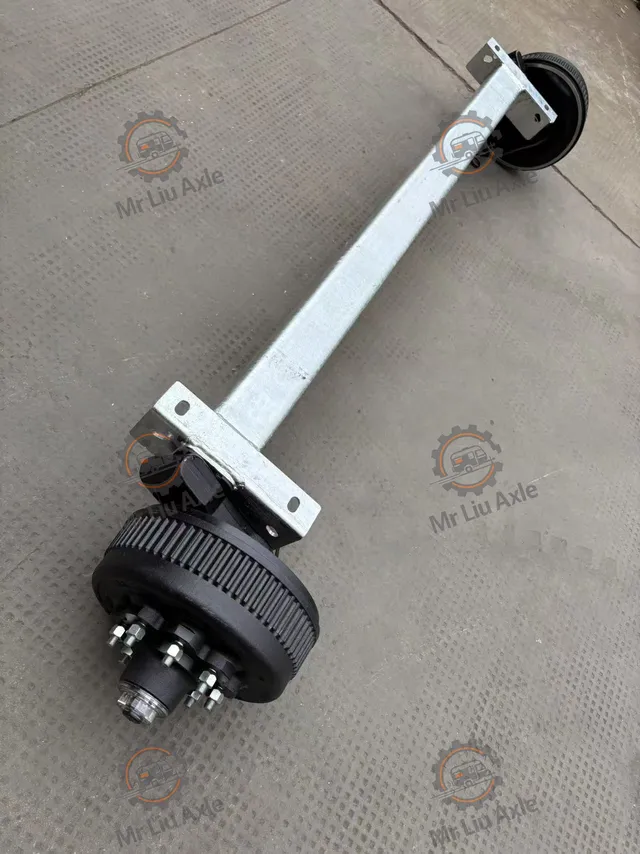
Run your fingernail across the bearing seats. If you feel a groove, replace the spindle or the entire axle. Replacement trailer axles in standard and custom lengths are available if the spindle is damaged beyond use.
How Do You Install New Bearing Races?
Grease the outside of each new race, seat it squarely in the hub bore, and drive it in with a brass drift worked in a star pattern until the tone changes from a hollow ring to a solid “thunk” against the shoulder.
Apply a thin film of grease to the outside of each new race. Place the outer race into the hub bore squarely. Work in a star pattern — three taps at 12 o’clock, three at 4 o’clock, three at 8 o’clock — to seat the race evenly. Repeat for the inner race from the opposite side. The race must sit fully flush against the hub shoulder with no gap visible.
If you don’t have a race driver set, a large deep socket matching the race OD works as a makeshift driver. Just don’t strike the bearing surface.
How Do You Pack Trailer Bearings with Grease?
Pack grease into the bearing until it extrudes from the roller cage on all sides, using a bearing packer or the hand-packing method with a palmful of NLGI #2 grease.
Place the new inner bearing into a bearing packing tool and pump grease until it extrudes from the roller cage on all sides. No packing tool? Use the hand-packing method: scoop a palmful of grease and press the bearing edge into it, working grease between the rollers until fully saturated. Rotate the cage as you go.
Apply a light coat of grease to the inside of the hub cavity and the new race surfaces. Seat the packed inner bearing into the inner race, then tap the new grease seal into place using a seal driver or flat block. The seal face should sit flush with the hub edge.
How Do You Set Trailer Bearing Preload?
Tighten the castle nut to 25 ft-lb while rotating the hub by hand, back it off 1/4 to 1/2 turn until finger-tight, then retighten to 12–15 ft-lb or until the nut slots align with the cotter pin hole.
Follow this exact sequence:
- Tighten the castle nut to 25 ft-lb while rotating the hub by hand. This seats the bearings fully.
- Back the nut off 1/4 to 1/2 turn until it is finger-tight.
- Tighten again to 12–15 ft-lb for standard bearings, or until the castle nut slots align with the cotter pin hole — whichever comes first.
- Insert a new cotter pin through the castle nut and spindle hole. Bend the legs around the nut.
Over-tightening is the #1 cause of premature bearing failure. Too much preload crushes the rollers against the race, generating heat. The hub should spin freely with no noticeable drag or play when rocked side-to-side.
Tap the dust cap back into place with a soft-faced hammer. If your trailer uses Bearing Buddies or a grease zerk fitting, pump grease until the piston plate moves outward slightly — do not overfill, which can blow out the rear seal.
How Do You Reassemble the Trailer and Test It?
Reconnect the brake wiring, torque the lug nuts in a star pattern (typically 90–120 ft-lb for 1/2″ studs), and check hub temperature during the first 20 miles — a hub too hot to touch means the preload is too tight.
Reconnect the brake wiring if applicable. Remount the wheel and lower the trailer. Re-torque the lug nuts after 50 miles.
For the first 20 miles, stop and feel the hub temperature at each rest stop. A warm hub is normal. A hub too hot to touch indicates over-tightening — jack up the wheel, back the castle nut off 1/16 turn, and re-pin.
What Are the Most Common Trailer Bearing Problems?
Most post-replacement problems trace back to three causes: incorrect preload, a race that isn’t fully seated, or a crooked or over-greased seal — and each has a specific fix.
| Symptom | Cause | Fix |
|---|---|---|
| Hub gets hot after 10 miles | Castle nut too tight | Back off preload, re-torque to 12 ft-lb |
| Hub wobbles side-to-side | Bearing preload too loose | Tighten castle nut, check for worn races |
| Grease leaking from rear seal | Seal installed crooked or over-greased | Replace seal, reduce grease volume by 30% |
| Metallic grinding noise | Race not fully seated or wrong bearing | Disassemble, inspect race depth, verify part numbers |
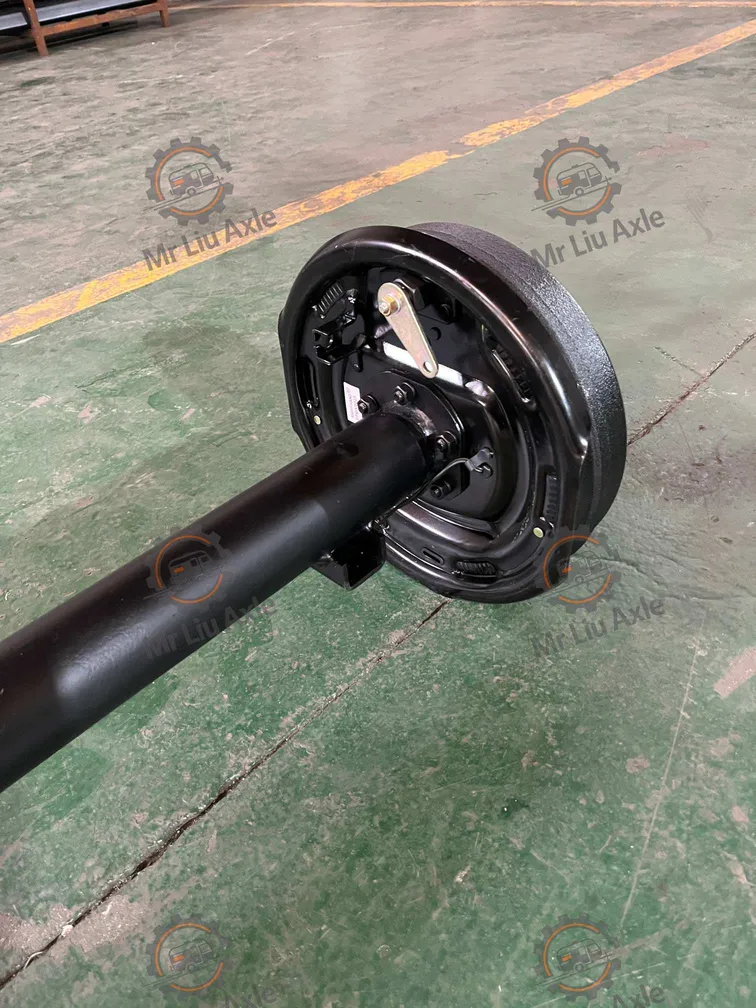
| Brakes feel weak after reassembly | Brake magnet misaligned with hub drum | Check magnet gap (0.030–0.060″), adjust if needed |
How Often Should You Repack Trailer Bearings?
Repack standard utility trailer bearings every 12 months or 12,000 miles, freshwater boat trailer bearings every 6 months, and saltwater boat trailer bearings every 3 months or after every launch day.
- Standard utility trailers: Every 12 months or 12,000 miles
- Boat trailers (freshwater): Every 6 months — submersion during launch pushes water past the seal
- Boat trailers (saltwater): Every 3 months or after every launch day
- Car haulers / heavy equipment: Every 6 months regardless of mileage
Between services, pull the dust cap every 3,000 miles and visually inspect the grease color. Clean grease is tan or amber. Black grease means contamination (brake dust or water). Gray grease means metallic wear — replace bearings immediately.
Factory perspective: In our production and warranty experience, the most bearing failures come from boat trailers that launch in salt water without rinsing the hubs afterward — salt water migrates past the seal, contaminates the grease, and turns it black within weeks.
When Should You Replace the Entire Hub Assembly?
Replace the complete hub assembly instead of just the bearings when the bearing seats are scored or oval, the brake drum is grooved beyond maximum diameter, the wheel studs are loose or stripped, or the hub shows heat blueing.
- The bearing seats in the hub are scored, oval, or oversized from a previous spin-out
- The brake drum surface is grooved beyond the manufacturer’s maximum diameter
- The wheel studs are loose, stripped, or showing thread damage
- The hub has been overheated to the point of blueing
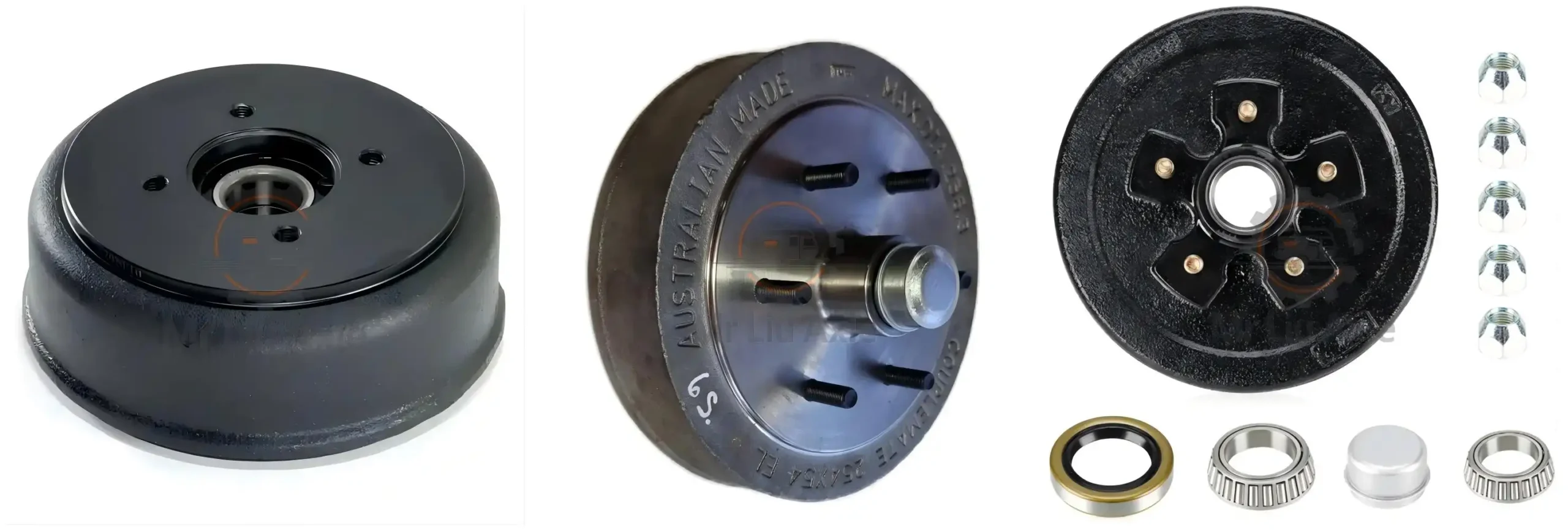
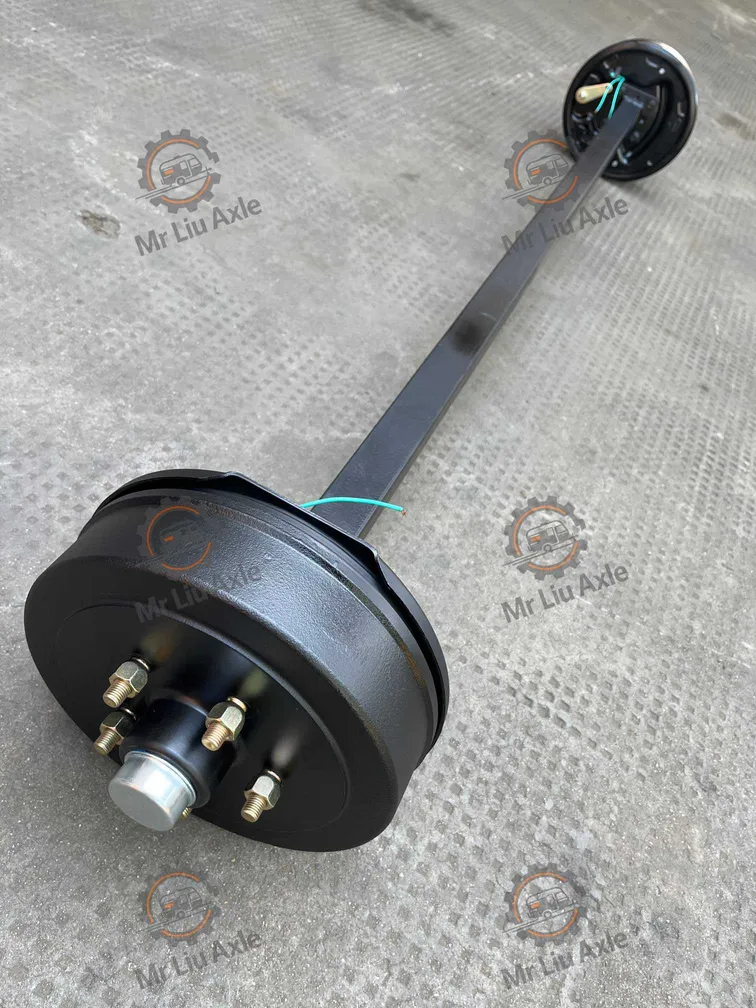
Complete hub assemblies with bearings, races, seal, and pre-installed studs are available as bolt-on replacements. Check the trailer hub, bearing, and brake drum catalog for assemblies matching your axle capacity, bolt pattern, and brake size.
References
- Trailer Hub Bearing Replacement — Complete Walkthrough Video (YouTube)
- Timken Bearing Maintenance Handbook — Tapered Roller Bearing Installation and Preload
- NTRA (National Trailer and Towing Association) — Trailer Hub Servicing Guidelines
- MrLiuAxle — Trailer Axle Bearings, Hubs, and Replacement Parts
Frequently Asked Questions
What tools do I need to replace a trailer axle bearing?
You need a 1/2″-drive socket set with a 1-1/4″ or 1-1/2″ castle-nut socket, a torque wrench rated 50–150 ft-lb, a flat-head screwdriver or seal puller, a brass drift punch or hardwood block, a dead-blow hammer, a wire brush, and a bearing packer or grease-proof gloves.
How do I know which bearing size my trailer uses?
Check the part number stamped into the face of the existing bearing cone. If it is worn off, measure the spindle seat diameters with a caliper and match them to a bearing set by axle load capacity — 2,000–3,500 lb axles typically use LM48548/10 + LM67048/10, and 5,200–7,000 lb axles use 25580/20 + 15123/15245.
Can I reuse the cotter pin?
No. Cotter pins are designed for single-use torque retention. A reused pin can fatigue and back the castle nut off, which is why a new cotter pin or tang washer should always be installed during reassembly.
What torque should the castle nut be tightened to?
Tighten the castle nut to 25 ft-lb while rotating the hub by hand to seat the bearings, back it off 1/4 to 1/2 turn until finger-tight, then retighten to 12–15 ft-lb or until the nut slots align with the cotter pin hole — whichever comes first.
How long does a trailer axle bearing replacement take?
About 90 minutes per wheel with the right tools, including hub removal, race extraction and installation, greasing, preload setting, and reassembly.
Can I put new bearings into old races?
No. Bearings and races wear as a matched set, so never install new bearings into old races or old bearings into new races. Mixing used and new components voids the warranty and guarantees premature failure.
How do I know if the preload is set correctly?
The hub should spin freely with no noticeable drag and no side-to-side play when rocked by hand. If the hub gets too hot to touch after 10 miles of driving, the castle nut is too tight — jack up the wheel, back it off 1/16 turn, and re-pin.