

Blog
How to Customize Trailer Axles: Load, Length, Brake Options

How to Customize Trailer Axles: Load, Length, Brake Options
Not every trailer fits a catalog part. Off-the-shelf axles work for standard builds, but if you’re manufacturing trailers with unique frame widths, specialised load requirements, or region-specific brake systems, customization isn’t a luxury — it’s a necessity. The right axle should match your chassis like it was designed for it, because it was.
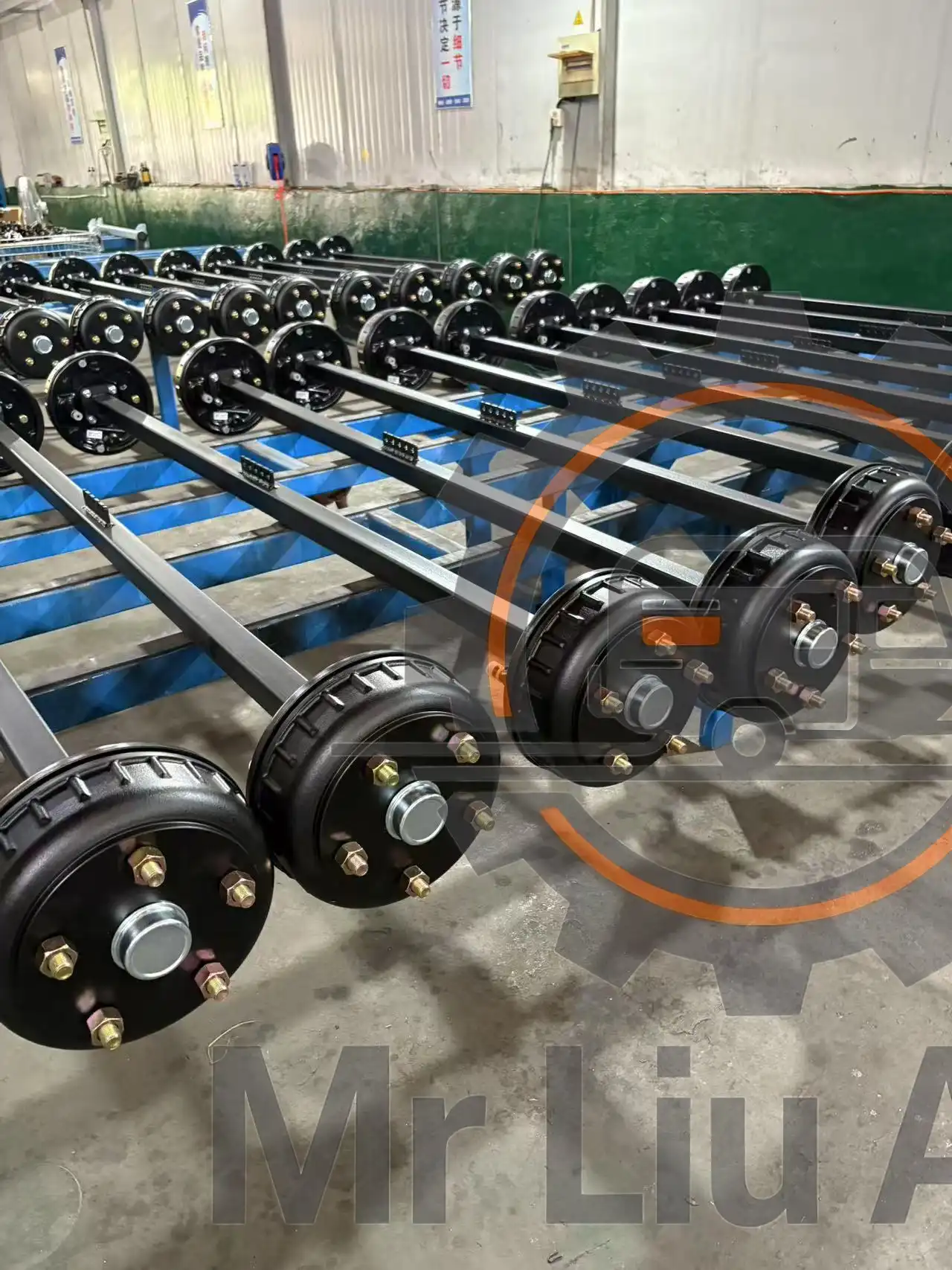
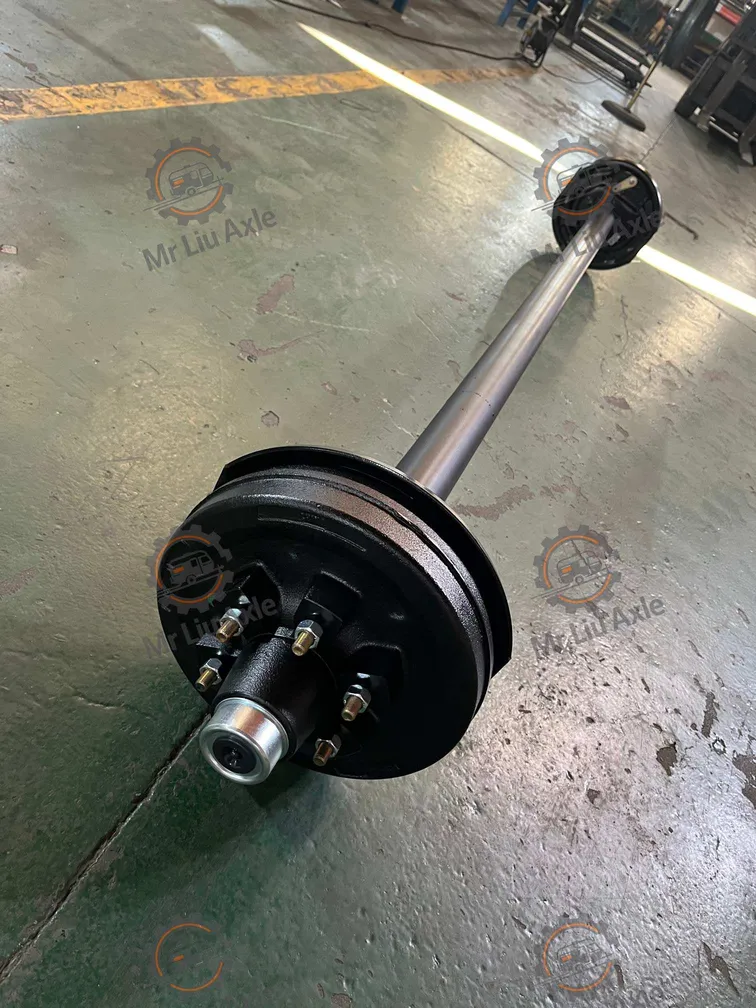
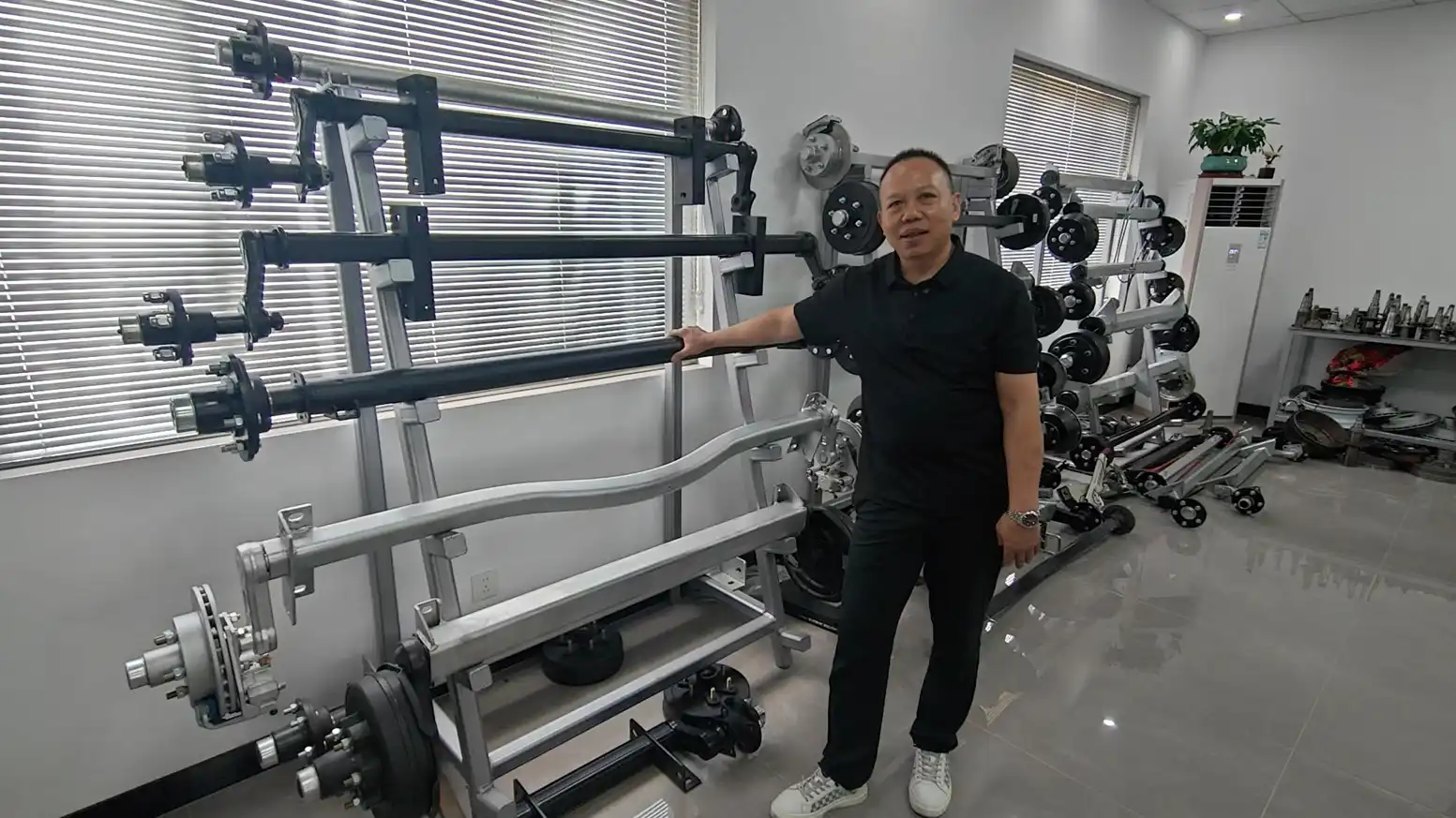
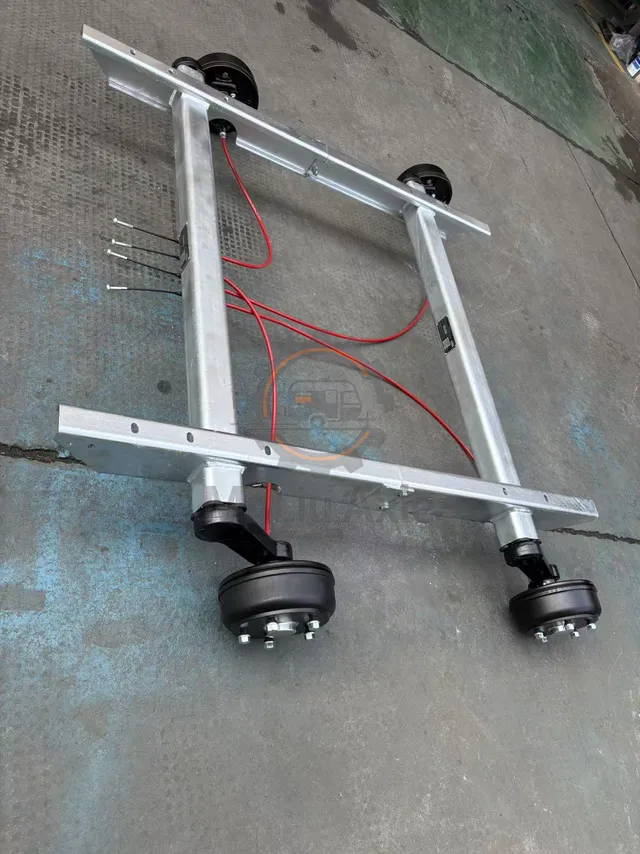
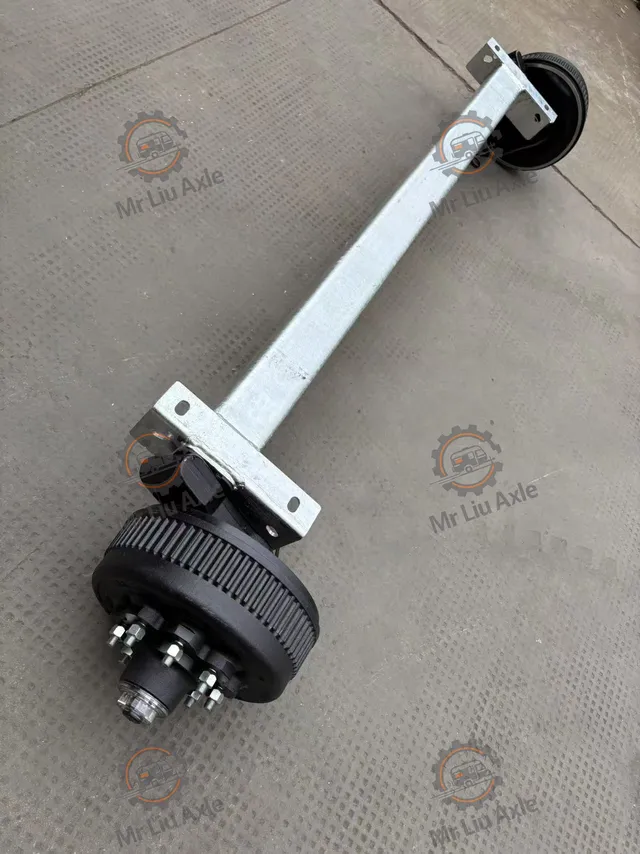
At Mr Liu Axle, we manufacture torsion axles and spring axles — our two core product lines — with full customization across load capacity, hub face width, brake configuration, and surface finish. Whether you need ten axles for a production trial or a thousand for a full production run, we build to your exact specification.
1. Load Customization Range: 500 kg to 3,500 kg
We produce axles rated from 500 kg (1,100 lbs) up to 3,500 kg (7,700 lbs), covering virtually every light- to medium-duty trailer application on the market:
- 500–750 kg: Small utility trailers, motorcycle trailers, light camping trailers, jet-ski trailers
- 1,000–1,500 kg: Medium utility trailers, single-axle caravans, boat trailers up to ~4.5 metres
- 2,000–2,500 kg: Tandem-axle caravans, larger boat trailers, horse floats, equipment trailers
- 3,000–3,500 kg: Heavy-duty caravans, large boat trailers, commercial equipment trailers, food trailers
Both our torsion axle and spring axle lines span this full load range. Torsion axles offer independent suspension, lower deck height, and zero maintenance on the rubber-in-tube system — ideal for caravans, camper trailers, and premium builds. Spring axles provide a cost-effective, field-serviceable solution with proven durability for utility trailers, construction equipment, and high-volume production lines.
When specifying your axle load, always calculate your trailer’s gross vehicle mass (GVM) or gross trailer weight rating (GTWR), then select an axle rated at least 10–15% above that figure. This safety margin accounts for uneven load distribution, dynamic forces during braking and cornering, and the real-world tendency of users to overload.
2. Hub Face Width: Up to 2,500 mm
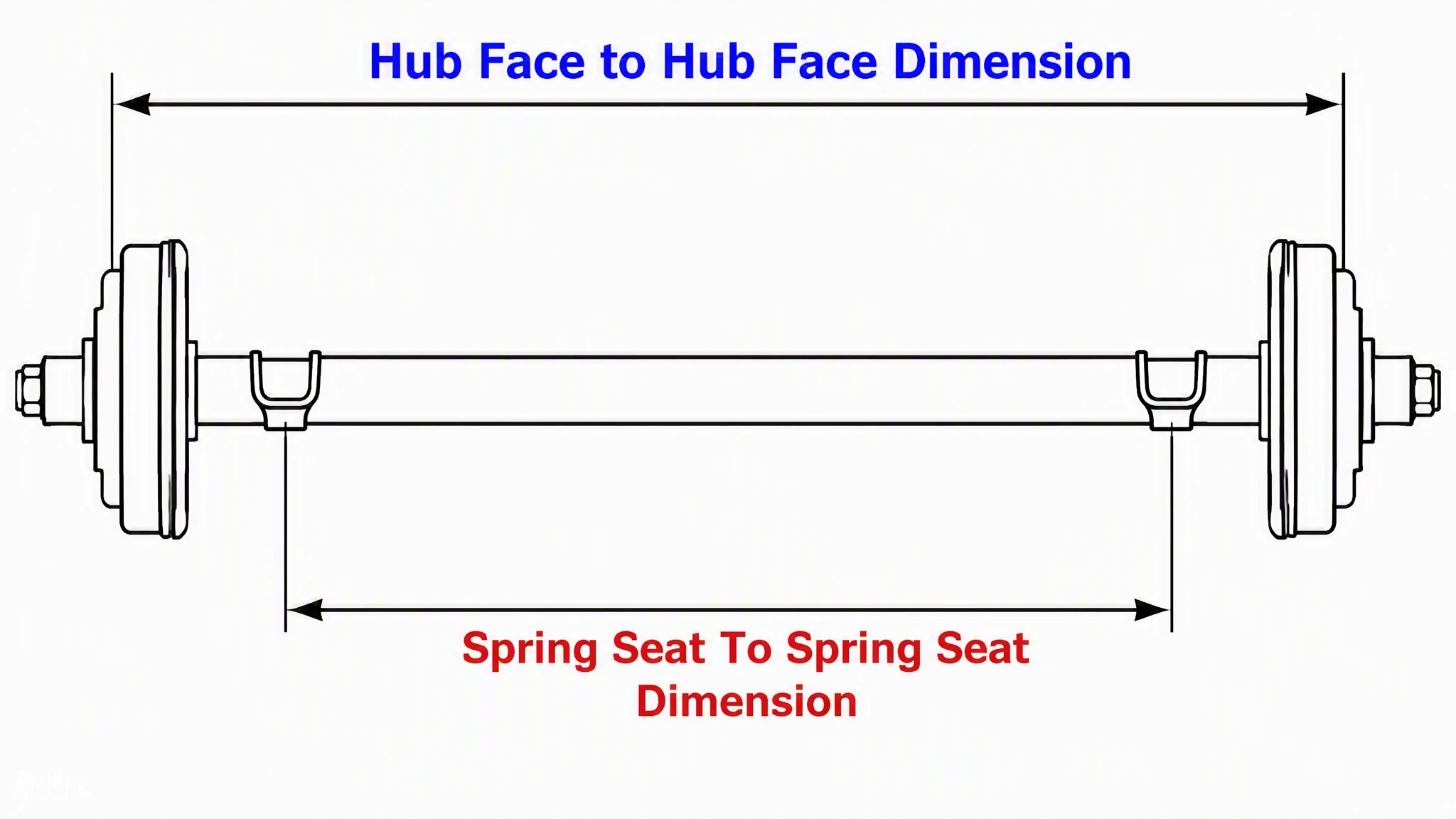
Hub face width — the distance from the outside of one hub to the outside of the other — is the single most critical dimensional specification on any axle. It must match your trailer frame width, wheel offset, and tyre clearance requirements. Get it wrong, and your wheels rub the frame or stick out past the guards.
We manufacture axles with hub face widths from compact 1,000 mm (39 inch) designs for small European caravans, all the way up to 2,500 mm (98.4 inch) for wide-track utility trailers, off-road campers, and specialised commercial builds. Between those extremes, virtually any dimension is achievable.
When ordering, specify one of the following measurements:
- Hub face to hub face — the most common specification for complete axle assemblies
- Spring center to spring center — used when matching to an existing chassis mount pattern
- Overall length including brackets — occasionally required for tight packaging constraints
If you are unsure which measurement your build requires, send us your trailer frame width and tyre size. We will calculate the correct hub face width to achieve proper wheel alignment and guard clearance.
3. Brake Type Selection: Configured by Market and Application
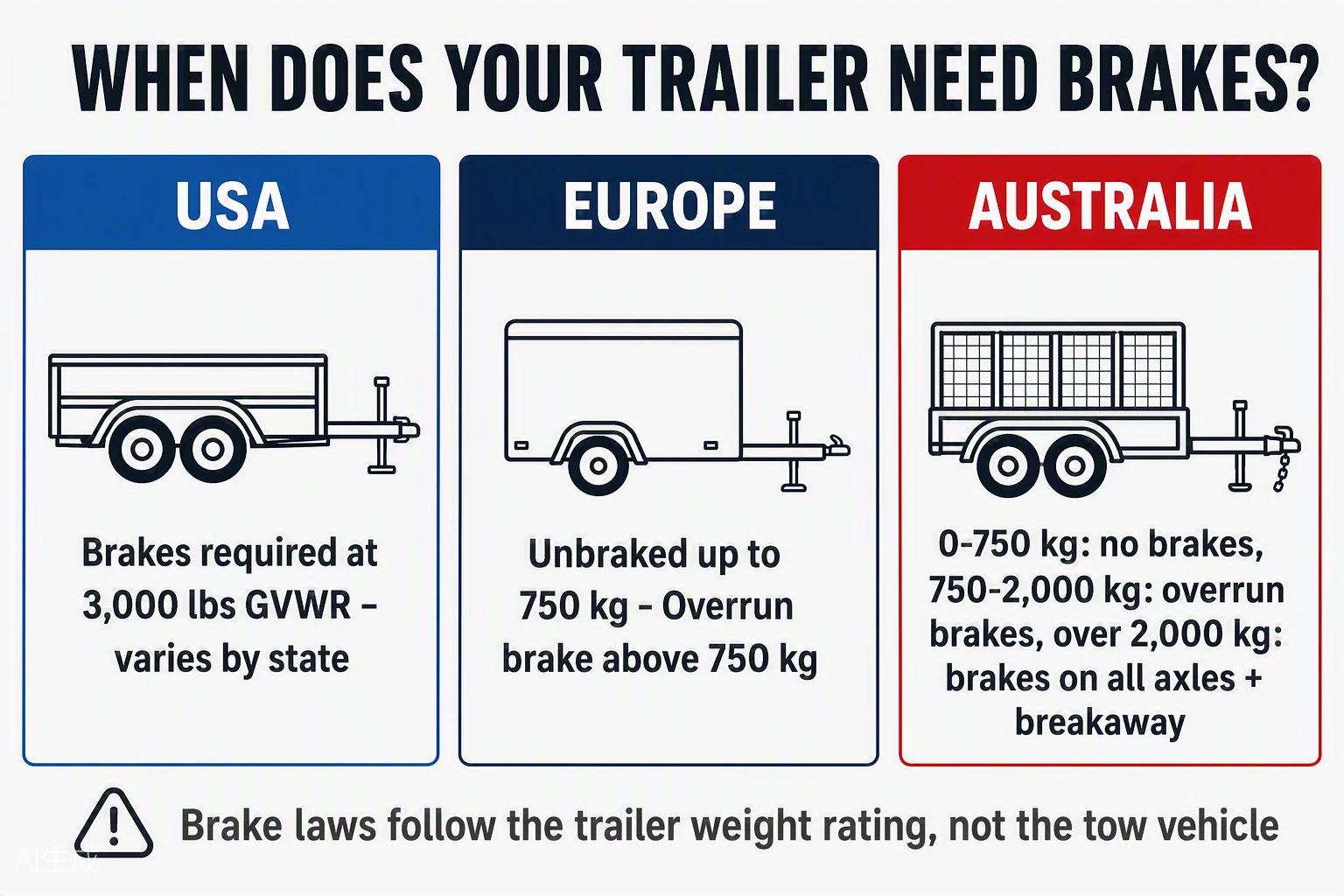
Brake selection is where regional standards, trailer type, and customer preference intersect. We offer a comprehensive range of brake configurations tailored to the three major markets we serve — Europe, Australia, and North America.
European Market: Knott Mechanical Overrun Brakes
European caravans and light trailers predominantly use mechanical overrun (inertia) brake systems from Knott — the leading brand in the EU market. These systems engage automatically when the tow vehicle decelerates, using the trailer’s own momentum to activate the brakes through a mechanical linkage. No electrical connection required.
We fit Knott overrun couplings, brake cables, and compatible brake assemblies to our axles for European-bound builds. Common configurations include:
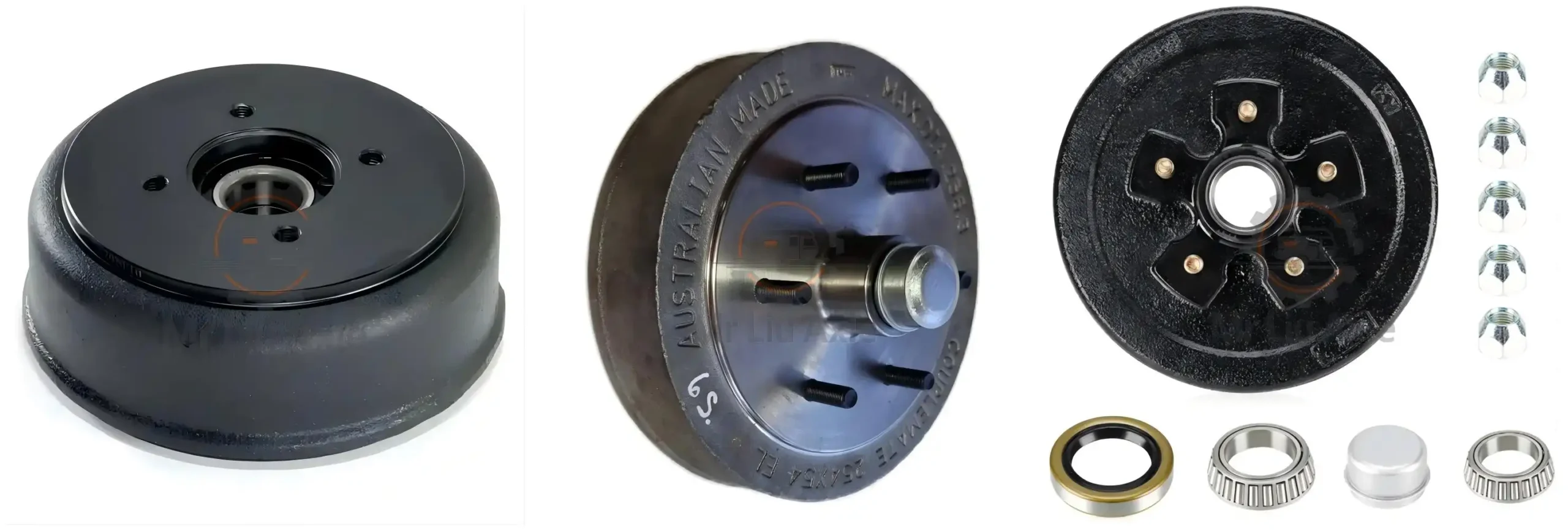
- Knott 200×50 mm and 250×40 mm brake drums
- Matching handbrake expanders and parking brake mechanisms
Australian Market: Electric and Hydraulic Brakes
Australian trailers over 750 kg GTM require brakes, and the market uses a mix of systems depending on trailer type and weight class:
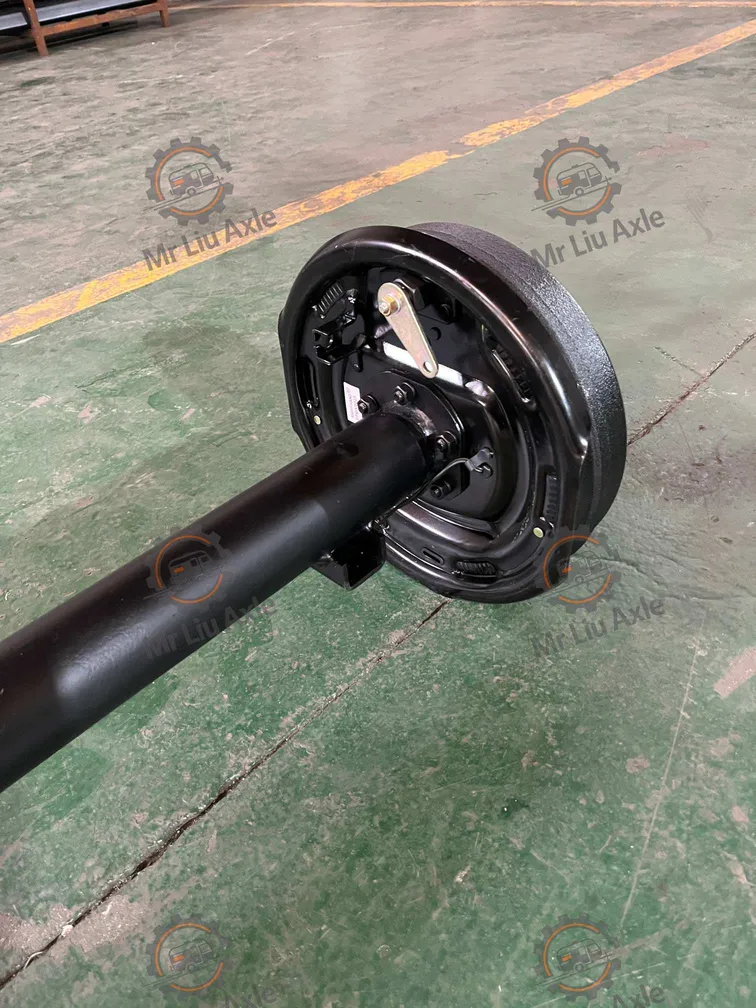
- Electric drum brakes: The most common type for caravans and general-purpose trailers. 10-inch drums for axles up to ~1,450 kg, 12-inch drums for heavier tandem-axle builds
- Hydraulic drum brakes: Fitted to some commercial and agricultural trailers where electric actuation is impractical
- Hydraulic disc brakes: Increasingly popular on boat trailers — especially for saltwater marine use — where disc brakes resist corrosion better than drums and provide more consistent stopping performance when submerged during launch and retrieval
North American Market: Electric and Hydraulic Brakes
The US and Canadian trailer markets divide along similar lines:
- Electric drum brakes: Standard on the vast majority of travel trailers, cargo trailers, and utility trailers. Available in 10-inch (3,500 lb axles) and 12-inch (5,200–7,000 lb axles) drum sizes
- Hydraulic drum brakes: Used on some commercial trailers and in the Northeast where state regulations favour surge (overrun) systems
- Hydraulic disc brakes: Standard equipment on boat trailers in the US market, where the combination of consistent wet-braking performance and superior corrosion resistance makes discs the clear choice for marine applications
Brake Drum Quality Control Through Proprietary Tooling
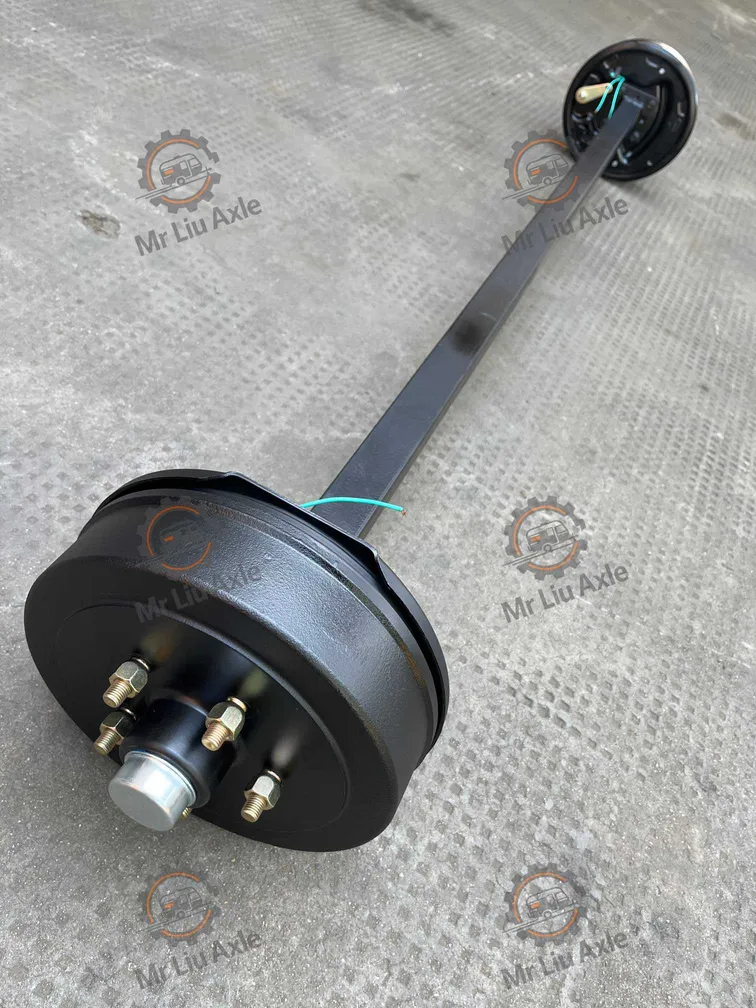
One detail that sets us apart: all brake drums for drum brake configurations are produced using our own proprietary molds and dies, manufactured by large-scale professional foundries with decades of casting experience. We design and own the tooling. They provide the casting expertise and production capacity. This partnership gives us full control over casting quality, machining tolerances, surface finish, and dimensional accuracy — without the limitations of small-scale in-house casting. Whether you need a 200×50 mm Knott-compatible drum for a European caravan axle or a 12-inch electric drum for a 7,000 lb US trailer axle, the drum was cast and machined to our tooling, our specifications.
This matters because it means consistent brake shoe fit, reliable braking performance, and no variation between production batches. When your customer presses the brake pedal, the stopping power is predictable — every time.
4. Surface Finish: Hot-Dip Galvanizing or Paint
The right surface treatment depends on where and how the trailer will be used. We offer two options:
Hot-Dip Galvanizing
Our standard and most popular finish. The axle is submerged in a molten zinc bath, producing a metallurgically bonded coating that typically measures 60–100 microns. Hot-dip galvanizing provides:
- 10–15 years of corrosion protection in normal outdoor conditions
- Superior resistance to saltwater, road salt, and coastal air
- Self-healing properties at scratches and cut edges
Hot-dip galvanizing is essential for boat trailers, any trailer used within 50 km of the coast, and all Australian-bound axles where the combination of salt air and UV is relentless.
Painting / Powder Coating
For dry-climate applications and indoor-use trailers, we offer painted or powder-coated finishes in standard or custom colours. This option is more economical than galvanizing and delivers a clean, professional appearance. Best suited for:
- Enclosed cargo trailers
- Show trailers and exhibition builds
- Utility trailers in arid regions
Powder coating is not recommended for marine, coastal, or snow-country applications. In those environments, specify hot-dip galvanizing — no exceptions.
5. MOQ and Lead Time
We understand that not every order is a full container. Our production minimums and lead times are structured to support both sample testing and volume production:
| Order Type | MOQ | Lead Time |
|---|---|---|
| Sample / prototype axle | 1 piece | 1–2 weeks (depending on spec complexity) |
| Small production batch | 10 pieces | 2–3 weeks |
| Volume production | 100+ pieces | 3–4 weeks |
| Container orders (500+ axles) | 500+ pieces | 4–6 weeks |
Samples from 1 piece. If you are qualifying a new axle supplier, testing a new trailer design, or building a prototype for certification, we will produce a single axle to your exact specification. No MOQ. No shortcuts. The sample axle is built on the same production line, using the same tooling, by the same team that handles our volume orders. What you test is what you will get at scale.
For repeat orders of established specifications, our fastest turnaround is 2 weeks from confirmed order to shipment-ready, provided the required brake components and steel stock are on hand. Longer lead times apply for highly customised specs or large container-volume orders that require raw material procurement.
How to Start Your Custom Axle Order
Getting a quote is straightforward. Send us the following:
- Load capacity required (kg or lbs)
- Hub face width (mm or inches)
- Brake type and market (e.g., “electric drum, US market” or “Knott overrun, EU market”)
- Surface finish (hot-dip galvanizing or paint/powder coat)
- Quantity (sample, trial batch, or production volume)
We will confirm specifications, quote pricing, and provide a production timeline within 24 hours. Every axle ships with a riveted metal nameplate showing product model, rated load, production date, and batch number — full traceability from our factory to your workshop.
Ready to spec your custom axle? Contact us with your requirements and we’ll have a quote back to you within one business day.