

Blog
How to Match Brake Drums to Your Axle?

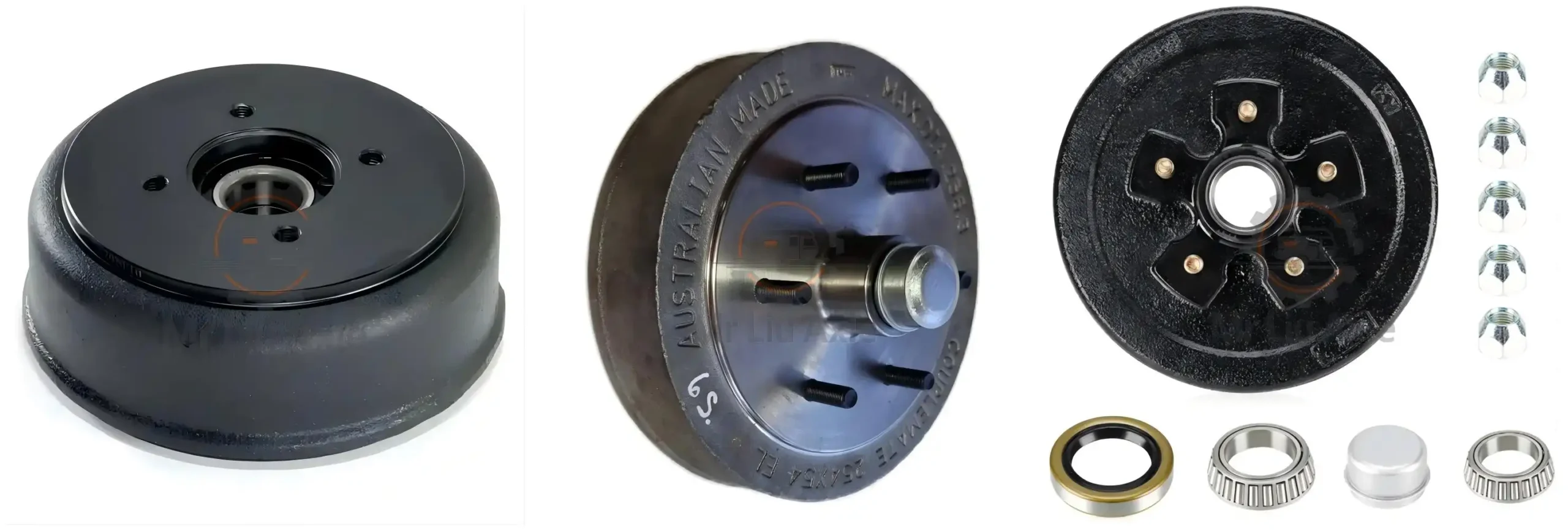
How to Match Brake Drums to Your Axle?
Matching the right brake drum to your axle assembly is not just about diameter and width. The wrong drum — even by a few millimetres — creates uneven braking, premature shoe wear, safety issues, and costly warranty returns. Whether you are building a utility trailer in Texas, a caravan in Melbourne, or a boat trailer in Hamburg, the brake drum must match the axle hub, the bolt pattern, the brake system type, and the market regulations where the trailer will operate.
In this guide, I will walk through the brake drum sizing and matching standards across the three major markets we supply — North America, Australia, and Europe — along with the critical installation details and the most common mistakes that cause brake performance problems.
1. North American and Australian Market Brake Drum Standards
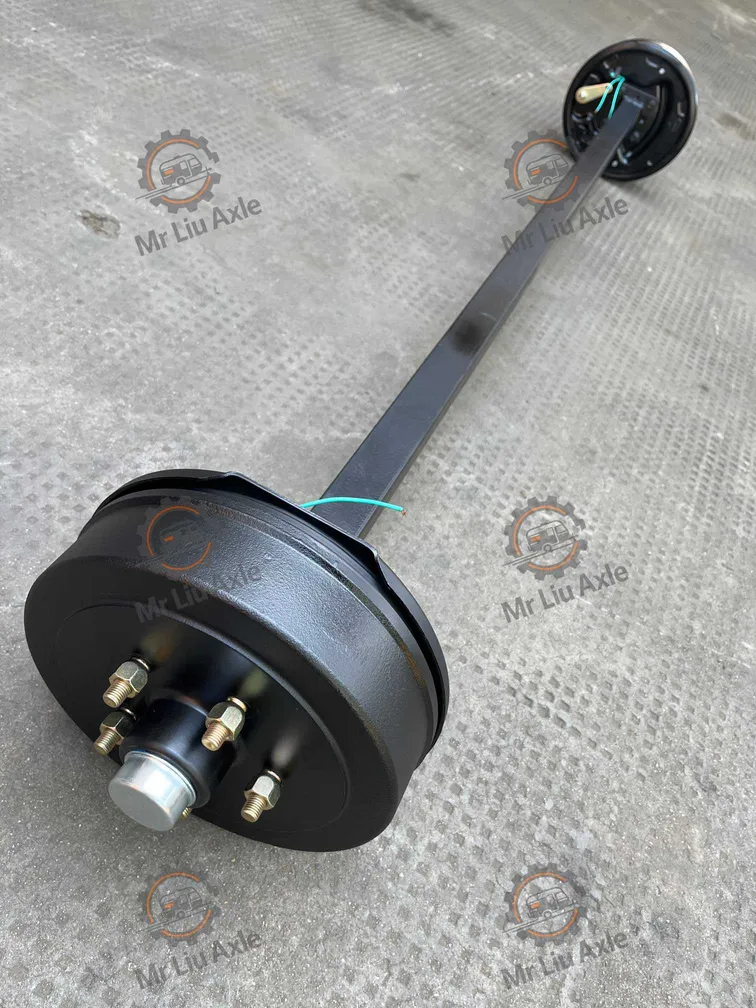
The North American and Australian trailer brake markets share similar conventions for drum sizing, driven by common trailer weight classes and brake system types. The two dominant drum sizes are 10 inch and 12 inch, used across both electric and hydraulic brake configurations.
10-Inch Brake Drums
Standard on single-axle and lighter tandem-axle trailers, typically paired with axles rated from 1,400 kg up to approximately 2,000 kg per axle. Common applications include:
- Single-axle utility trailers
- Small to mid-size caravans and travel trailers
- Light boat trailers
- Cargo trailers with GVWR under 3,500 lbs
10-inch electric drum brakes dominate the US market for these weight classes. In Australia, 10-inch drums are also common on caravans and general-purpose trailers up to ~1,450 kg GTM per axle.
12-Inch Brake Drums
Used on heavier tandem-axle trailers and single heavy-duty builds, typically from 2,000 kg up to 3,200 kg per axle. Applications include:
- Large caravans and fifth-wheel trailers
- Heavy equipment and construction trailers
- Horse floats
- Large boat trailers (for drum brake configurations)
Disc Brakes for Boat and Marine Trailers
Both the US and Australian markets have shifted strongly toward hydraulic disc brakes for boat trailers. Disc sizes are typically 10 inch and 12 inch rotor diameters, matched to hydraulic calipers. The advantages are clear: disc brakes resist corrosion better than drums when submerged during launch and retrieval, they provide more consistent stopping in wet conditions, and they cool faster under repeated braking.
if you are building boat trailers for saltwater use, hydraulic disc is the default specification in both markets. Drum brakes on a saltwater boat trailer are an invitation to warranty claims.
2. European Market Brake Drum Standards
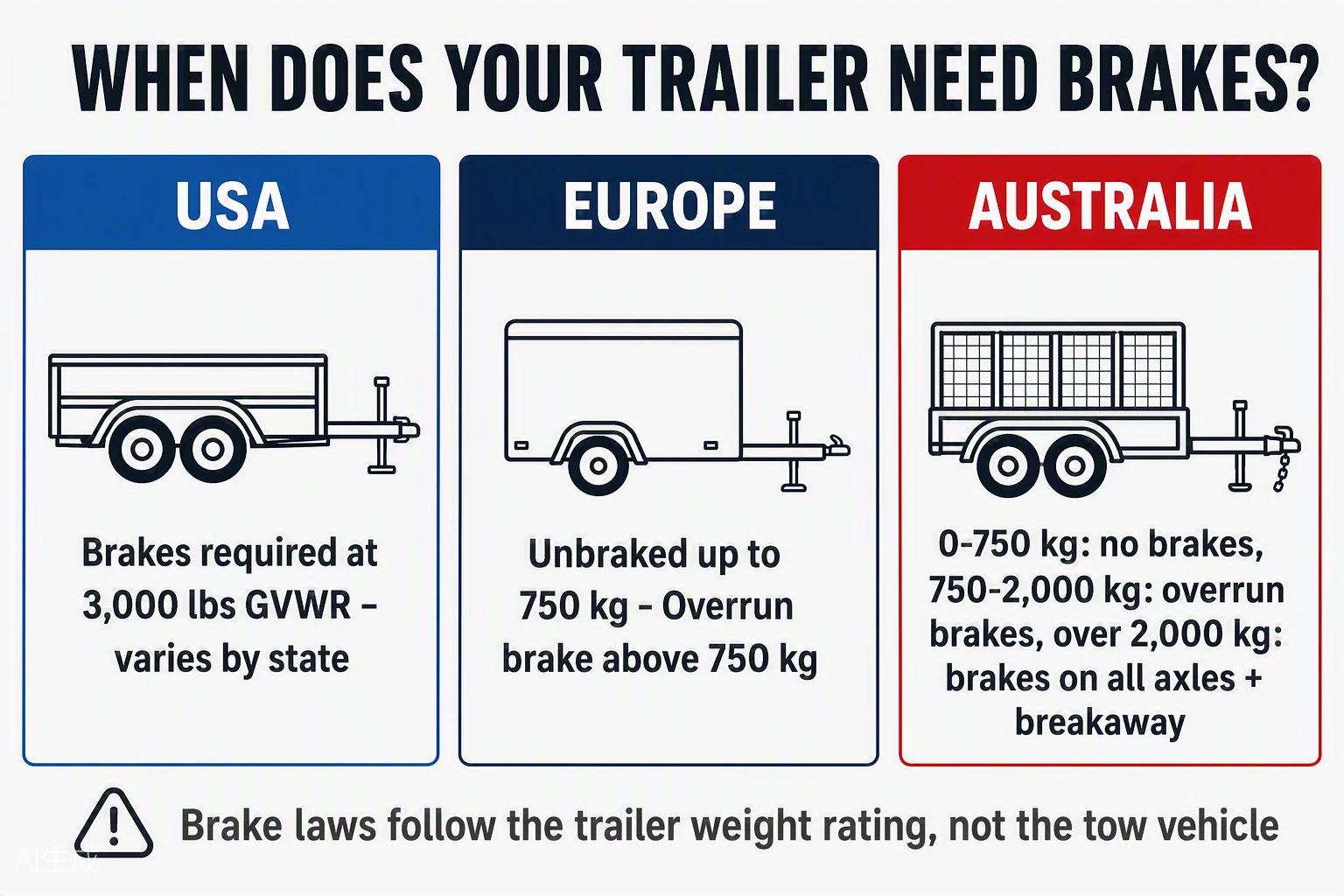
European trailers use a completely different brake ecosystem. Instead of electric or hydraulic brakes, the vast majority of caravans and light trailers use mechanical overrun (inertia) brake systems, where the trailer’s own momentum activates the brakes through a coupling-driven cable linkage.
The dominant brake drum suppliers in Europe are Knott and AL-KO, and their drum dimensions are the industry reference points:
Knott 200×50 mm
The most common European caravan brake drum. Used on axles from approximately 750 kg to 1,500 kg. The 200 mm outer drum diameter and 50 mm drum width define the brake shoe contact area and dictate the compatible brake expander and handbrake mechanism.
Knott 250×40 mm
A wider-diameter, narrower-width drum used on heavier single-axle and tandem-axle European trailers, typically from 1,500 kg up to 2,500 kg. The 250 mm diameter provides greater braking torque, while the 40 mm width maintains compatibility with specific Knott brake shoe designs.
AL-KO 230×60 mm
AL-KO’s standard drum for mid-to-heavy European trailers. The 230 mm diameter and 60 mm width make it a distinct specification from Knott drums. AL-KO drums require AL-KO-specific brake expanders, shoes, and handbrake components — they are not interchangeable with Knott hardware.
Critical note: Knott and AL-KO brake drums are not cross-compatible. A Knott expander will not seat correctly in an AL-KO drum, and vice versa. When specifying a replacement drum, you must match both the drum dimensions and the original equipment manufacturer. This applies equally to brake shoes, expanders, and handbrake mechanisms.
3. Bolt Pattern (PCD) Matching
The brake drum must bolt to the wheel hub with a matching pattern. This sounds obvious, but PCD mismatches are one of the most common and expensive errors in brake drum ordering. Below are the standard PCD patterns by market:
North American Common PCDs:
- 4 on 4 inch (4×101.6 mm) — Small utility trailers, jet-ski trailers
- 5 on 4.5 inch (5×114.3 mm) — The most common US trailer bolt pattern. Used on 3,500 lb axles and below across thousands of trailer models
- 6 on 5.5 inch (6×139.7 mm) — Heavy-duty utility trailers, larger caravans, equipment trailers
- 8 on 6.5 inch (8×165.1 mm) — Heavy commercial trailers, goosenecks, some large horse floats
European Common PCDs:
- 4×98 mm — Light trailers, some French and Italian caravan manufacturers
- 4×100 mm — Compact trailers, small utility builds
- 5×112 mm — The dominant European caravan pattern. Standard on most German, UK, and Scandinavian caravans from 1,000–2,000 kg
- 5×139.7 mm — Heavier European trailers, some commercial and agricultural applications
Australian Common PCDs:
- Australian trailers generally follow US conventions for PCD, with 5 on 4.5 inch and 6 on 5.5 inch being the most common for caravans and utility trailers
- Some European-imported caravans in Australia retain 5×112 mm or 4×100 mm patterns
Before ordering any brake drum, confirm the PCD by physically measuring the bolt circle on the hub, or checking the trailer manufacturer’s specification sheet. Never assume — especially on imported trailers where a previous owner may have swapped hubs.
4. Installation Key Points
Even the correctly specified drum will fail if installed improperly. Here are the critical installation steps:
Verify Drum Inner Diameter
Before installation, measure the drum’s inner braking surface with a brake drum micrometer or internal caliper. Compare against the specification. A drum that is oversized (worn beyond limits or machined too large) will cause reduced braking force and uneven shoe contact. Most drums have a maximum oversize cast into them — do not exceed it.
Check Shoe-to-Drum Contact Pattern
After installation, rotate the drum and inspect the contact pattern on the brake shoes. The contact should be even across the full shoe width, not concentrated at one edge or the center. Uneven contact causes localized overheating, glazing, and premature wear.
Set the Correct Shoe-to-Drum Clearance
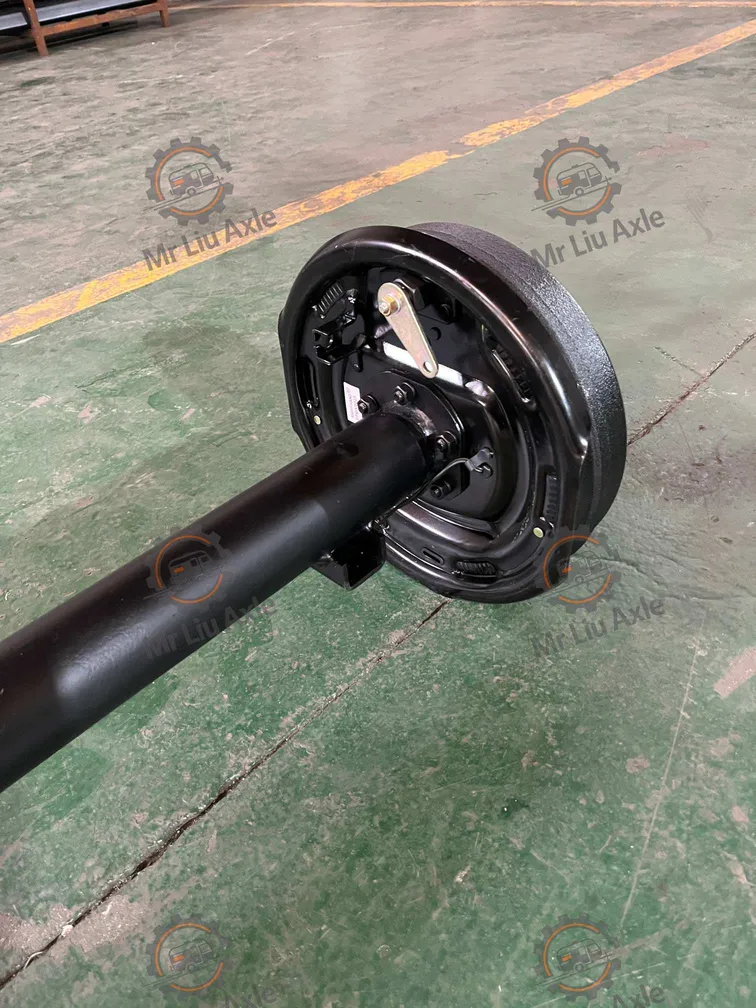
The adjuster star wheel sets the running clearance between the shoe lining and the drum surface. Too tight: the brakes drag, overheat, and wear rapidly. Too loose: excessive pedal travel and reduced braking force. Adjust to the manufacturer’s specified clearance — typically around 0.3–0.5 mm for electric drum brakes.
Torque the Wheel Nuts in Sequence
After fitting the drum and wheel, torque the lug nuts to specification in a star pattern. Uneven torque warps the drum, creates brake pulsation, and can crack the drum flange. Retorque after the first 50–100 km of driving.
Grease the Bearings During Drum Installation
Removing the drum is the right time to inspect and repack the wheel bearings. Fresh grease and a new seal cost almost nothing and prevent the most common cause of roadside trailer failures.
5. Common Mistakes
Here are the errors we see most often from builders and distributors:
Ordering by Diameter Alone
A “10-inch drum” is not a specification. It is a category. You need the exact inner diameter, drum width, bolt pattern, brake system compatibility (electric/hydraulic/overrun), and shoe width. Ordering “one 10-inch drum” without these details is a coin toss.
Mixing Knott and AL-KO Components
Knott shoes in an AL-KO drum, or an AL-KO expander in a Knott drum, will not seat correctly. The geometry differs. The handbrake mechanism geometry differs. The result is partial contact, uneven wear, and reduced braking force. Always match the drum to the original brake system manufacturer.
Ignoring the Hub PCD
The drum must match the hub bolt pattern. A 5 on 4.5 inch drum will not bolt to a 5 on 4.75 inch hub. The holes may look close, but the misalignment stresses the studs and creates an unsafe wheel attachment. Measure before you order.
Forgetting the Brake Actuator Compatibility
The drum is only one part of the system. An electric drum requires an electric brake controller in the tow vehicle. A hydraulic drum requires a hydraulic actuator at the coupling. A European overrun drum requires a compatible overrun coupling. The drum, the actuator, and the controller must form a matched system.
Using Worn or Turned-Down Drums with New Shoes
New shoes on a worn drum create a contact mismatch. The shoes are flat; the drum is concave from wear. The result is edge contact, glazing, and noise. Either machine the drum to a fresh surface (within oversize limits) or replace the drum when replacing shoes.
Brake Drum Manufacturing at Mr Liu Axle
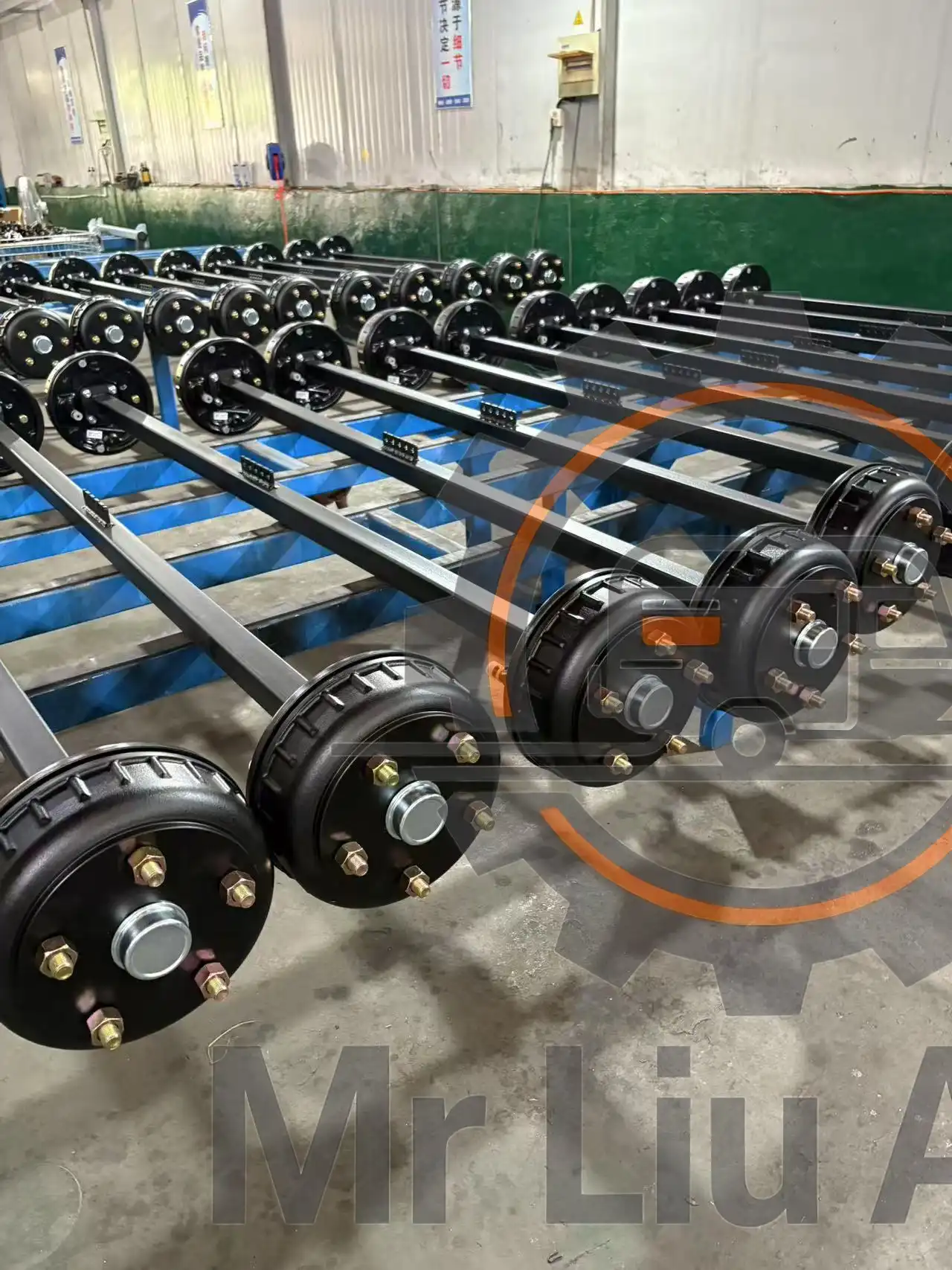
All brake drums we supply are developed using our own proprietary tooling and molds, manufactured by large-scale professional foundries with decades of casting experience. We design the molds. They execute the casting and precision machining. This partnership gives us full control over material quality, dimensional tolerances, and surface finish — without the limitations of small-batch in-house production.
We produce close to 10,000 brake drums annually across our full product range: 10-inch and 12-inch drums for the North American and Australian markets, Knott-compatible 200×50 mm and 250×40 mm drums for Europe, and AL-KO-compatible 230×60 mm drums for European builds requiring AL-KO brake systems. Every drum is machined to our tooling specifications and inspected before shipment.
If you need a drum specification outside our standard range, we can custom-develop tooling to your requirements. Custom drum diameters, widths, bolt patterns, and brake system interfaces are all within our engineering capability.
Browse our full brake drum product range to see our standard offerings, or contact us with your spec sheet for a custom quote.
Further Reference
For additional technical details on hub drums and rotors from one of North America’s major brake component suppliers, see Dexter Axle’s Hub Drums and Rotors product page. Dexter remains a key reference point for US trailer brake standards and provides useful cross-reference data for drum specifications.
Need Help Matching the Right Drum?
Send us your axle load rating, hub PCD, brake system type (electric/hydraulic/overrun), and target market. We will confirm the correct drum specification and quote availability — standard or custom — within 24 hours.
Contact us with your drum requirements.