

Blog
Drop Axles Explained: Lower Deck Height Without Losing Capacity

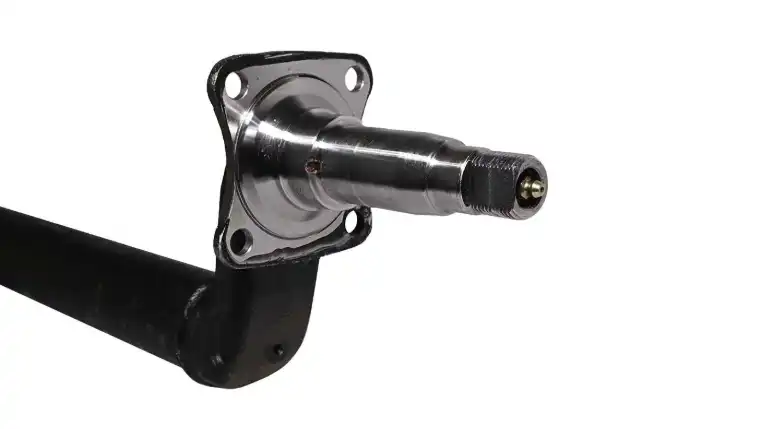
Drop Axles Explained: Lower Deck Height Without Losing Capacity
A cargo trailer builder in Florida called me last spring with a problem. His customers loved his enclosed trailers — until they tried to load them. The rear door sat high, the ramp angle was steep, and a landscaping crew had nearly dropped a zero-turn mower off the side twice. His frame shop had quoted a full redesign: dropped crossmembers, new floor, weeks of rework. He didn’t need a new frame. He needed a different axle.
What is a drop axle?
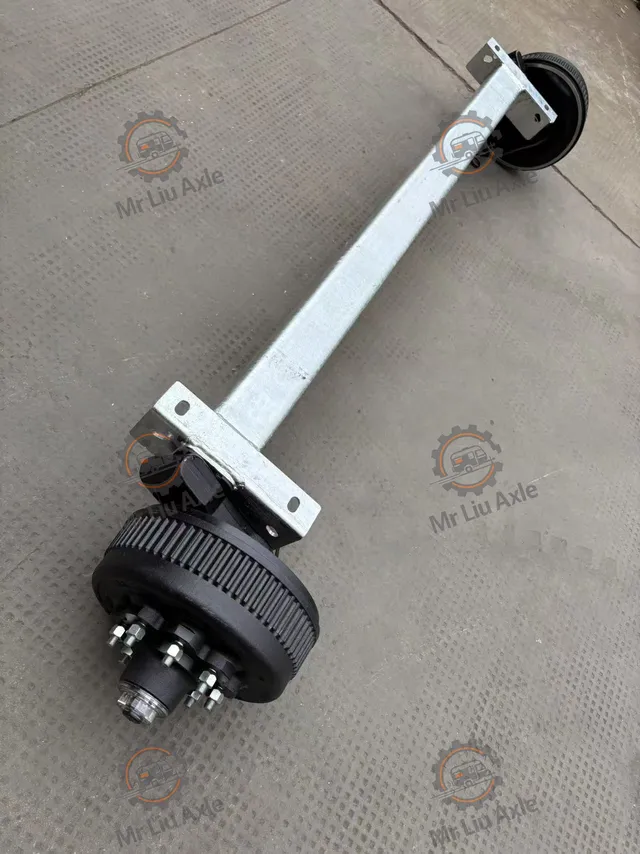
On a standard straight axle, the wheel spindles sit on the same centerline as the axle tube. On a drop axle, the spindles are welded on several inches above the tube centerline — most commonly a 4-inch drop. The effect is simple geometry: the wheels stay where they were, but the tube — and the trailer frame hanging from it — drops down by the same amount. Your deck height falls four inches without touching the frame, the floor, or the suspension hangers.
Why does deck height matter?
Four inches doesn’t sound like much until you watch someone use the trailer:
- Loading height. A lower door or tailgate means a shallower ramp angle for mowers, ATVs, and equipment — and less lifting for anything carried in by hand.
- Center of gravity. A lower deck puts the cargo’s weight closer to the road, which improves stability in crosswinds and emergency maneuvers.
- Interior design. Enclosed trailer builders can eliminate step-up wheel wells inside the box, reclaiming floor space and simplifying racking.
- Overall height clearance. A lower deck can bring a tall enclosed trailer back under garage doors, carport openings, and ferry height limits.
Does a drop axle lose load capacity?
No — this is the question buyers ask most, and the answer is straightforward. Moving the spindle position changes where the wheel meets the tube; it doesn’t change the tube, the spring seats, the bearings, or the load path between them. A 3,500 lb drop axle carries 3,500 lbs, rated exactly like its straight-spindle twin.
The only real engineering difference is a slightly higher bending moment at the spindle weld — which is why reputable manufacturers use heavier spindle forgings and full-penetration welds on drop designs, and why a drop axle is one product where build quality is worth asking about.
What is the trade-off of a drop axle?
Everything the frame gains, the tube loses. On a drop axle, the tube itself rides four inches closer to the road — it becomes the lowest point under the trailer.
For pavement, highways, and graded gravel, that changes nothing in practice. But drop axles are the wrong choice where ground clearance is the whole game: off-road campers, boat ramps with steep transitions, construction sites, or farm tracks with deep ruts. Dragging an axle tube over a rock is a bad day. Match the axle to the terrain, not the other way around.
Drop axle vs. straight axle: quick comparison
| Drop Axle (4″) | Straight Axle | |
|---|---|---|
| Deck height | 4″ lower | Standard |
| Rated capacity | Same as straight | Same as drop |
| Ground clearance under tube | Reduced by 4″ | Full |
| Best for | Cargo, enclosed, equipment trailers on pavement | Boat, off-road, utility, rough-terrain trailers |
Should I choose a drop, straight, or torsion axle?
A drop axle solves one specific problem: deck height. It is a variation of the leaf-spring axle, not a replacement for every design. If your priority list looks different, two other types are worth a look:
- Spring axles (straight spindle) — the versatile default. Maximum ground clearance, field-serviceable anywhere, and the widest range of capacities. Our spring axle range covers the standard ratings most trailers are built on.
- Torsion axles — instead of leaf springs, rubber cords inside the tube give each wheel independent suspension. Smoother ride, less maintenance, and a popular upgrade for caravans and cargo trailers that live on the highway. See our torsion axle range for standard configurations.
For a systematic overview of how all the axle types compare — spring, torsion, drop, and more — Lippert’s guide to the different types of trailer axles is a useful reference.
In Our Workshop
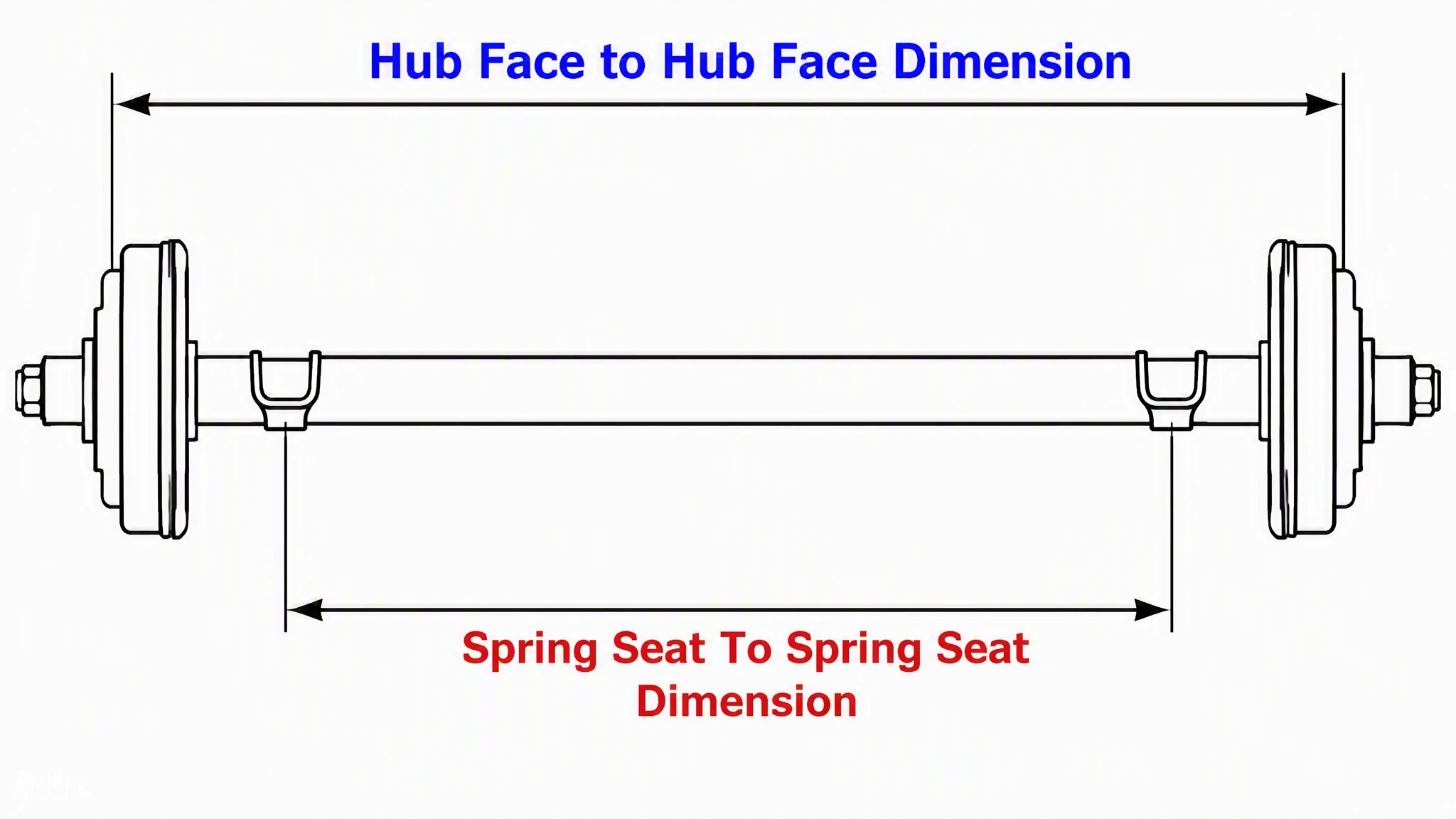
After 20 years of building axles, the most expensive drop-axle mistake I see is also the simplest: the order that never said “drop.” A 4-inch drop axle and a straight axle can share identical hub face and spring center measurements — on paper they look like the same part, and they are absolutely not interchangeable once the fenders and frame clearances enter the picture.
So in our workshop, every quote confirmation ends with four words: drop or straight spindle? It takes ten seconds to ask. It has saved more than one customer a container of wrong axles.
Frequently asked questions
What is a drop axle on a trailer?
A drop axle has its wheel spindles welded several inches above the tube centerline — most commonly 4 inches — so the trailer frame and deck sit lower while the wheels stay in the same position. It is the standard way to lower deck height without redesigning the frame.
Does a drop axle reduce weight capacity?
No. A drop axle carries the same rated capacity as a straight axle of the same rating — a 3,500 lb drop axle carries 3,500 lbs. The spindle position changes deck height, not the load path through the tube, springs, and bearings.
How much ground clearance do you lose with a drop axle?
The axle tube rides lower by the full drop amount — typically 4 inches — becoming the lowest point under the trailer. On pavement this is irrelevant; for off-road, boat ramps, or rough terrain, a straight axle is the better choice.
Can I replace a straight axle with a drop axle?
Yes, if hub face and spring center measurements match — the swap bolts on. Your deck will sit lower by the drop amount, so confirm fender clearance and check that the reduced tube-to-ground clearance suits your terrain before ordering.
Considering a Drop Axle for Your Next Build?
Send us your hub face, spring center, and capacity — and tell us “drop” or “straight.” We will confirm the right specification before you commit. Browse our spring axle range for standard sizes, or contact us for a factory-direct quote — most replies go out within 24 hours.