

Blog
How to Measure Trailer Axle for a Replacement (Hub Face, Spring Center, Overall Length)

How to Measure Your Trailer for a Replacement Axle (Hub Face, Spring Center, Overall Length)
Last month, a trailer builder in Texas emailed me a photo with a short message: “The axle doesn’t fit.” He had ordered a replacement based on his trailer’s overall width — 80 inches — and assumed that was the axle size. It wasn’t. His hubs sat 4 inches too far out, the wheels rubbed the fenders, and a $300 axle became a $600 lesson in return freight. A tape measure and 15 minutes would have prevented all of it.
What are the three measurements for a replacement trailer axle?
1. Hub face measurement (HF)
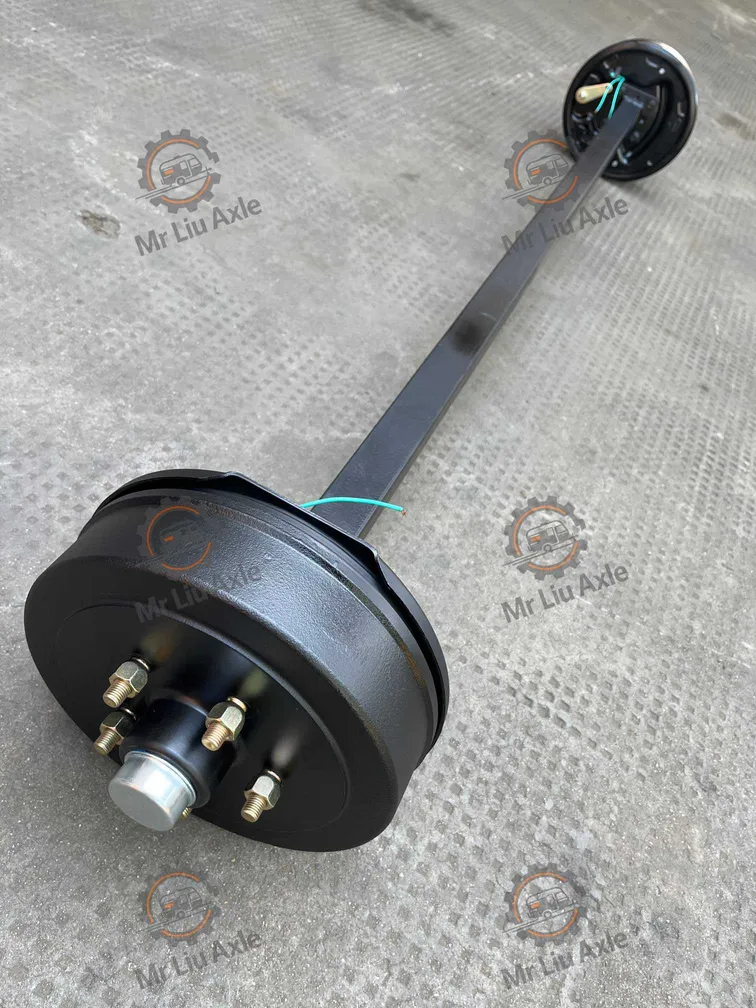
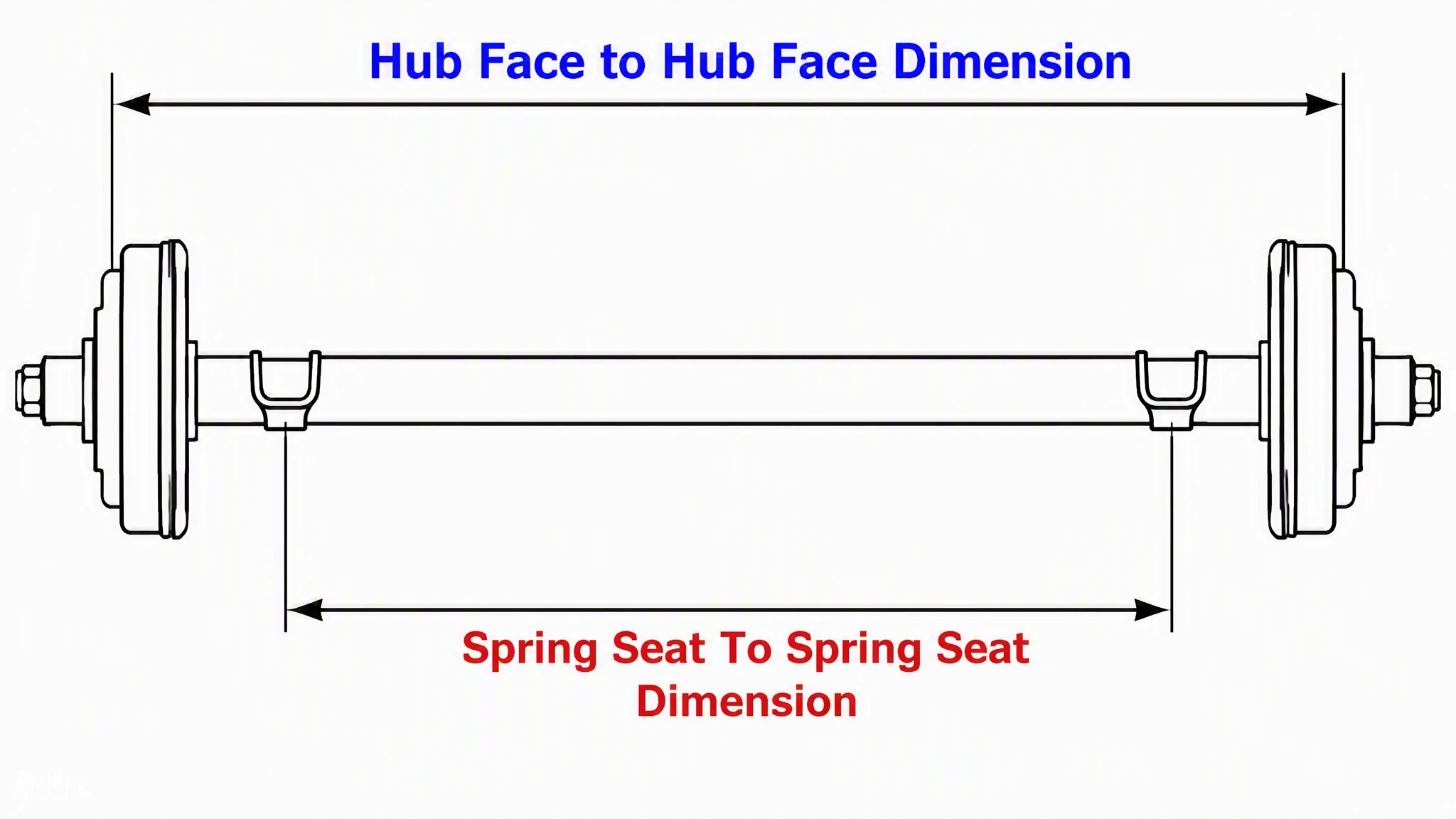
The hub face measurement is the distance from the mounting face of one hub — the flat surface where your wheel sits against the hub — to the same point on the opposite hub. It determines your trailer’s track width and is the first number any axle supplier should ask for.
How to measure it: Remove both wheels. Hook your tape measure on the hub face on one side and pull it straight across to the hub face on the other. Keep the tape level and parallel to the axle tube. Measure to the nearest 1/8 inch — not the nearest inch.
Common error: Measuring over the brake drums or including the wheel studs. The studs stick out past the hub face and will add roughly an inch you don’t want.
2. Spring center measurement (SC)
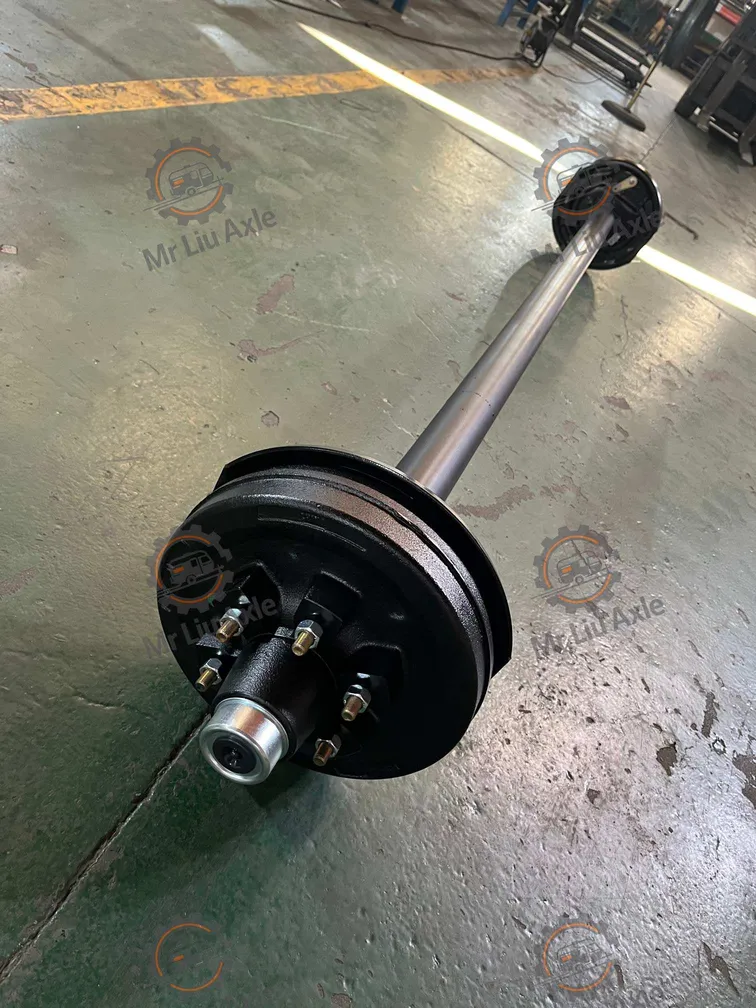
If your trailer uses leaf springs, this is the distance from the center of one spring seat — the welded pad where the spring stack clamps to the axle — to the center of the other. It must line up with the spring hangers on your trailer frame. In our records, spring center errors cause roughly 80% of all wrong-size orders.
How to measure it: Measure from the center of one spring seat to the center of the other. The seats are usually 2 to 2-3/8 inches wide, so measuring edge-to-edge instead of center-to-center will throw you off by a full inch or more.
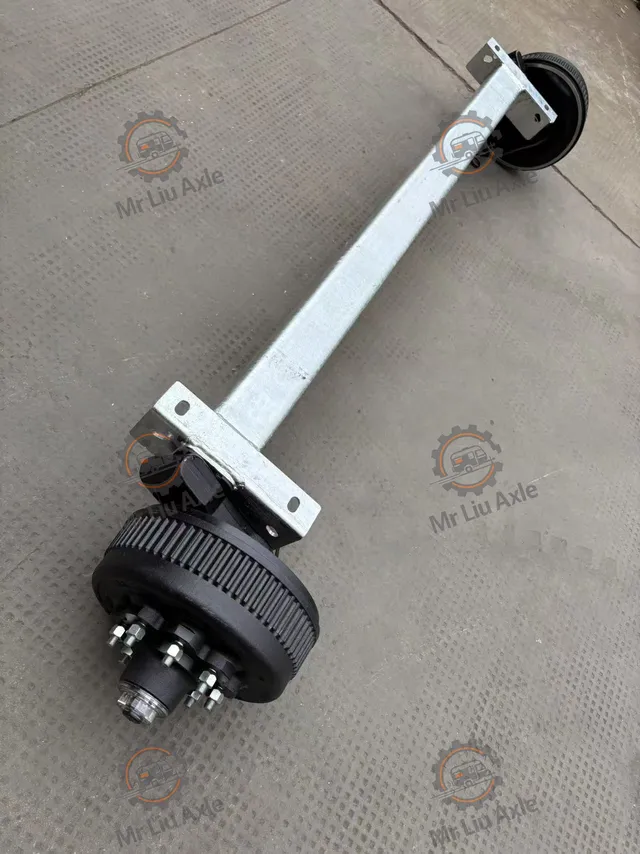
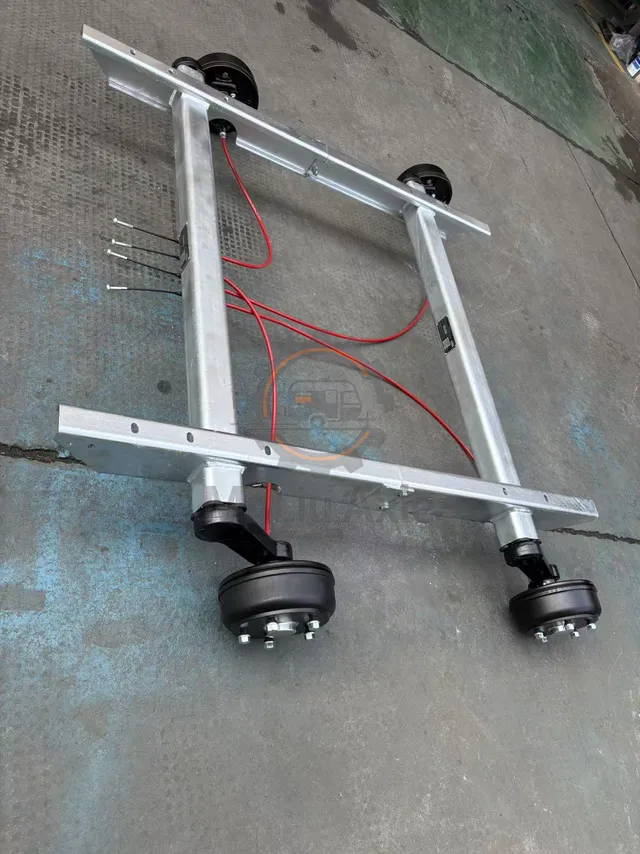
Replacing with a torsion axle? Torsion axles have no leaf springs — they bolt to the frame with a mounting bracket instead, so spring center doesn’t apply; you measure the frame’s mounting width and the bracket bolt pattern. Our torsion axle range lists the standard bracket dimensions for each capacity.
3. Overall length (tip-to-tip)
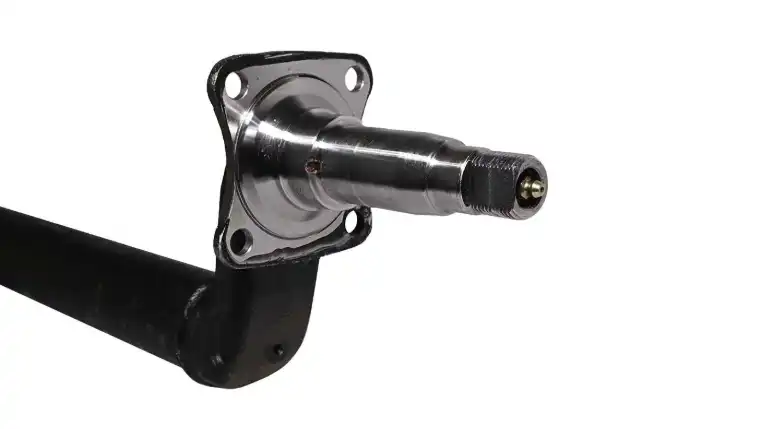
Overall length — also called tip-to-tip — is the distance from the very end of one spindle to the end of the other. On a standard straight axle it is typically 9–10 inches longer than the hub face measurement, but that varies with brake type and spindle design, so never calculate it. Measure it. This number matters most for clearance: fenders, boat hulls, and enclosed trailer walls all live close to the spindle ends.
What else should I check before ordering?
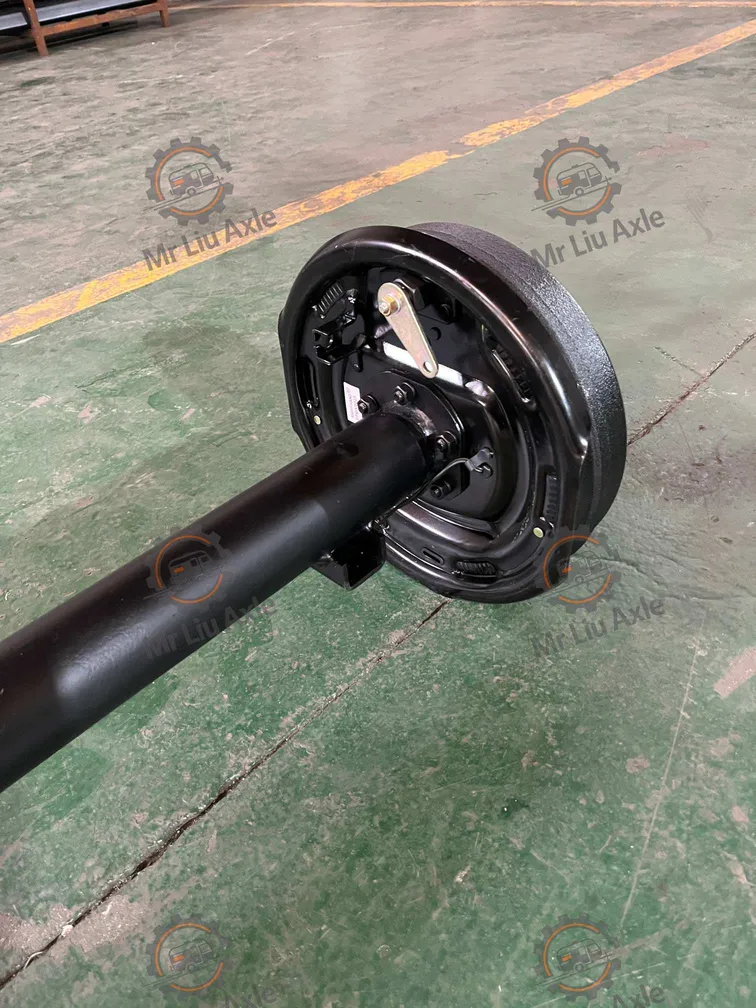
One more check: the brake flange — the flat plate welded behind the spindle where the brake backing plate bolts on. Count the mounting bolts: most light trailer axles use a 4-bolt flange, while 5,200 lb and heavier axles typically use 5 or 6 bolts. If you are buying a bare axle and reusing your existing brakes, a mismatched flange means your backing plates simply won’t bolt on. Note the flange bolt count and your brake drum size on the same sheet as your three measurements.
Quick reference: where to measure
| Measurement | Measure From → To | Most Common Mistake |
|---|---|---|
| Hub Face (HF) | Wheel mounting face of one hub → same face on the opposite hub | Measuring over brake drums or including wheel studs |
| Spring Center (SC) | Center of one spring seat → center of the other | Measuring edge-to-edge instead of center-to-center |
| Overall Length | End of one spindle tip → end of the other | Calculating from hub face instead of measuring directly |
| Brake Flange | Count the backing-plate mounting bolts | Assuming all flanges are 4-bolt |
What are the most common axle measuring mistakes?
- Ordering by trailer width. Your trailer’s body width tells you nothing about the axle. Only hub face determines track width.
- Measuring spring seats edge-to-edge. Always center-to-center — the seats themselves are over 2 inches wide.
- Measuring a bent axle. If the old axle took a hit, its numbers are lies. Measure the trailer frame instead: hanger to hanger, inside fender to inside fender.
- Forgetting drop vs. straight spindles. A 4-inch drop axle and a straight axle with the same hub face are not interchangeable. Note which one you have.
- Rounding to the nearest inch. Axle manufacturing works to 1/8 inch or better. “About 79 inches” is how wrong axles get ordered.
For a broader look at how capacity, brakes, and hub size factor into the same decision, Lippert’s guide on how to select the right trailer axle is a solid companion read.
In Our Workshop
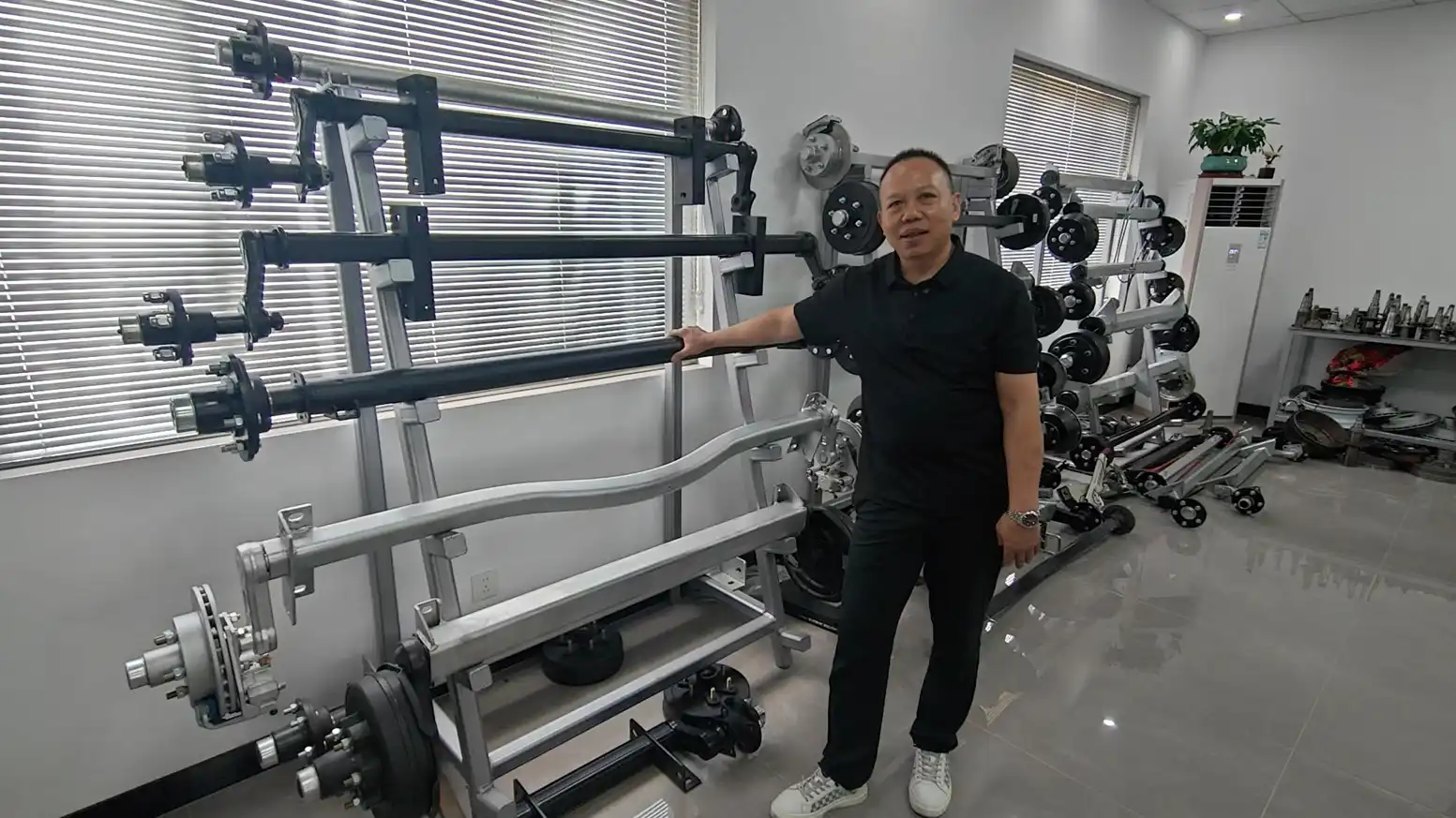
After 20 years of building axles, I’ve learned that the measuring mistakes above aren’t rare — they’re the default. So in our workshop, no replacement axle goes into production on numbers alone. When a customer sends an inquiry, we ask for three photos: a straight-on shot of the hub face with the tape measure visible, the spring seats with centers marked, and the brake flange. Our team cross-checks the photos against the written dimensions, and if anything disagrees by more than 1/8 inch, we call before we cut steel.
It adds a day to the process. It has also cut our wrong-fit returns to nearly zero — and on a 100-pound piece of steel crossing the Pacific, that’s the only statistic that matters.
Frequently asked questions
How do you measure a trailer axle hub face?
Remove both wheels and measure straight across from the flat wheel-mounting face of one hub to the same face on the opposite hub, keeping the tape level and parallel to the axle tube. Measure to the nearest 1/8 inch, and do not include the brake drums or wheel studs.
What is spring center on a trailer axle?
Spring center is the distance between the centers of the two welded spring seats where the leaf springs clamp to the axle. It must match the spring hanger spacing on your trailer frame — measure center-to-center, never edge-to-edge.
Can I measure my old axle for a replacement?
Only if it is straight and undamaged. A bent or impact-damaged axle gives false numbers — in that case measure the trailer frame instead: hanger to hanger and inside fender to inside fender.
How accurate do trailer axle measurements need to be?
To the nearest 1/8 inch. Axle manufacturing works to 1/8-inch tolerance or better, and rounding to the nearest inch is the single most common cause of wrong-size orders.
Ready to Order?
Send us your three measurements — hub face, spring center, and tip-to-tip — and we will confirm the fit before you pay a cent. Browse our torsion axle range for standard sizes, or contact us for a wholesale quote on custom dimensions. Most fit confirmations go out within 24 hours.