

Blog
U-Bolts, Spring Seats & Castle Nuts: The $5 Parts That Kill Axles

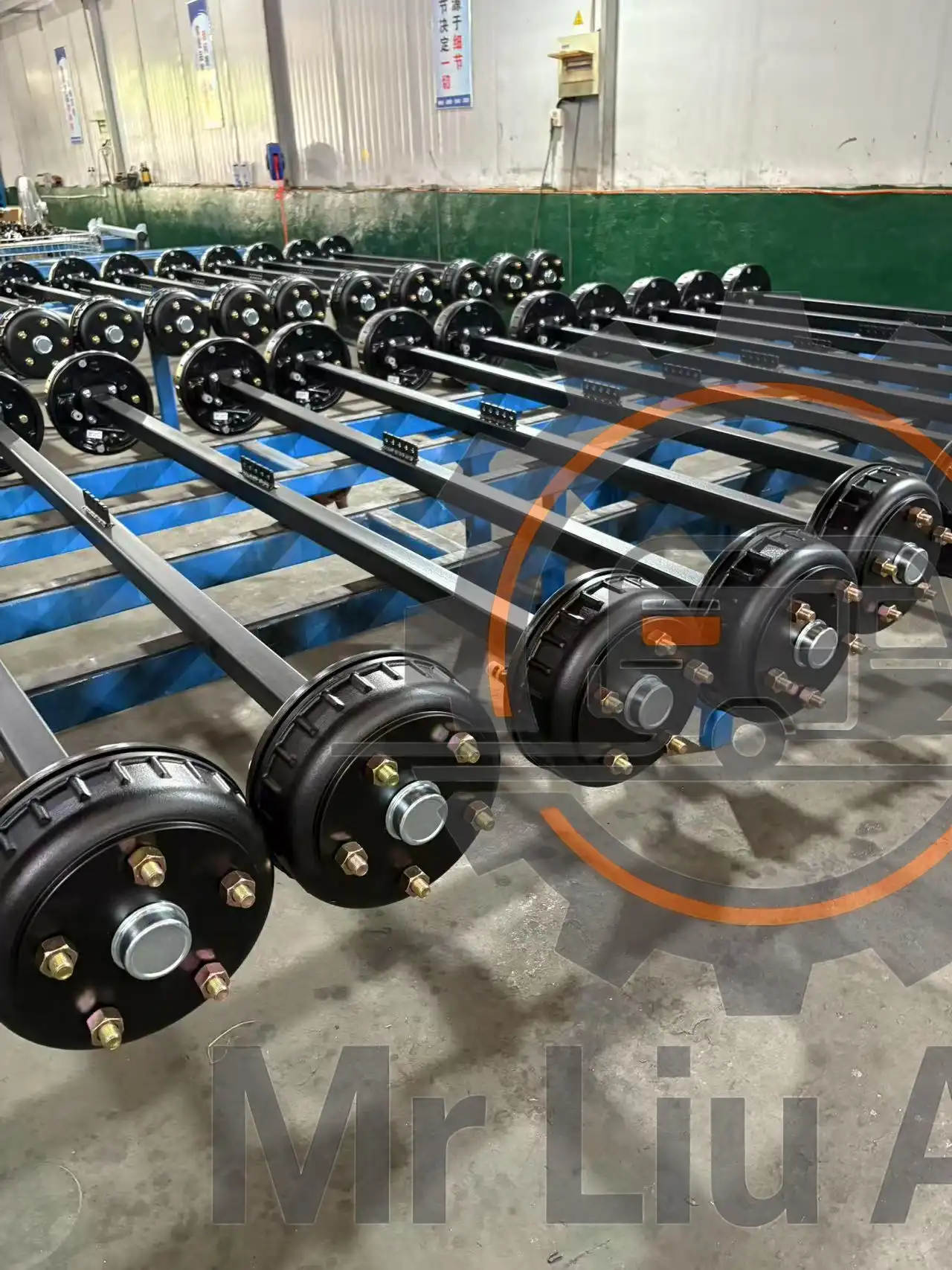
A customer once sent us a furious warranty claim: his trailer was chewing through tires, the axle had “shifted,” and he wanted a replacement. We asked for photos before agreeing to anything. The axle tube was fine. The U-bolts holding it to the springs were finger-loose — they had stretched after the first few hundred miles, nobody re-torqued them, and the axle had walked half an inch out of position.
That story repeats itself constantly, in every market we ship to. After 20 years of building axles, I can tell you the uncomfortable truth: axles rarely fail because of the axle. They fail because of the five-dollar hardware around it. Three parts in particular — U-bolts, spring seats, and the humble castle nut — cause the majority of the failures we see in the field. Here’s what goes wrong with each, and how to prevent it.
U-Bolts: The Clamp That Stretches
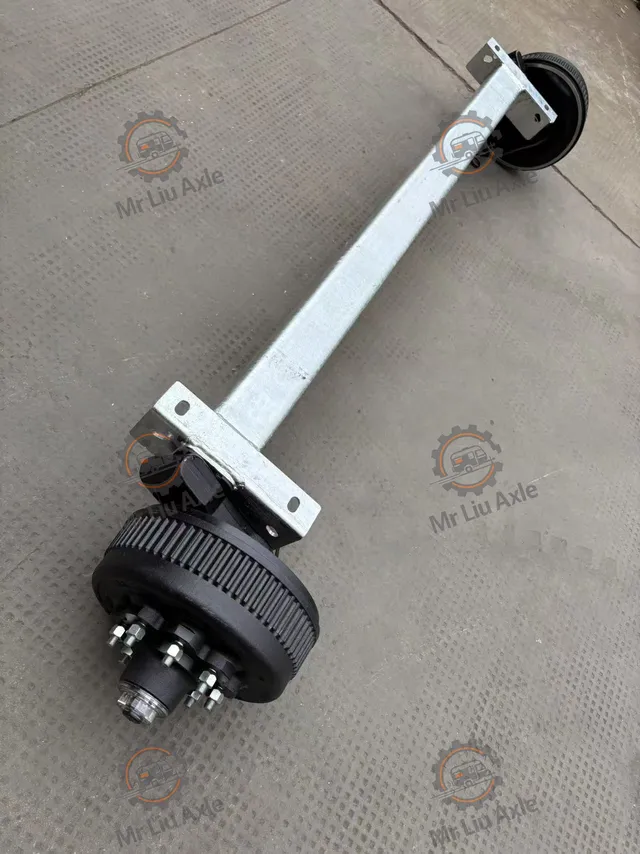
U-bolts are the only thing clamping your axle to the leaf spring stack. They look indestructible — and they stretch anyway. New U-bolts lose a measurable amount of clamping force after their first heat cycles and road miles as the threads seat, the spring pack compresses, and the paint underneath squeezes out.
That’s why every manufacturer that knows what it’s doing — and every service manual worth reading — specifies the same procedure: torque to spec, drive about 50 miles, re-torque. Skip that second step and the clamp load keeps falling until the axle can shift under braking and cornering forces. The symptoms arrive quietly: a tire wearing on one edge, a trailer that tracks slightly sideways, a clunk over bumps. By the time you notice, the damage is already compounding.
One more rule: never re-use U-bolts after removing them. They’re designed to stretch once, into a permanent set. A second installation never achieves the same clamping force.
Spring Seats: The Weld Nobody Inspects
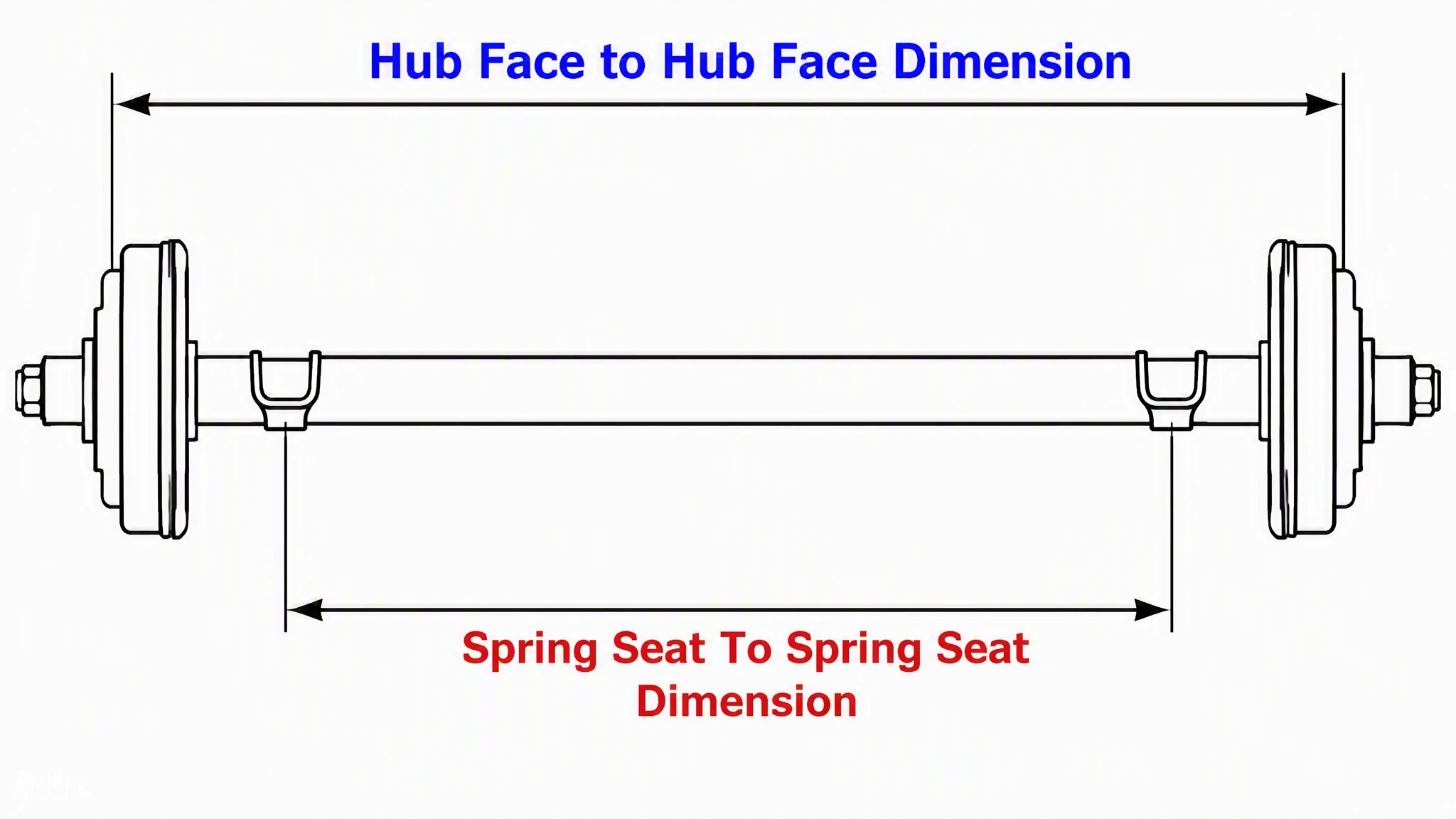
The spring seat is a small steel pad welded to the axle tube — and it’s the only thing locating the axle on the suspension. Everything the road throws at the trailer passes through that weld: vertical load, braking torque, side force in corners.
A good spring seat weld is boring to look at: full penetration, consistent bead, no undercut at the edges. A bad one — a cold weld, a skipped pass, a bead that sits on top of the steel instead of fusing into it — looks almost the same to the naked eye. The difference shows up five thousand miles later, when the seat cracks loose and the axle suddenly has an eighth of an inch of play it was never designed to have.
This is why the seat weld is one of the first things to check on any used trailer, and one of the first things we inspect — destructively, on sample axles from every production batch — in our own quality control.
Castle Nut & Cotter Pin: A Procedure, Not a Torque
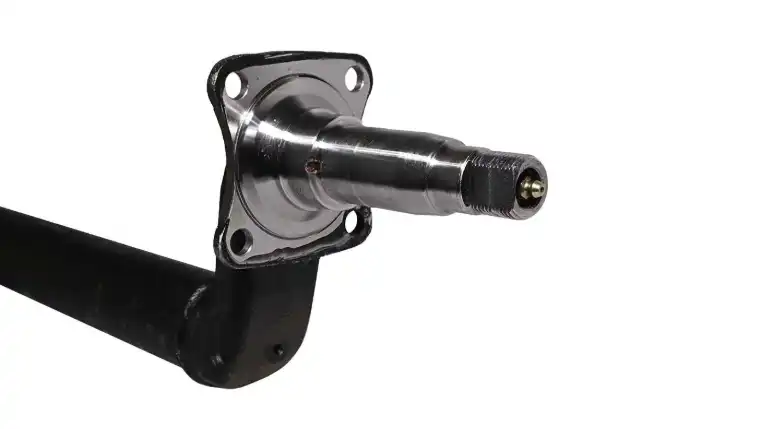
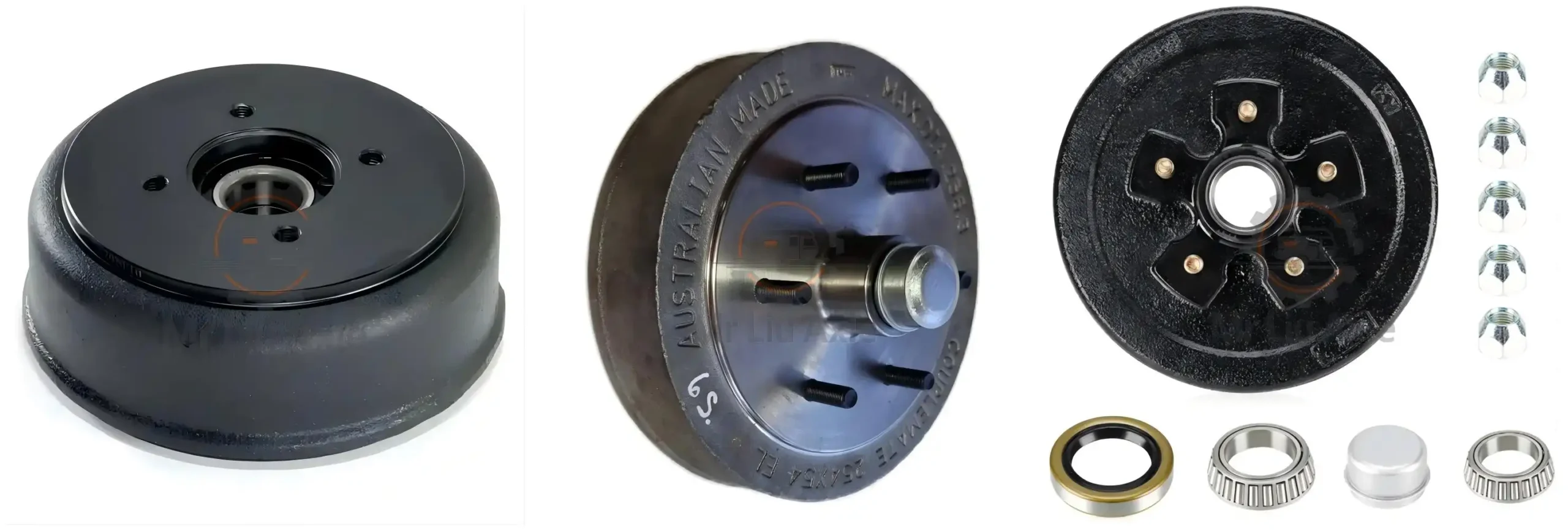
The spindle nut is the most misunderstood fastener on the entire trailer. Mechanics trained on cars instinctively want to torque it tight. On a trailer hub, that’s exactly wrong: the castle nut is tightened to seat the bearings, then backed off to the nearest cotter pin slot. Too tight, and the bearing runs hot and dies young. Too loose, and the hub rocks on the spindle until the bearing destroys itself.
The castellated design exists precisely for this job: the notches let a pin lock the nut against rotation without relying on a precise torque value. Design World’s explainer on what a castellated nut is and where it’s used covers the locking principle in detail — including why these nuts suit low-torque, vibration-heavy positions like a trailer spindle.
And the cotter pin? It’s a single-use component. Once bent and removed, its fatigue life is spent. A re-used cotter pin can snap from vibration and let the castle nut walk off the spindle entirely — and at that point, physics decides where your wheel goes.
Quick Reference: The Three Failure Modes
| Part | How It Fails | Prevention |
|---|---|---|
| U-bolts | Stretch and lose clamp load; axle shifts on springs | Re-torque after first 50 miles; never re-use |
| Spring seat | Cold or cracked weld; axle “walks” out of alignment | Visual weld inspection at purchase and every service |
| Castle nut & cotter pin | Over-tightened (bearing overheats) or too loose (hub rocks); re-used pin snaps | Set-and-back-off procedure; fresh cotter pin every time |
In Our Workshop: The Hardware Standard We Ship With
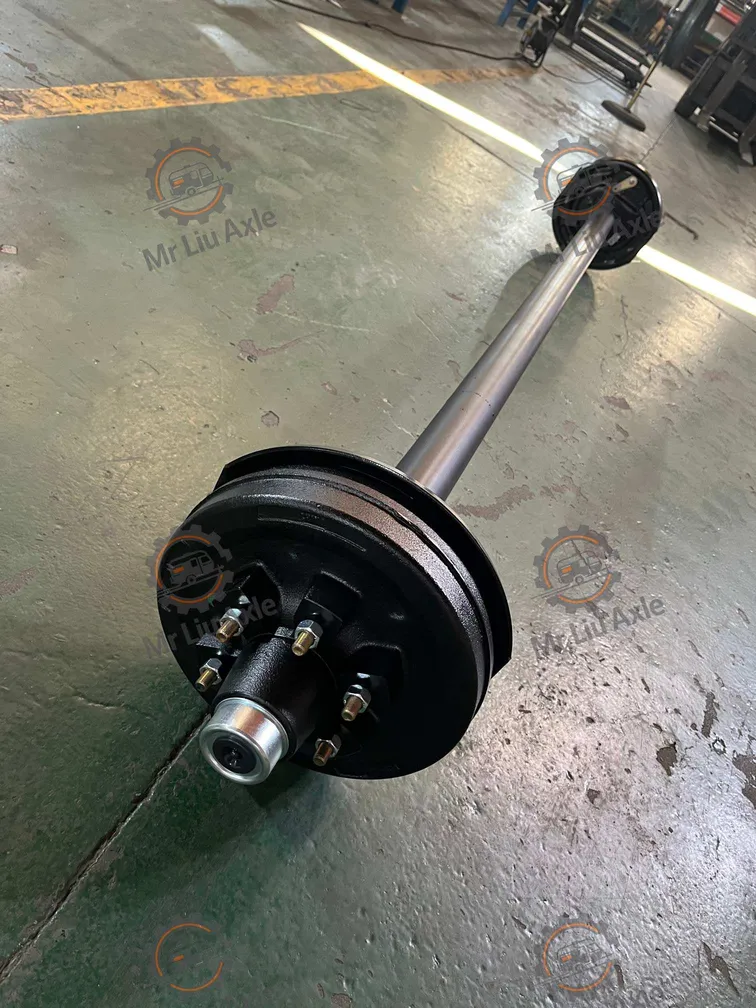
None of this is exotic knowledge — which is exactly why it frustrates me when cheap hardware undoes good steel. So we set a simple rule for every axle that leaves our factory: U-bolts are high-tensile grade with the re-torque interval printed on the packing list; spring seat welds pass a per-batch destructive test before any axle ships; and every hub ships with the castle nut procedure in the box, plus a fresh cotter pin — never a re-used one, never a substitute. It’s the same hardware standard across our entire spring axle range, from the lightest 750 kg units up.
The axle tube gets all the attention in a spec sheet. But after two decades, I’ll tell you what actually determines whether a trailer is still running straight in year ten: the five-dollar parts, and whether somebody checked them.
Ordering axles or replacing suspension hardware? Every axle in our spring axle range ships with graded hardware and the torque procedure included. Tell us your axle rating and bolt pattern, and we’ll confirm the correct hardware kit — most quotes go out within 24 hours.